Where This Job Goes Sideways
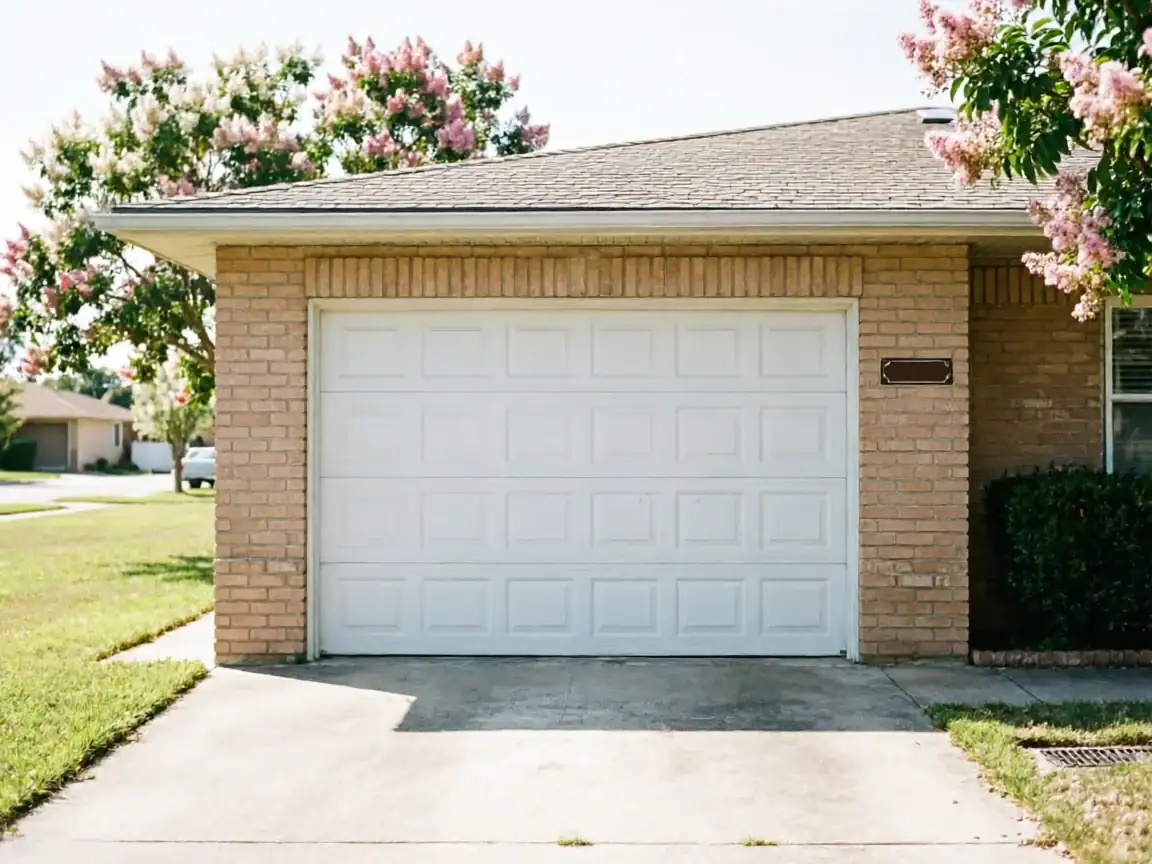
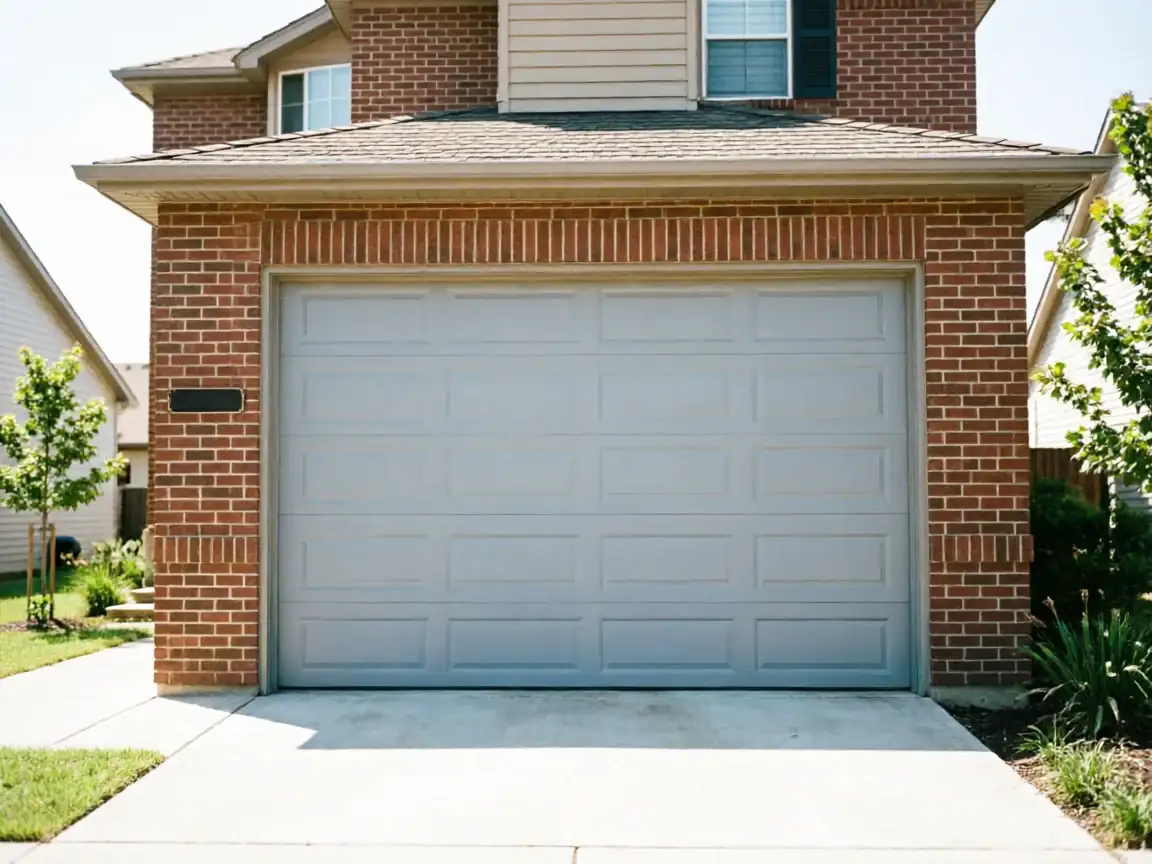
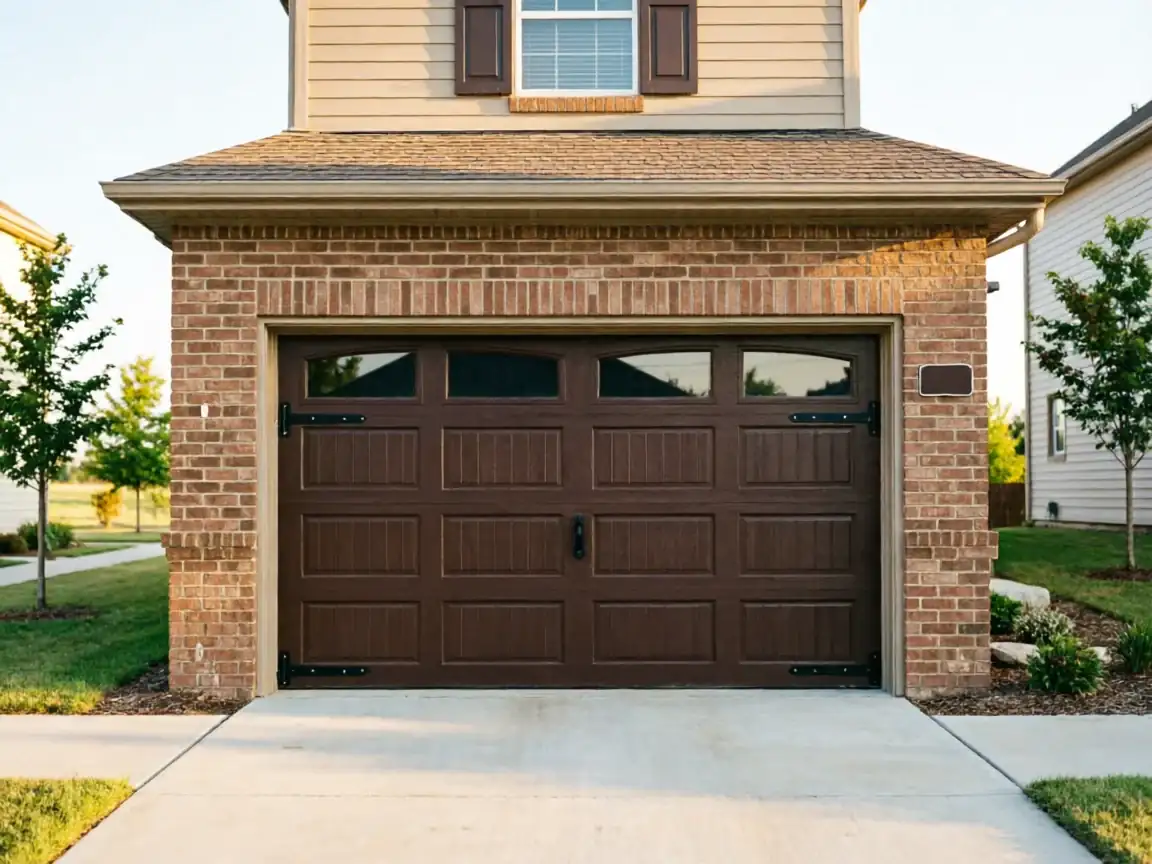
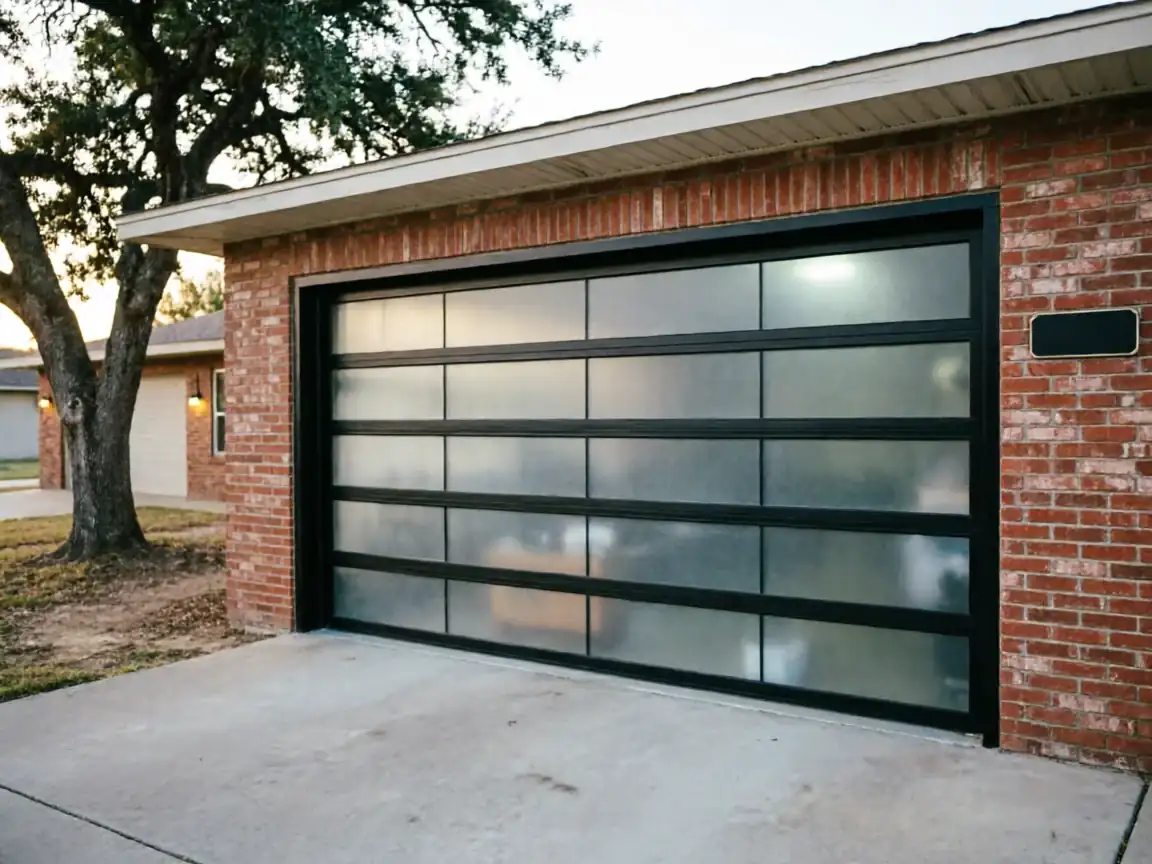
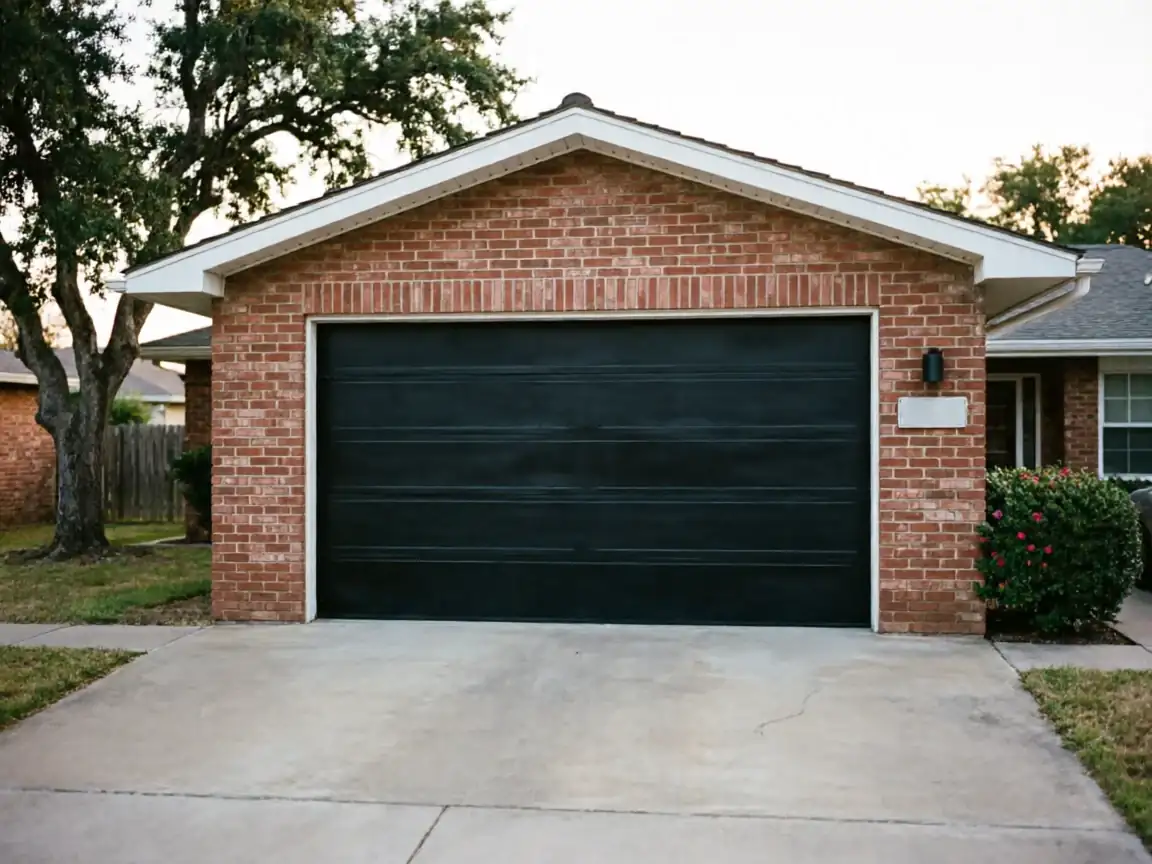
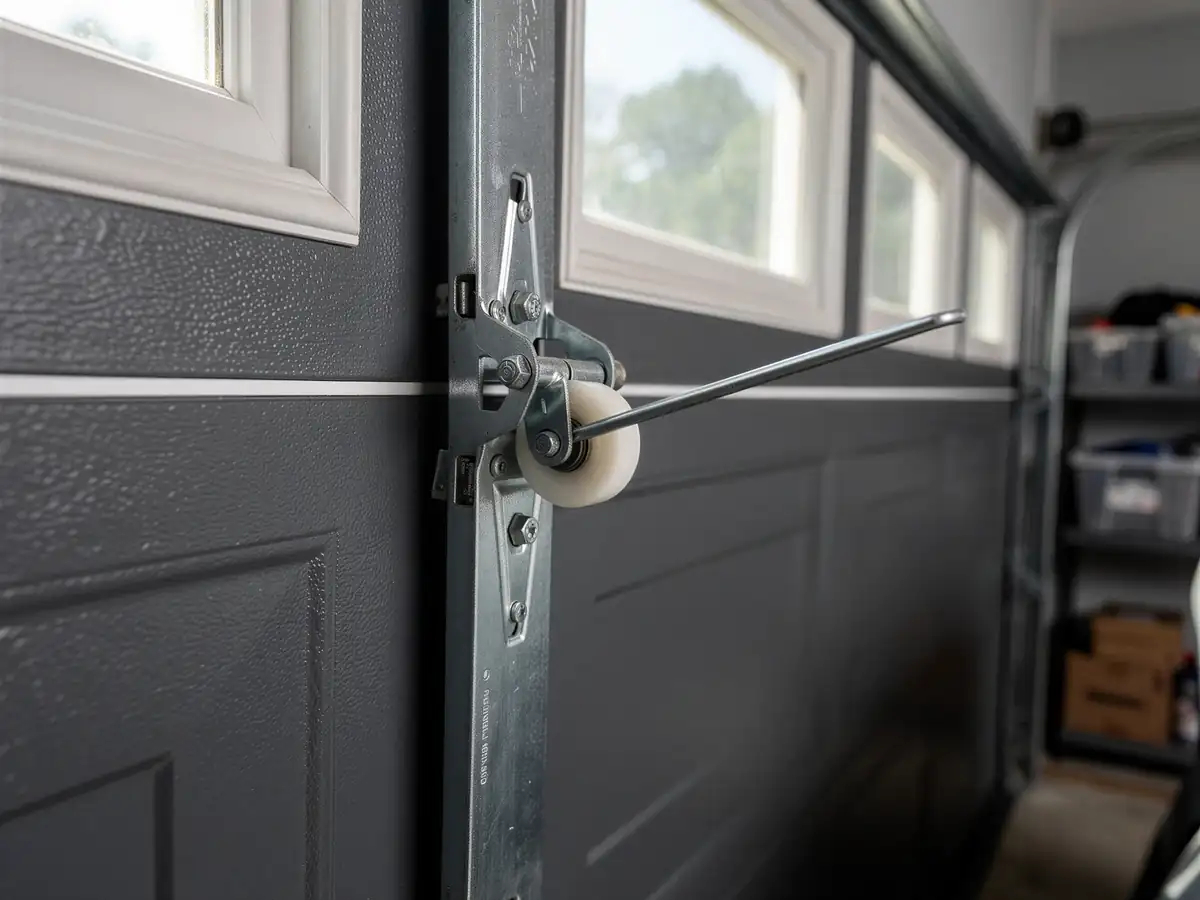
Most of Serenada went up around 1981, and with only 573 households out here, it's a small, tight pocket of houses that were mostly built in the same stretch of years. That matters for this specific problem: a lot of these garages are still running the track, hinges, and roller brackets the builder put in. Forty-plus years of expansion and contraction on galvanized track, plus rollers that were never swapped for nylon, is exactly the combination that lets a door walk off its track. The failure point is usually the bottom bracket or a bent track section near the floor, where the door has the most leverage against it. On a door this old, the track itself may be slightly out of true just from decades of use, not from one bad day. That's a different repair than a newer door that jumped because a cable snapped - and it's why we look at the whole track run, not just the spot where the door is hanging crooked.
How Long You Are Without the Door
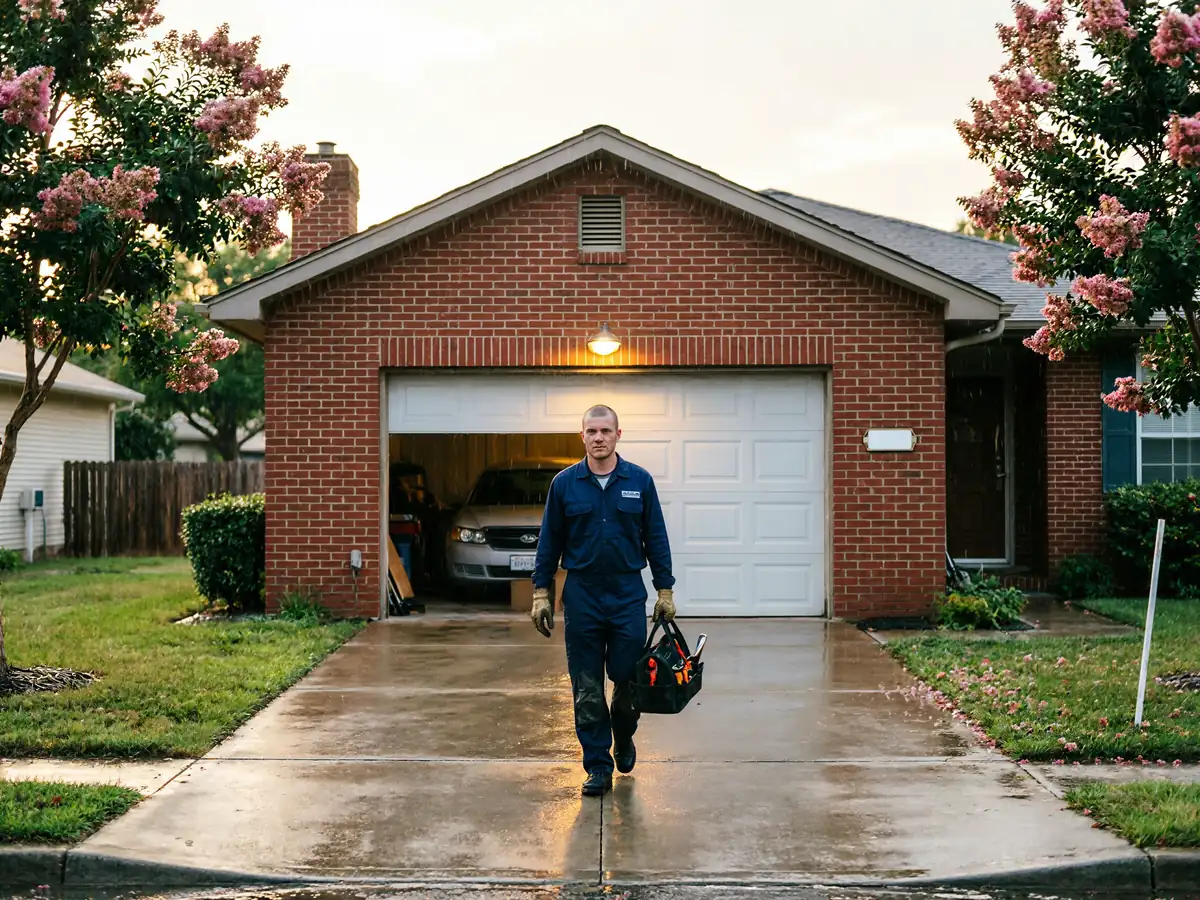
We're coming from Hutto, about 15 miles out, so factor that drive time into when the door actually gets looked at rather than when you call. We don't keep a branch or a standby crew in Serenada - it's a truck run, same as the rest of the towns we cover from here. Once we're on site, getting a door back on its track is usually quick if the track and rollers aren't bent beyond saving. If the track is warped from age rather than a single impact, that's a repair that takes longer to do right, because straightening old galvanized track rarely holds and we'd rather replace the bad section than send you off with a fix that fails again in a month.
How We Fix It
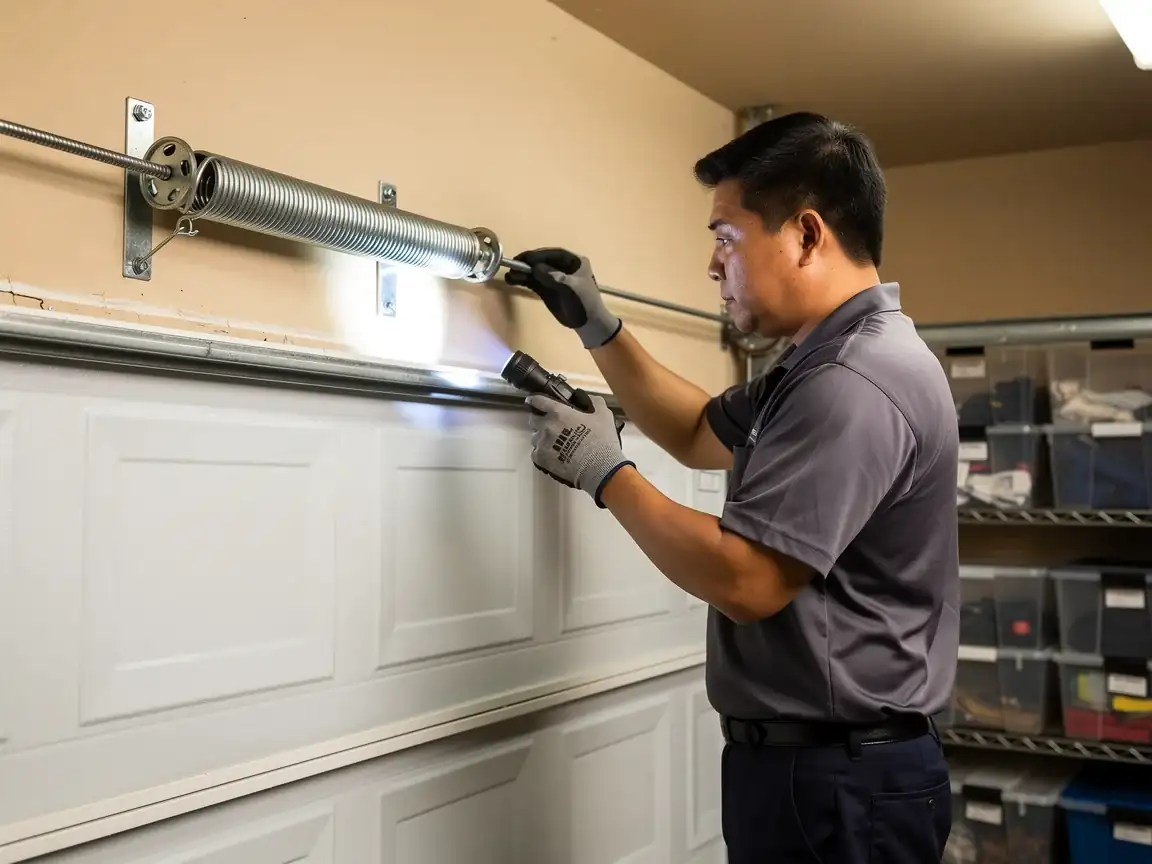
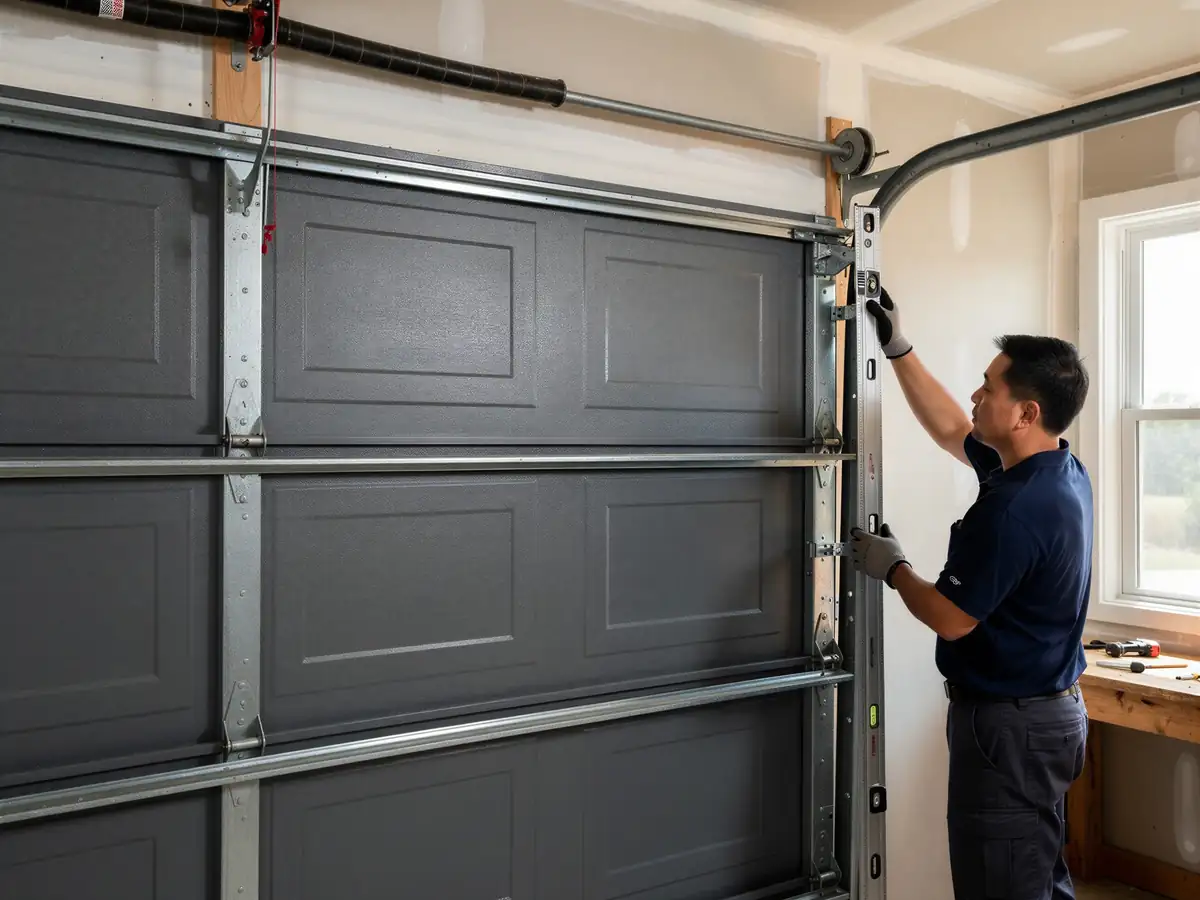
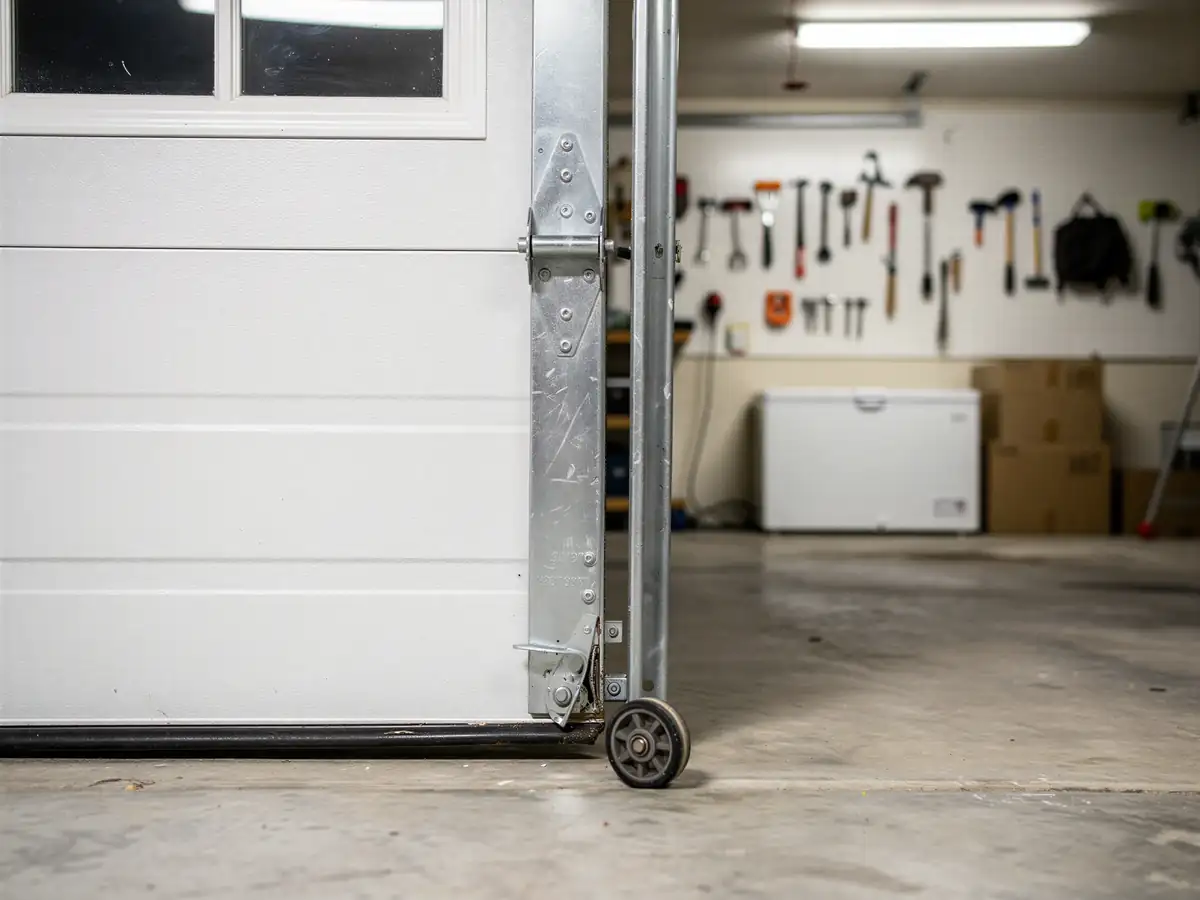
First we check whether the track itself is bent or just the rollers have popped out of it - those are two different repairs. If it's a clean pop-out, we reset the rollers, check the track alignment with a level, and make sure the door runs true before we leave. If the track is bent, especially near the bottom where cars and bikes clip it, we replace that section rather than hammer it straight, since bent galvanized track rarely stays straight once it's been bent once. We also check the rollers and bottom brackets while we're in there - on a door from the early 1980s, if one bracket has gone, the others on the same age hardware aren't far behind, and replacing just the one that failed often means a repeat call in a year or two.
What You Are Seeing
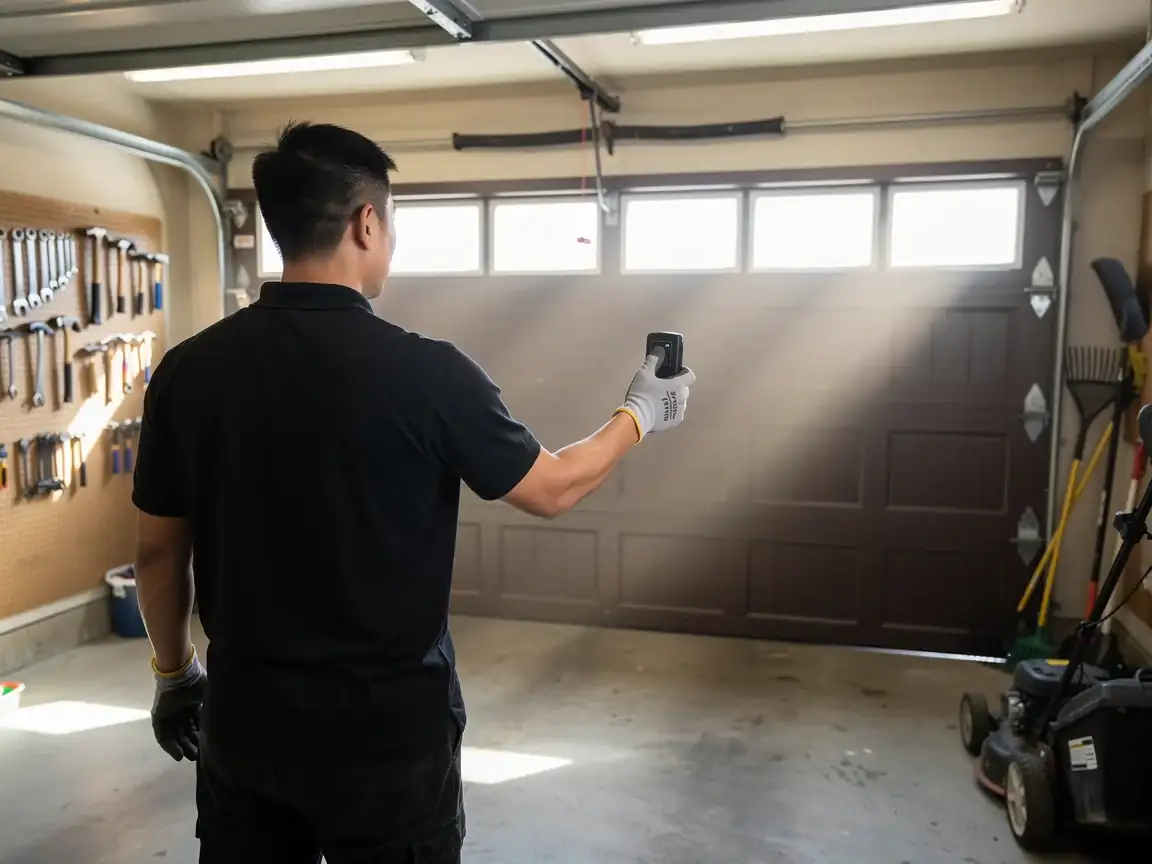
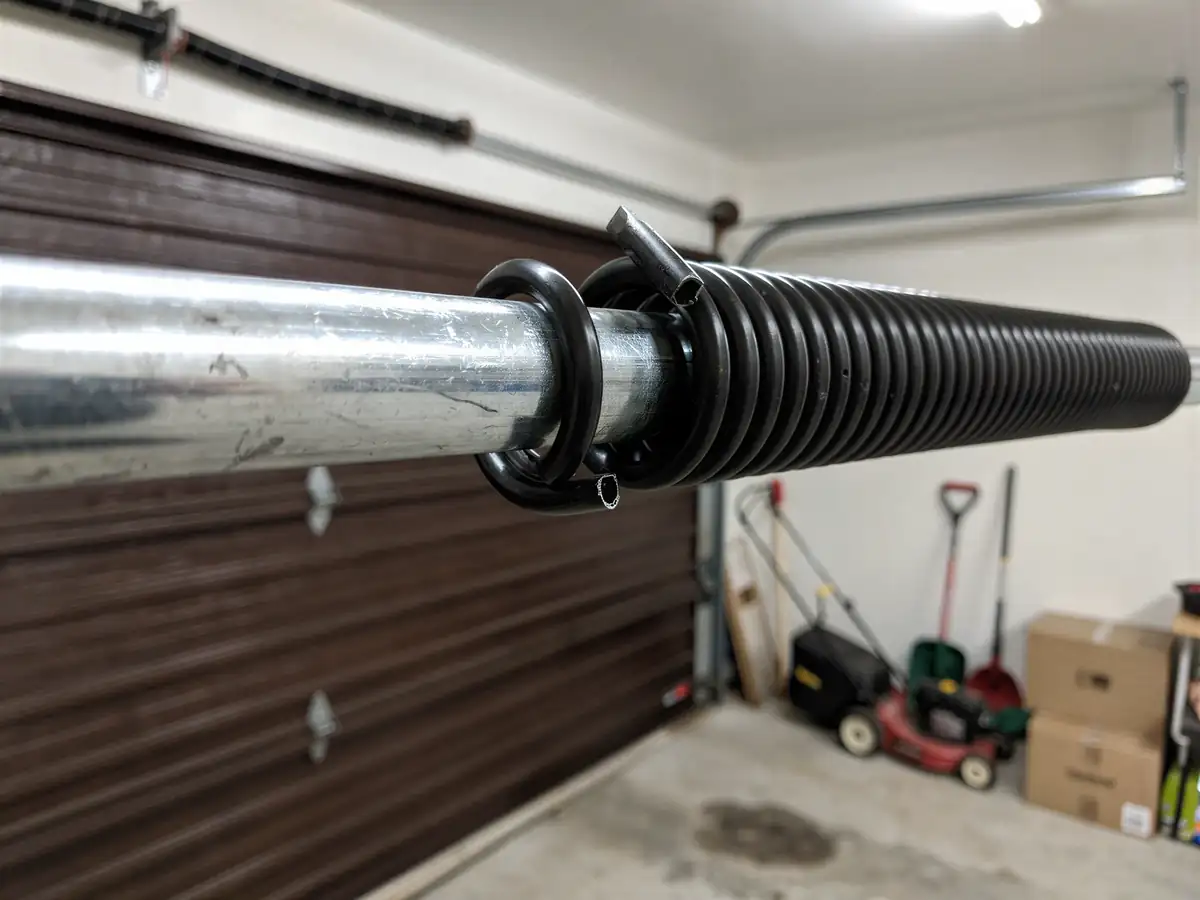
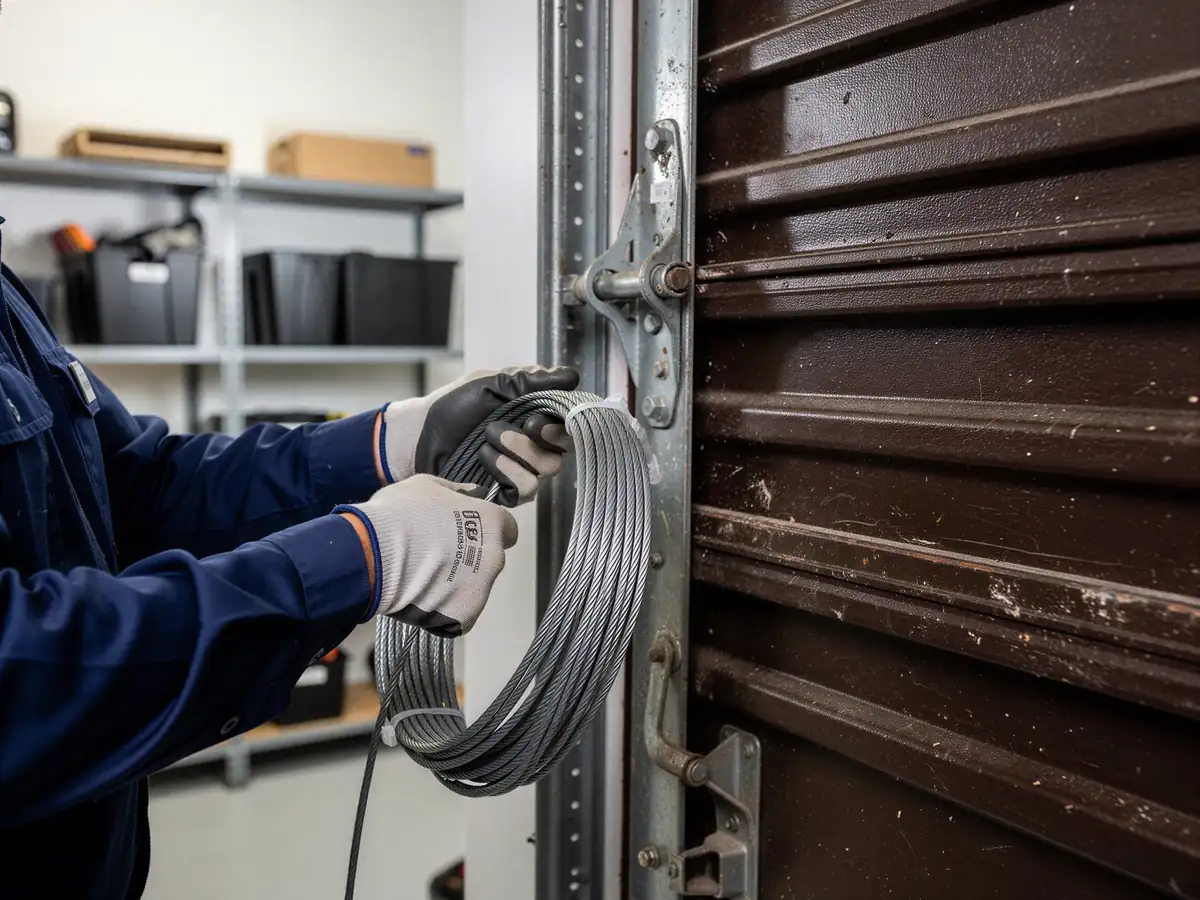
The usual signs: the door hangs crooked in the opening, there's a visible gap where the roller has left the track, or the door binds and grinds partway through its travel instead of running smooth. Sometimes it's subtler - the door closes unevenly, touching down on one side before the other, which tells you the track or roller problem is only on that side. If you hear a pop followed by the door sagging, that's often a cable or roller letting go rather than the track itself failing. Given the age of hardware common in this area, built-up wear rather than a single accident is the more likely story, and it's worth having the whole run checked rather than just the spot that's visibly off.