What You Pay
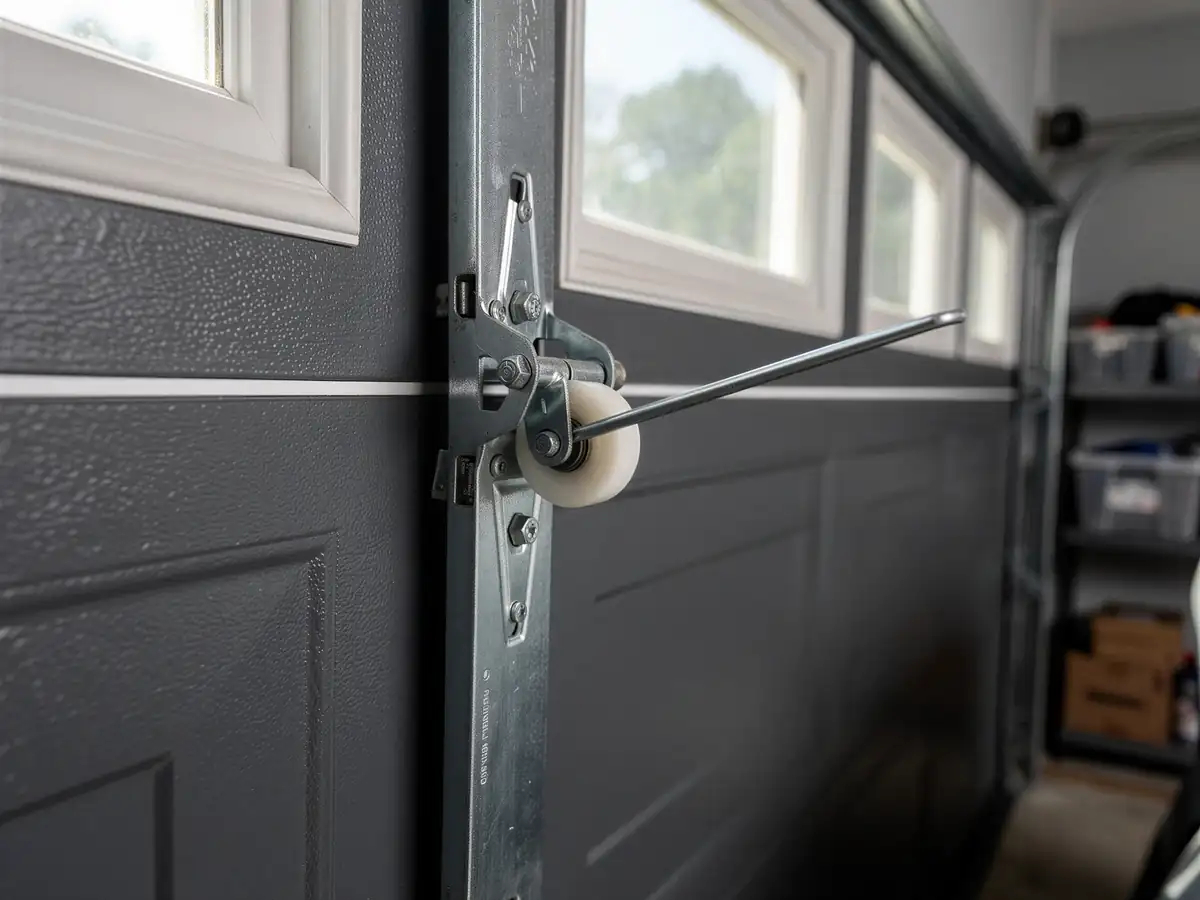
We won't quote a number here, because an off-track door is one of those jobs where the price swings a lot depending on what we find once we're under it. A door that popped one roller out of the track on a cold morning is a different job than one where a cable snapped, the door racked sideways, and a panel bent on the way down. If the track itself got bent when the door jumped it, that track gets replaced, not hammered back into shape - bent track that's been "fixed" will jump again.
What we can tell you is what drives the number up or down: how many rollers came out, whether the cable or spring let go at the same time, whether the opener forced the door against a jammed track before anyone shut it off, and whether the panel took a hit. A single-roller pop with no other damage is a short call. A door that's come most of the way off both tracks, with a bent panel and a snapped cable, is a bigger job and sometimes the point where replacing the door makes more sense than patching it.
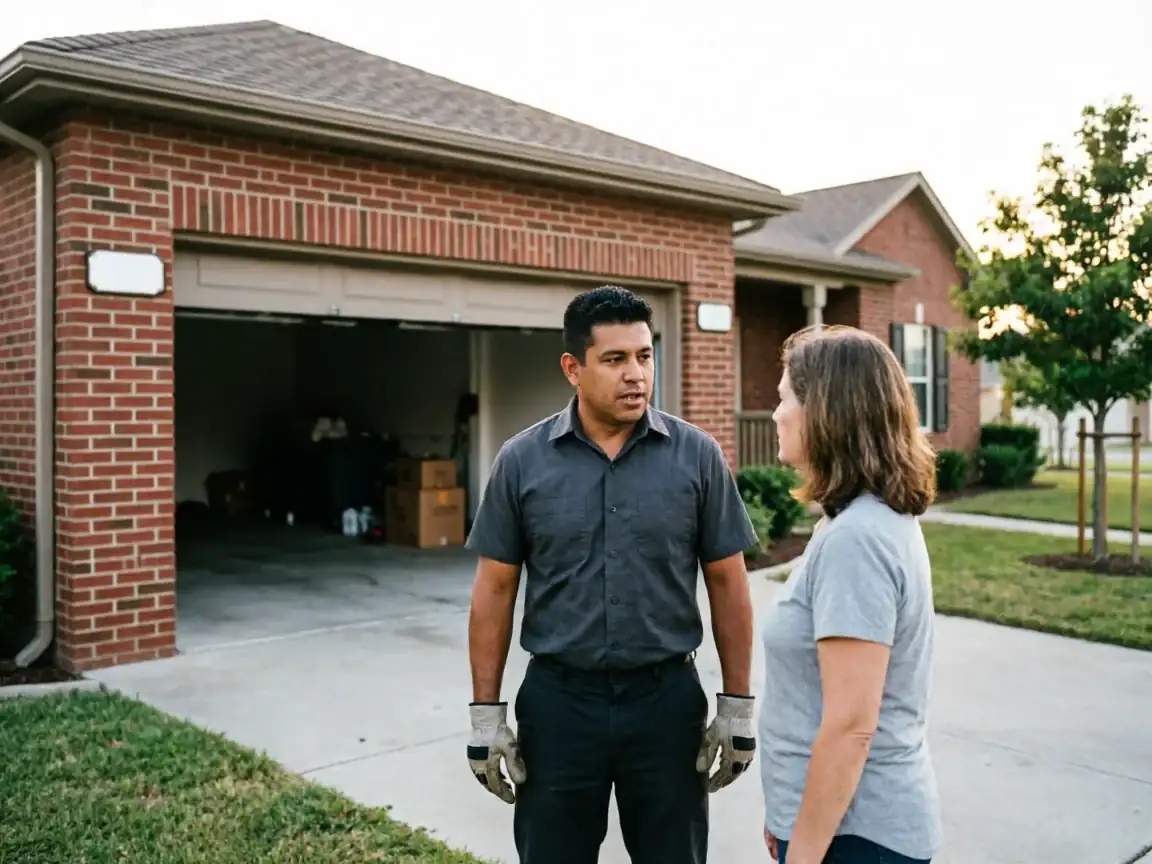
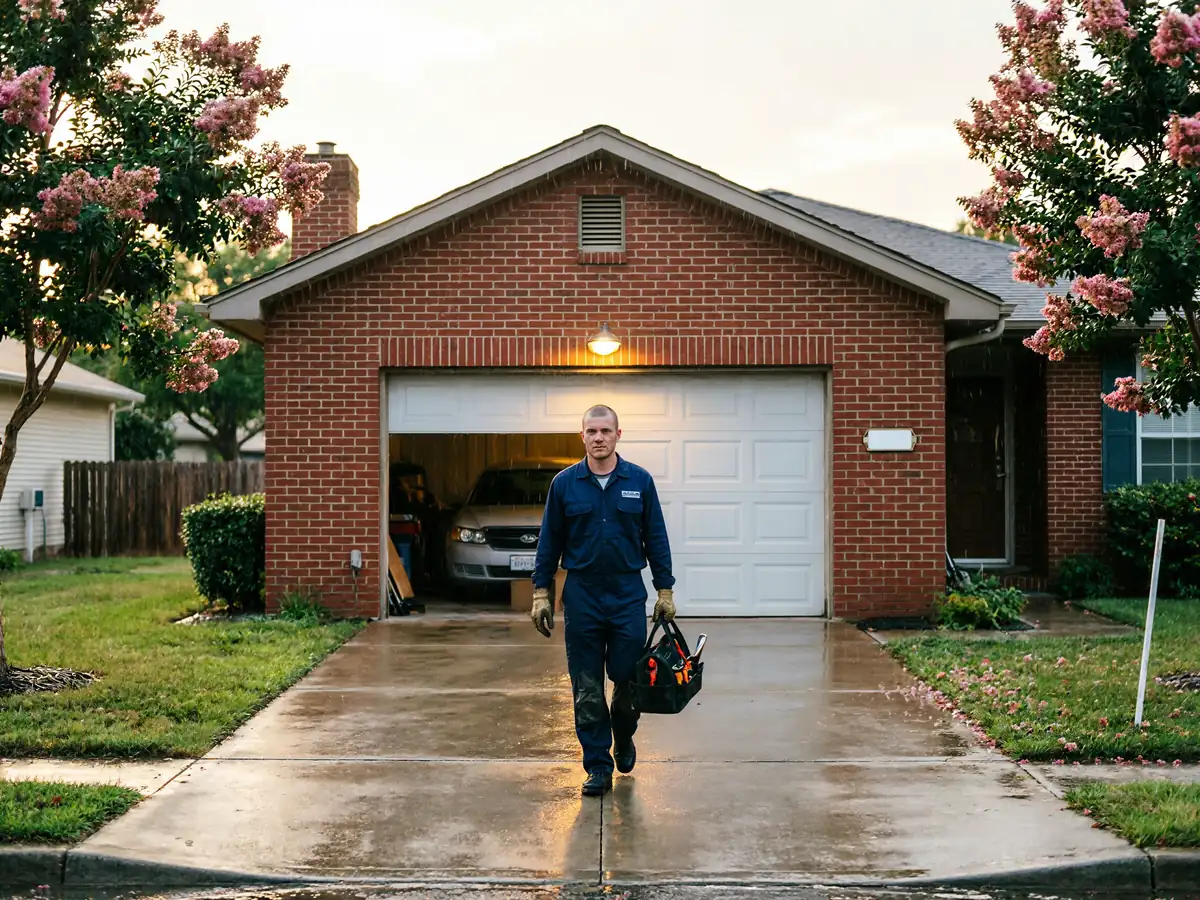
We give you the number before we touch anything, after we've actually looked at the door - not over the phone.
What Causes It Around Here
Hutto's housing runs from 1957 all the way up to 2018, but the median build year lands at 1984, and most of the garage door hardware across the area's nine named subdivisions went in during the 1980s and 90s. That matters because track brackets, rollers, and cable drums from that era weren't built to the tolerances doors get today, and thirty-plus years of opening and closing wears the horizontal track mounts loose before anyone notices.
Hutto sits in a mild climate band with only occasional freeze nights - we're not dealing with the hard freeze-thaw cycles that heave concrete slabs further north. But that doesn't mean temperature plays no role. A cold morning tightens steel cable and stiffens old grease in the rollers just enough that a door already running on a loose track bracket will catch, jump the track, and come down crooked.
The other big driver is simple: a garage door forced against resistance. If a roller is already riding loose and the opener keeps pulling against it, the door walks itself off the track a little more with every cycle until one day it comes all the way off. That's the pattern we see most in homes from this build era.
What You Are Seeing
An off-track door doesn't usually fail quietly
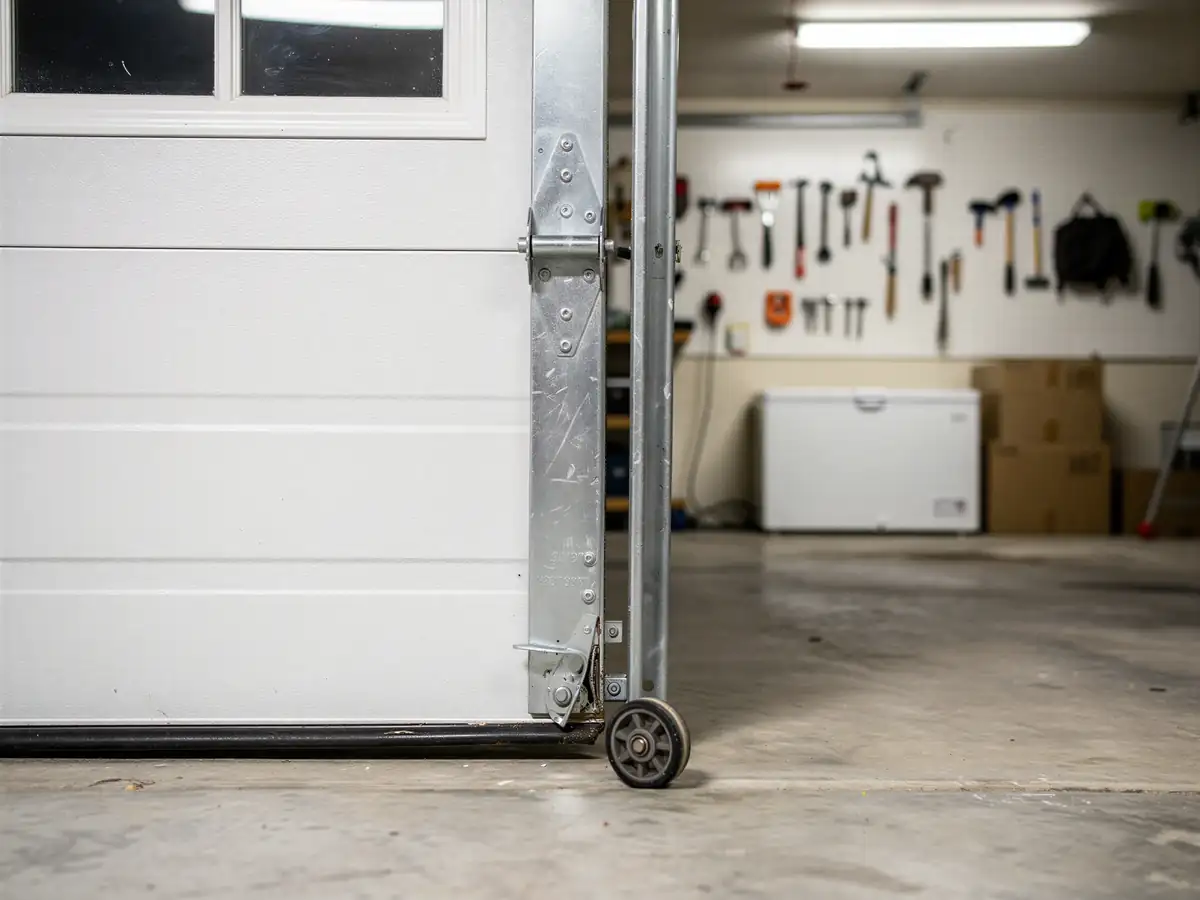
Most homeowners call us after the door is already hanging crooked - one side higher than the other, a gap where the door meets the frame on one edge, or the door stuck halfway open because a roller jumped the track and jammed against the bracket.
Sometimes it's less dramatic
A grinding or popping noise right before the door stops moving, or the opener straining and reversing instead of finishing its cycle. If you hear that and keep hitting the button, you can bend the track further or tear the roller bracket loose from the wood jamb, which turns a track job into a jamb repair too.
The door coming all the way down on one side and stopping on the other is the clearest sign the cable has let go along with the track
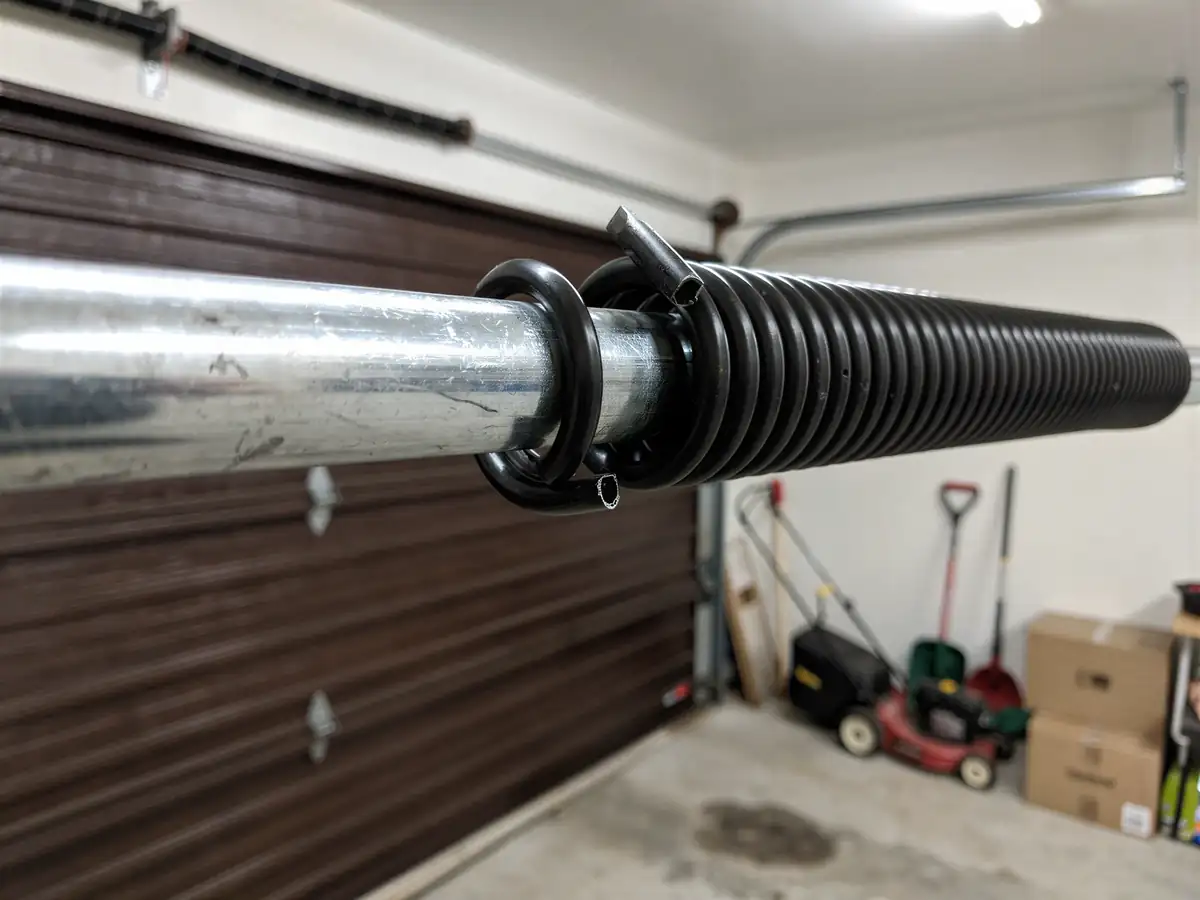
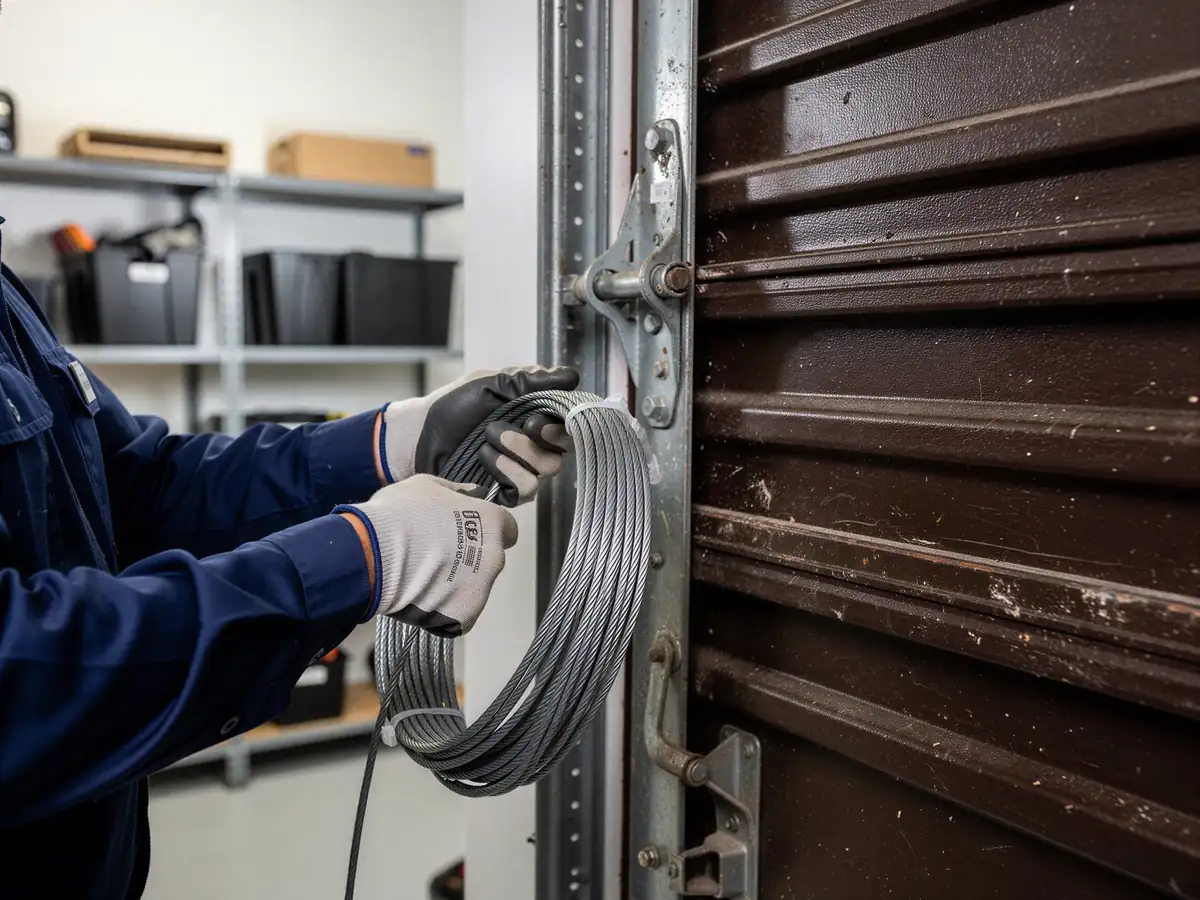
That's not a DIY fix, because a loaded cable or spring under tension can snap back hard. If you see a cable hanging loose, or the door leaning at an angle with a visible gap along one track, leave it alone and call. Don't try to force it back onto the track by hand, and don't keep running the opener against it.
How We Fix It
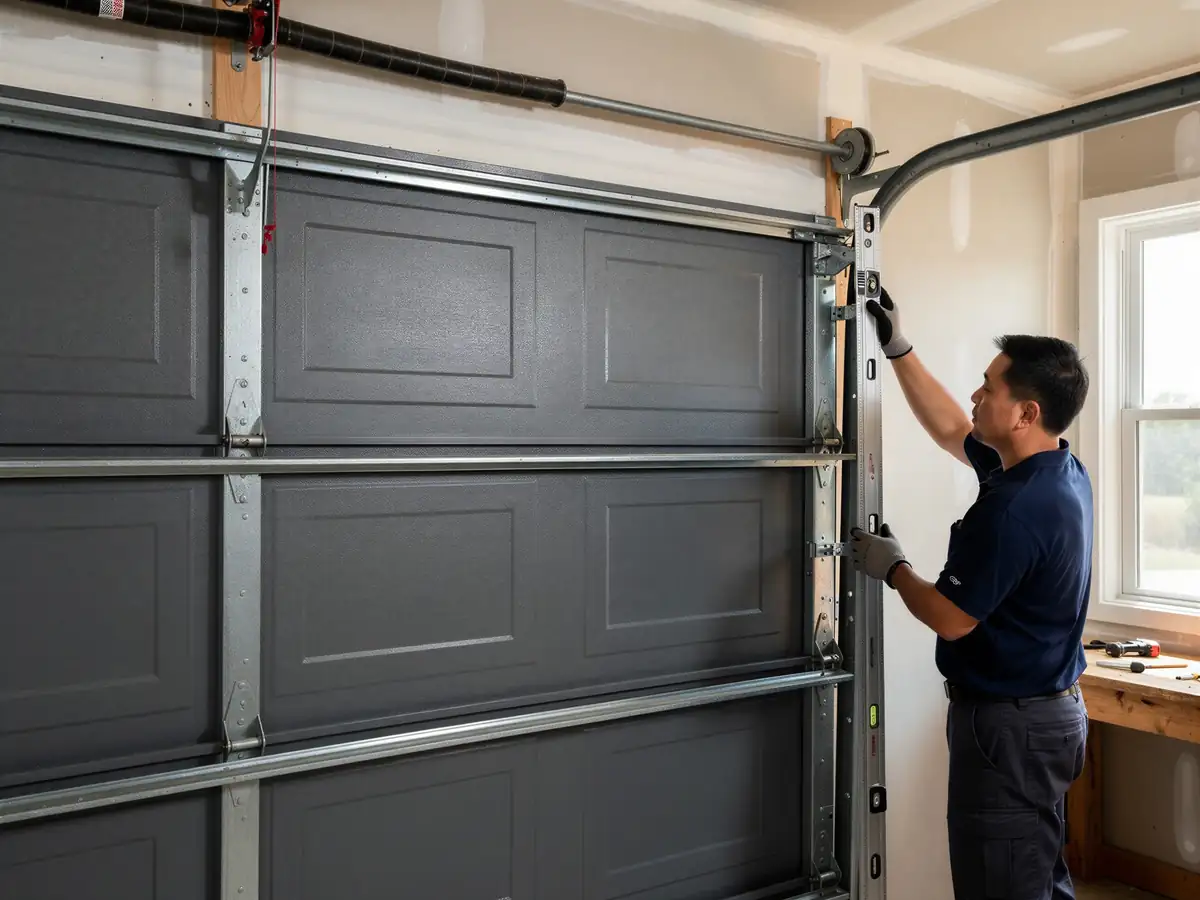
First thing we do is kill power to the opener so nothing moves while we're working. Then we check both tracks for bends - a track that got bent when the door jumped it gets replaced, because hammering it straight just means it jumps again later. We check every roller along both sides; worn or cracked rollers are a cheap fix now and the thing most likely to cause the next off-track call if we skip them.
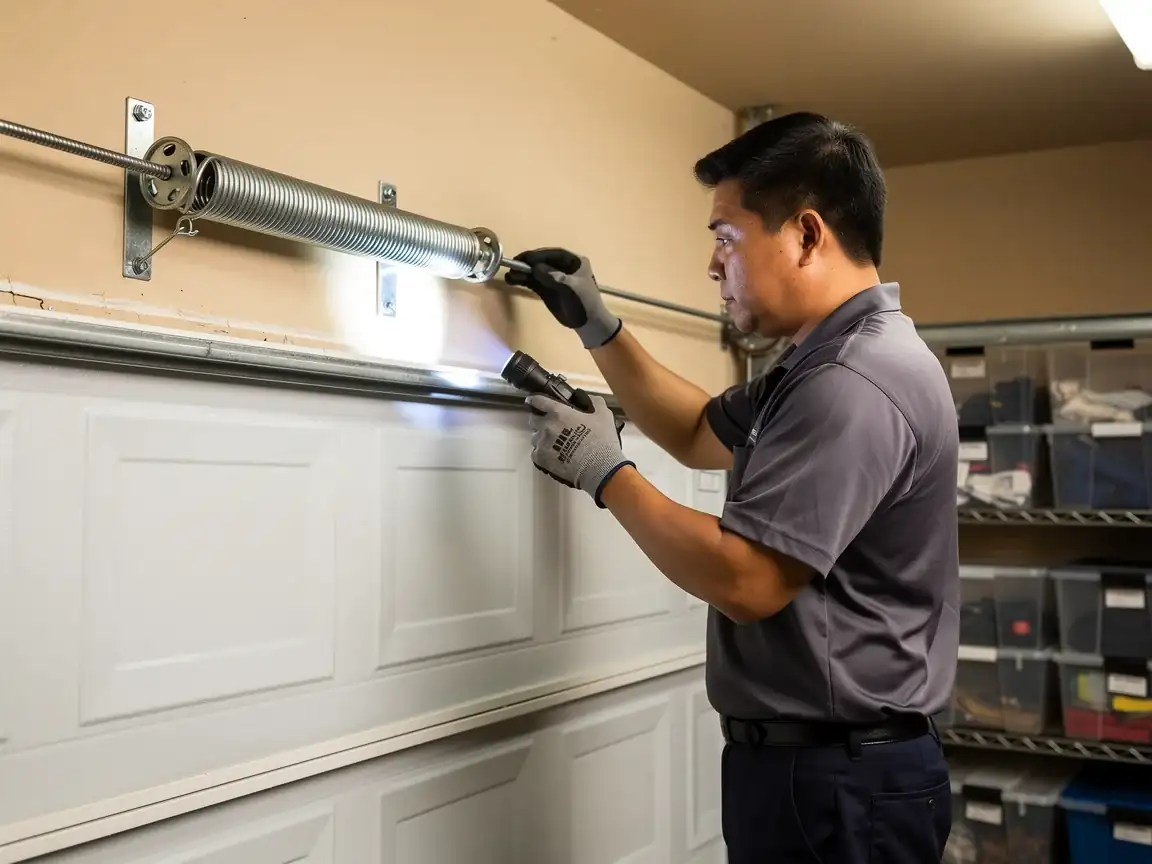
With 17,911 owner-occupied houses across this service area, this is one of the calls we get most, so we carry common roller and track-bracket sizes on the truck for the hardware era that's typical here. If a cable or spring let go at the same time, that gets replaced under tension with the proper bars and clamps - not something to do yourself.
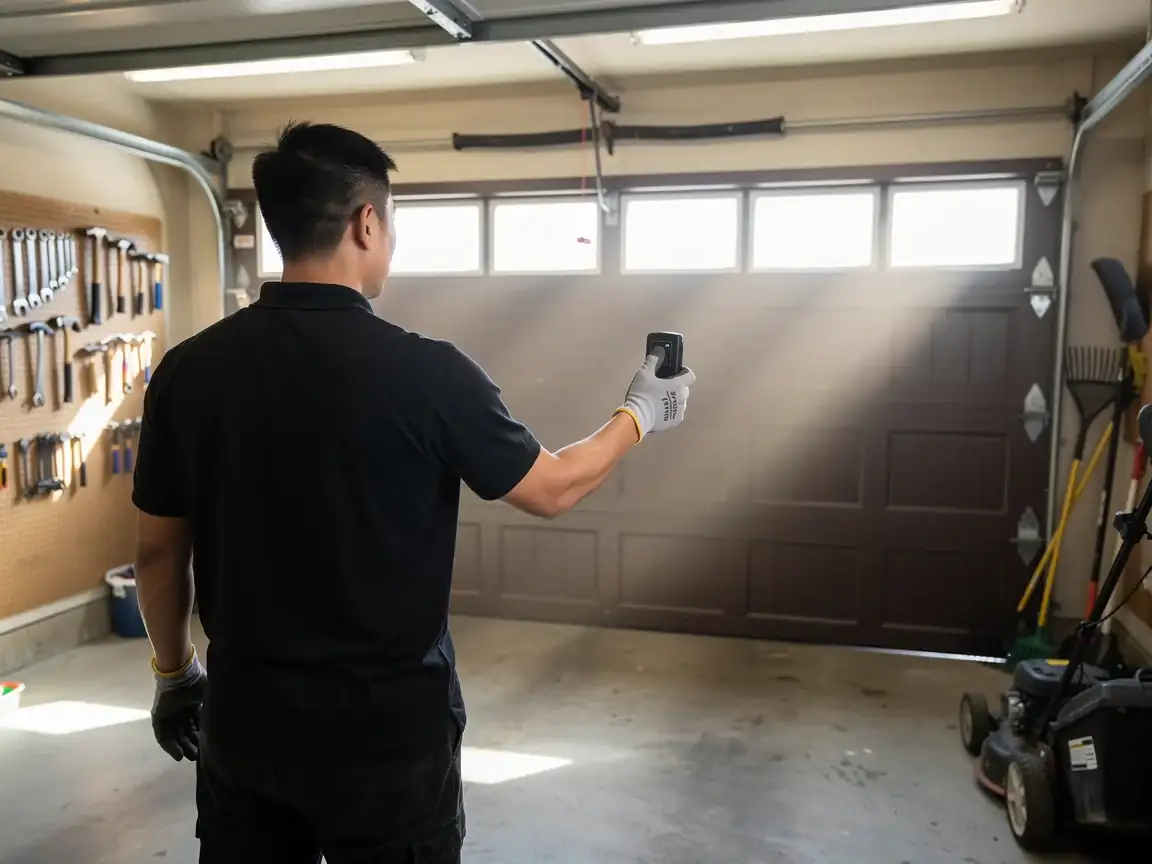
Once the door is back on track and secured, we run it through a full cycle by hand before we ever touch the opener, checking that it travels straight and doesn't bind. Then we reconnect the opener and run it again, watching the travel limits and force settings, since a door that jumped track once is a door whose opener settings are worth rechecking.