Serving Hutto, TX & nearby
(737) 450-3769
Hutto, TX

Openers and Power Cuts: What Hutto Homeowners Actually Deal With

Why older openers in Hutto's 1980s-90s housing stock fail during power cuts, what to do before calling, and what repair or replacement actually costs here.

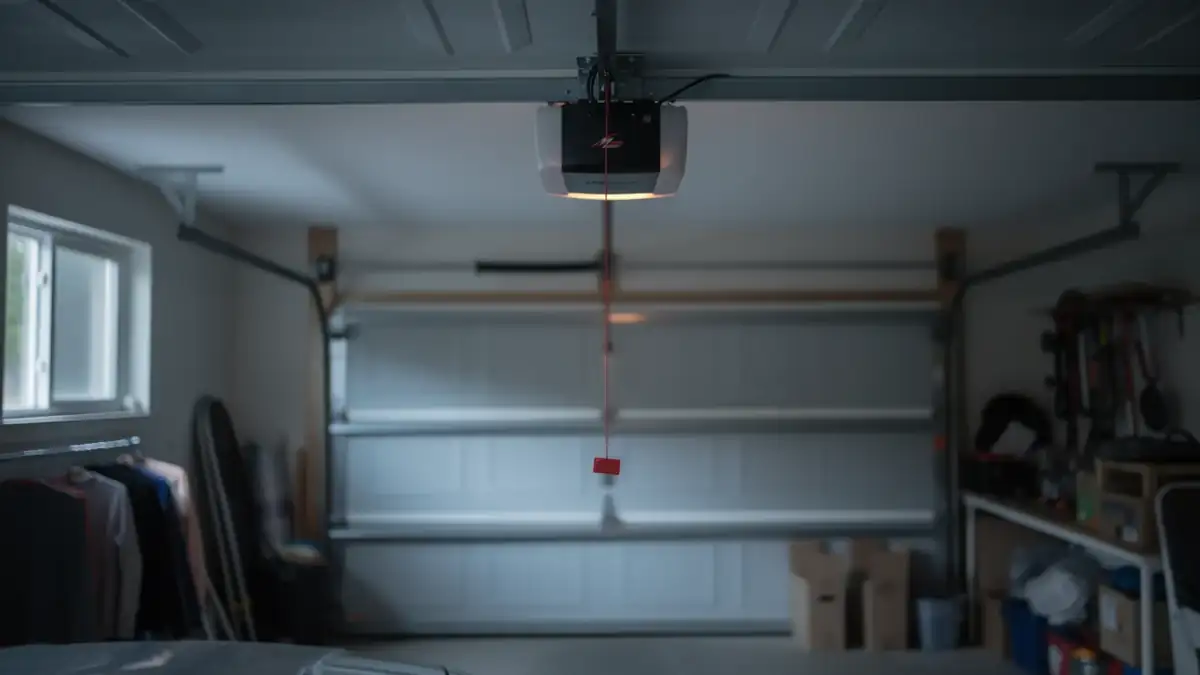
The garage door opener with a red emergency release cord hangs above a closed garage door.

The Problem

Housing in this service area went up mostly between 1957 and 2018, with the median build year sitting at 1984 and the bulk of the stock dating to the 1980s and 90s across the nine named areas we work in. That matters for openers specifically. A unit installed when a house was built in the mid-80s is a chain-drive model with a half-horsepower motor, a light bulb that's probably dead, and no battery backup of any kind. When the power goes out, that door does not open or close until the power comes back or someone pulls the manual release cord. We get calls where someone's been stuck with the car inside for an hour because they didn't know the red cord existed. The second issue is wear timing. A 35-to-40-year-old opener chassis, gears, and circuit board are well past the point where a repair makes sense most of the time. The motor housings from that era also weren't built with surge protection in mind, so a dirty power cut - the kind that flickers instead of cleanly dropping - can fry a board that a newer unit would shrug off. None of this is dramatic. It's just old equipment meeting an ordinary outage.

Doing Nothing For Now

If your opener is original to a house built in the 1980s or early 90s, waiting isn't automatically wrong. A chain-drive unit that still runs quietly and closes flush doesn't need to be replaced on a calendar. What we'd flag is any opener that's started grinding, reversing without reason, or failing to close all the way - those are signs the drive gear or the logic board is going, and in an outage you won't have the option to just wait it out, because the manual release only lets you move the door by hand, not power it. If you're in one of the owner-occupied houses that make up most of this area's 33,440 households, the honest move is to test the manual release once so you know it works before you need it in the dark. We don't push replacement on a unit that's functioning. We do tell people straight when a board is too far gone to fix, because sourcing a matching circuit board for a 1980s chassis usually isn't realistic - parts for openers that old simply aren't stocked anymore, and that's the one real limit on what we can do with an old unit.

What You Pay

We're not going to put a number here we can't back up - pricing depends on whether it's a board repair, a full opener swap, or a battery-backup add-on, and that's a conversation we have on the call once we know the opener model and what's actually failed. What we can tell you is how to think about it. With a median household income of $86,477 across this service area, most of the households we see are weighing a repair against a replacement rather than treating either as an easy yes. If your opener is original to a mid-1980s build, patching a dying board often costs close to what a new unit with battery backup runs, which changes the math. If it's a newer install from the 2000s or later, a targeted repair usually makes more sense. Ask for the breakdown before you agree to anything, and ask specifically whether battery backup is included or extra - for a house in this area that's seen its share of power cuts, that's the part worth paying for.

How Local Conditions Play In

This area sits in a mild climate band with only occasional freezes, not a hard freeze-thaw cycle that cracks concrete or seizes metal. That means openers here aren't fighting the kind of cold that kills lubricant and swells wood the way a harder climate does. The bigger factor is simply age meeting ordinary grid hiccups. Across the owner-occupied houses in this area - 17,911 of them - a large share still run the opener that came with the house, and houses built when the median year here was 1984 are now at the point where opener electronics are the first thing to fail, independent of weather. If you're out toward about 4 miles southwest, or anywhere else in the service area, the pattern's the same: older opener, no backup power, and a manual release cord most people have never touched. The freeze risk here is mild enough that we don't push winterizing services that make sense in colder regions - that would be solving a problem this climate doesn't really hand you.
How it works

From “it’s stuck” to “it’s fixed”

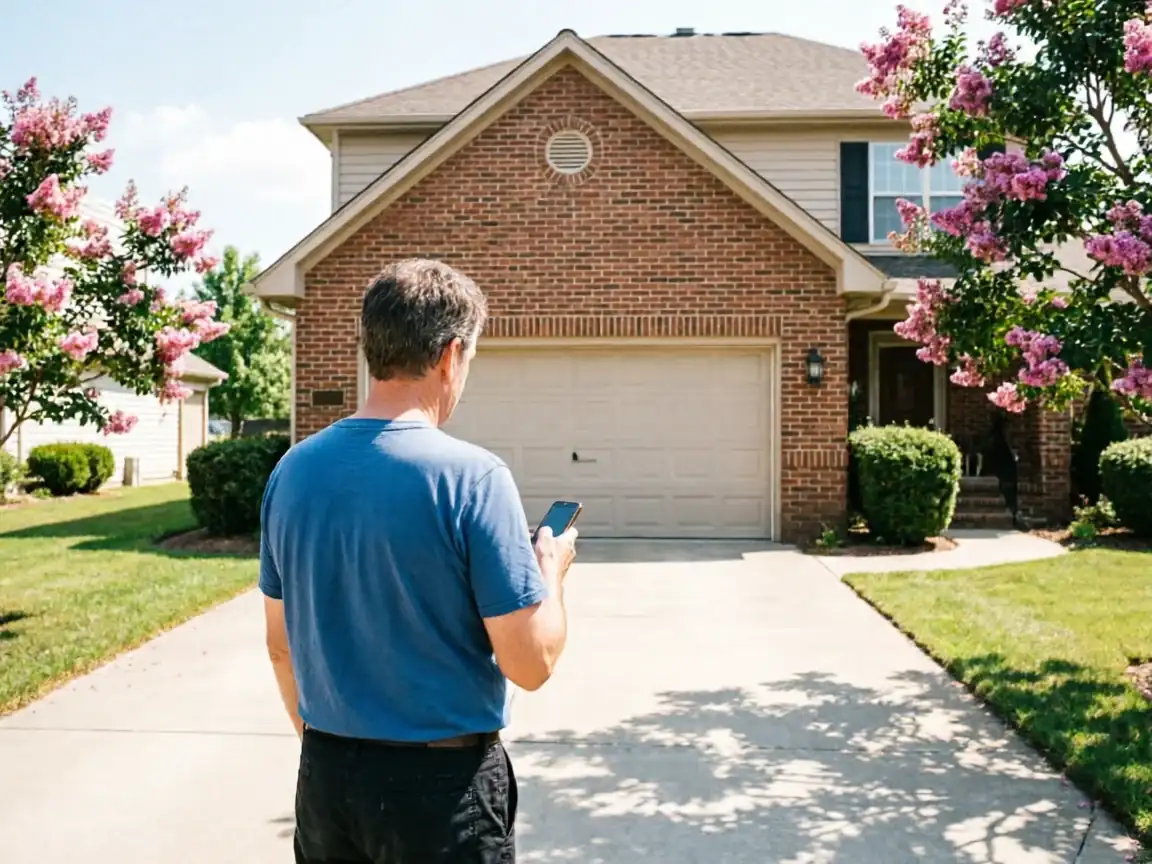
A man in a blue shirt stands in a driveway holding a phone, facing a house.

Tell us what’s wrong

Describe the symptom - won’t open, loud bang, opener runs but the door won’t move.

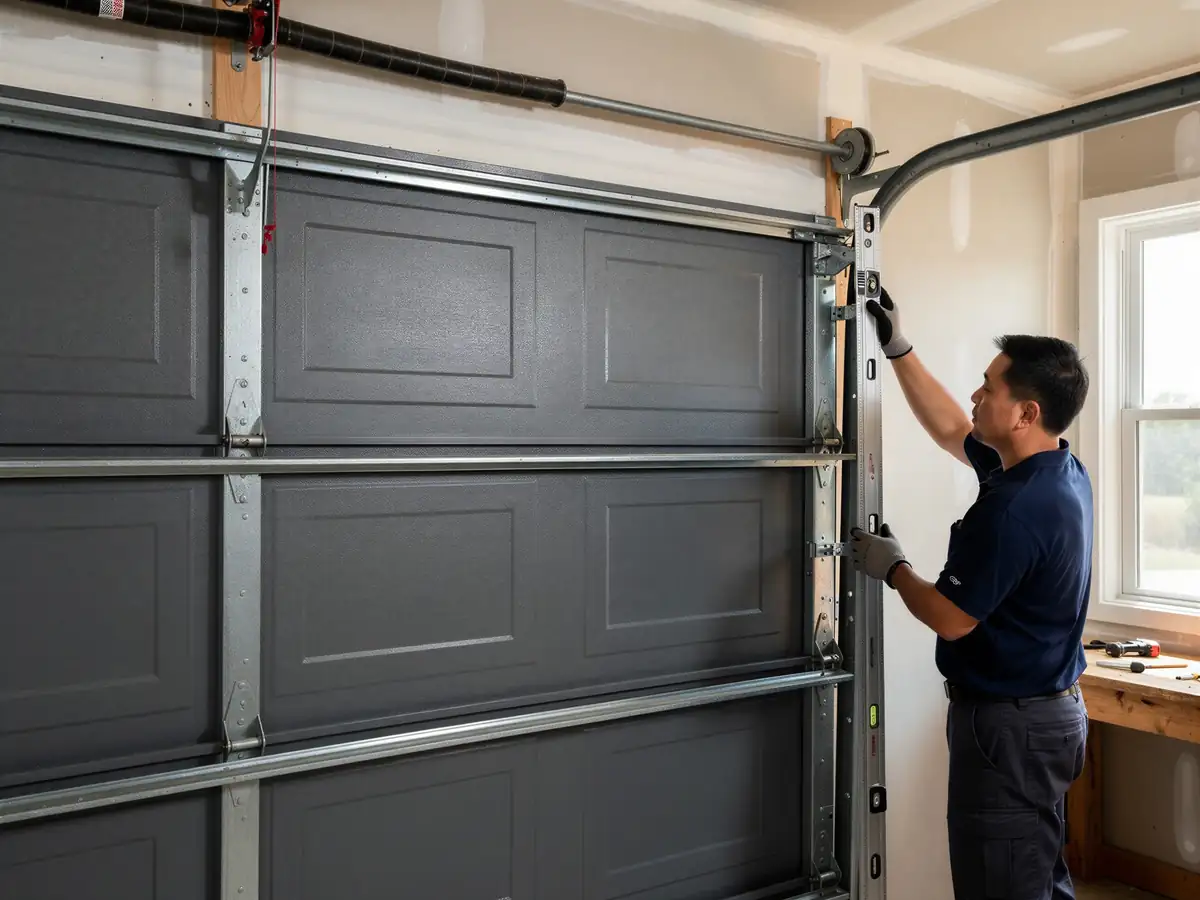
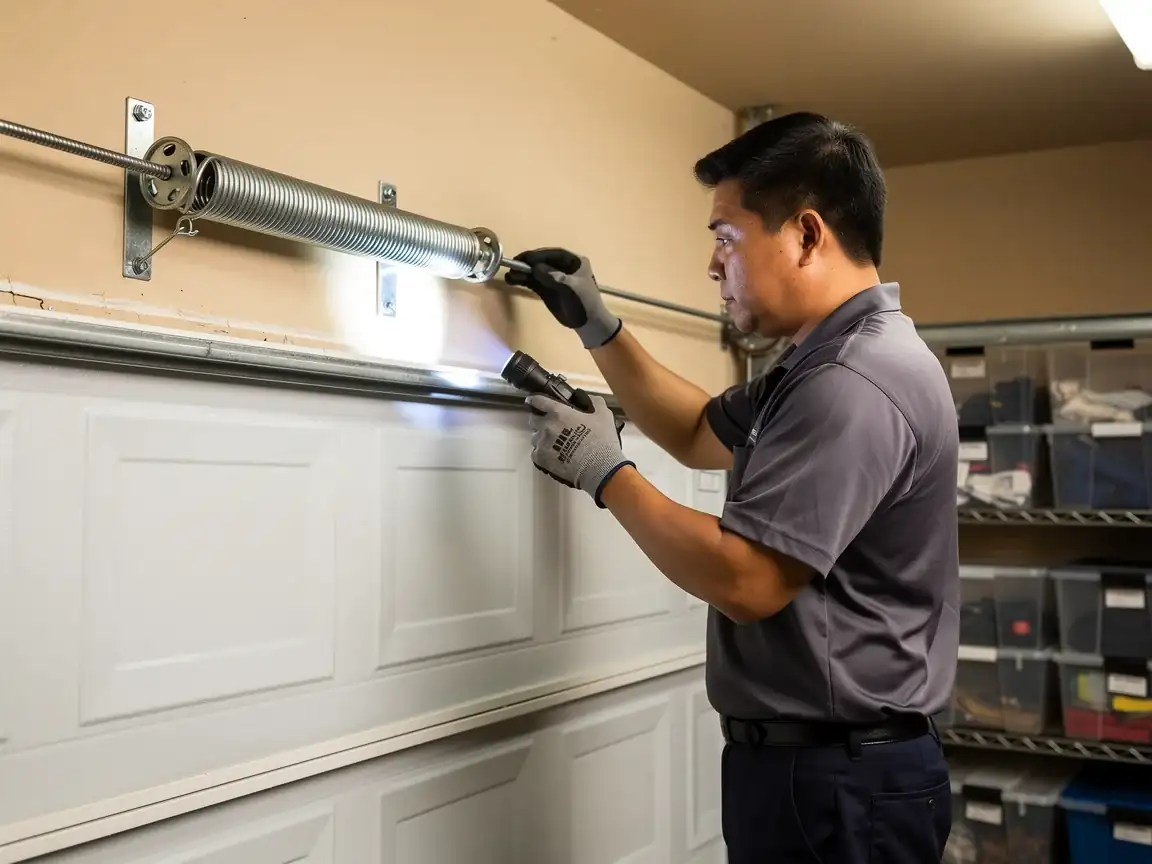
A technician inspects a garage door torsion spring with a flashlight.

On-site diagnosis

A technician tests the door under power and by hand and finds what actually failed.

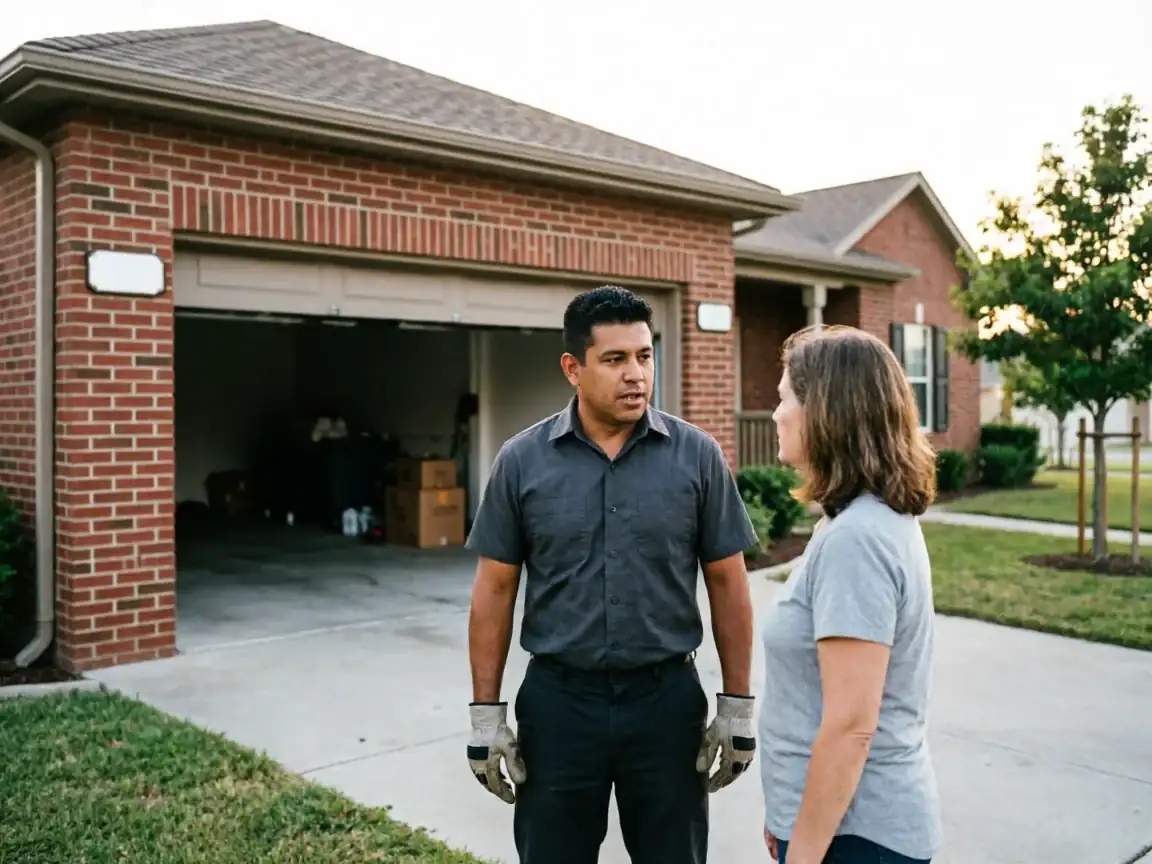
A technician wearing gloves talks to a woman in front of a brick house with an open garage.

Clear, up-front plan

You get the fix that’s needed and what drives the cost - before any work starts.

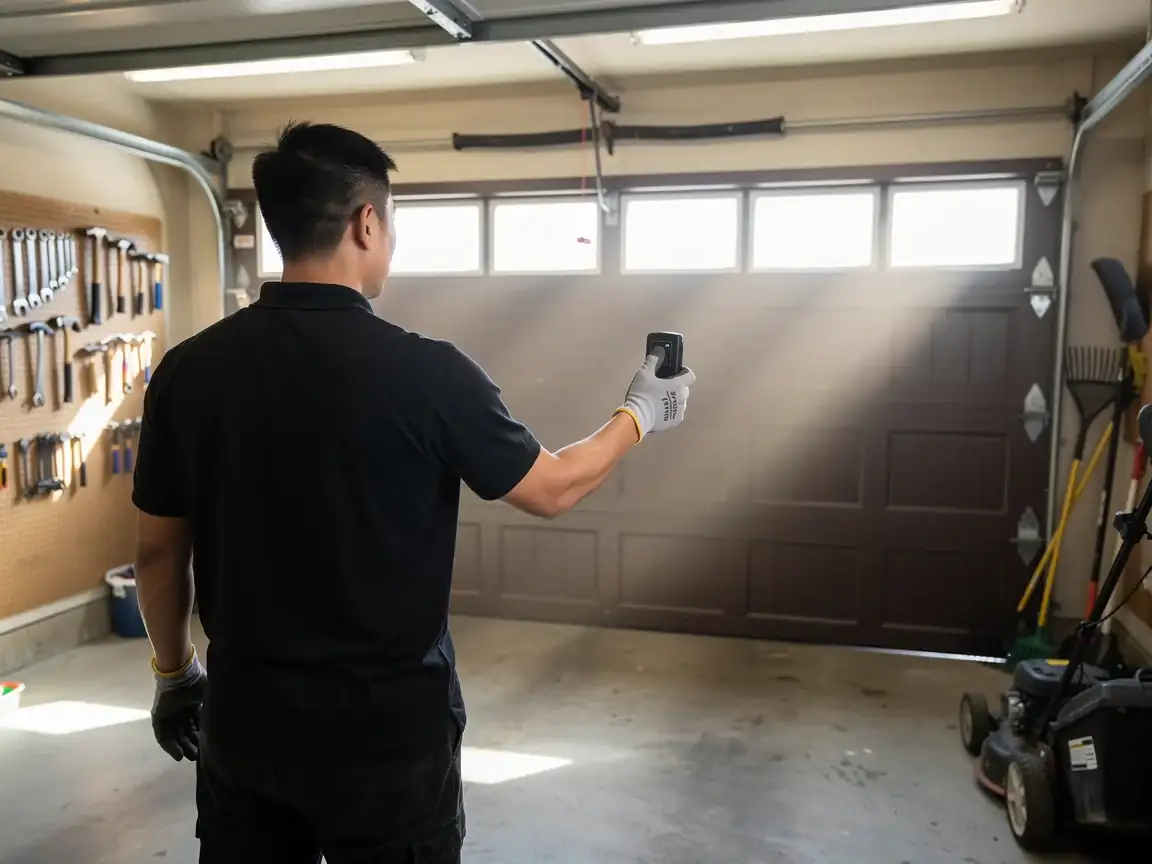
A technician in gloves holds a garage door opener remote, facing a brown garage door.

Repaired & tested

The repair is done, the door is set true and tested, and the work area left clean.

Next step

Not sure which repair your door needs in Hutto, TX? Describe what it’s doing - every job starts with a diagnosis.

How we work

What to expect

Diagnosis firstEvery visit starts by finding what actually failed - not a pre-written parts list.
The right part for the doorSprings and openers matched to the door’s weight and age, so the fix holds up.
Straight answersWhen a repair makes more sense than a replacement - or the reverse - you hear it plainly.
Clean, careful workTension released safely, hardware set true, the door tested under power before we leave.
What we do

Garage Door Services

Repair and installation work for Hutto homes and businesses.

Questions

Frequently asked

Straight answers about garage door repair in Hutto. Still unsure? Ask us directly.

Why does my garage door opener stop working completely when the power goes out?

Most openers in this area's older housing stock are standard chain-drive units with no battery backup, so when the power drops they simply stop responding to the wall button or remote. The door isn't locked, though - every opener has a manual release cord that disconnects the carriage so you can lift the door by hand.

Is it worth adding battery backup to an old opener?

If your opener dates to a 1980s or 90s build, it's usually more cost-effective to replace the whole unit with a newer model that has backup built in than to retrofit backup onto old electronics. We can tell you which makes sense once we see the model.

How do I find the manual release cord on my garage door?

It's a red cord hanging from the trolley on the track that runs along your garage ceiling. Pulling it down disconnects the door from the opener's carriage so you can lift and close it by hand during an outage. Pull it toward the opener to reconnect once power's back.

My opener is original to my house from the 1980s - should I replace it before it fails?

If it still runs smoothly with no grinding, hesitation, or partial closes, you don't need to replace it on a schedule. The concern is that parts for openers that old are hard to source, so when something does go, repair often isn't realistic and replacement becomes the only option anyway.

Ready to get your garage door sorted?

Tell us what it’s doing and where you are in Hutto - we’ll take it from there.

Request a QuoteCall