What You Pay
We don't post a flat number here because spring jobs aren't flat. A single torsion spring on a standard door is a different job than a matched pair on a heavier insulated double door, and the wire gauge and drum size change what we carry on the truck. What we can tell you is what drives the cost: whether it's one spring or two, whether the cable or drums took damage when the spring went, and whether your opener needs a reset afterward. If you're calling because a cable snapped along with the spring, that's a different repair than a clean spring break with the door otherwise sound.
One honest note: if your torsion bar, drums, or end bearing plate are worn out along with the spring, replacing just the spring is a short-term fix. We'll tell you straight if that's what we're looking at instead of quoting a spring-only job that won't hold.
Given the age spread of homes in this area - built anywhere from 1957 through 2018, with most dating to the 1980s and 90s - we see a wide range of spring sizes and mounting styles on service calls, which is part of why we quote on-site rather than over the phone.
What Causes It Around Here
Torsion springs fail from cycle count, not from one bad day. A spring rated for roughly 10,000 cycles wears down every time the door opens and closes, and a lot of the housing stock in this area - most of it built in the 1980s and 90s, with some homes going back to 1957 - is now carrying original or first-replacement springs well past that mark. Nobody replaces a spring on a schedule; it just lets go, usually on a cold morning or after a stretch of hard use.
The climate here sits in a mild band with occasional freezes, which is easier on steel than a true cold-winter climate, but it isn't nothing. A cold snap stiffens the coil and adds load right as a spring that's already near the end of its life gets asked to lift a heavy insulated door one more time. Humidity swings over the year also work rust into the coil gaps on older springs, especially ones original to houses from the 1980s stretch of construction, and rust-weakened steel breaks sooner than clean steel under the same load.
Put those two things together - a lot of aging stock and a climate that cycles between dry heat and damp cold spells - and spring failure is one of the most predictable calls we get.
What You Are Seeing
The door won't lift, or it lifts a few inches and stops
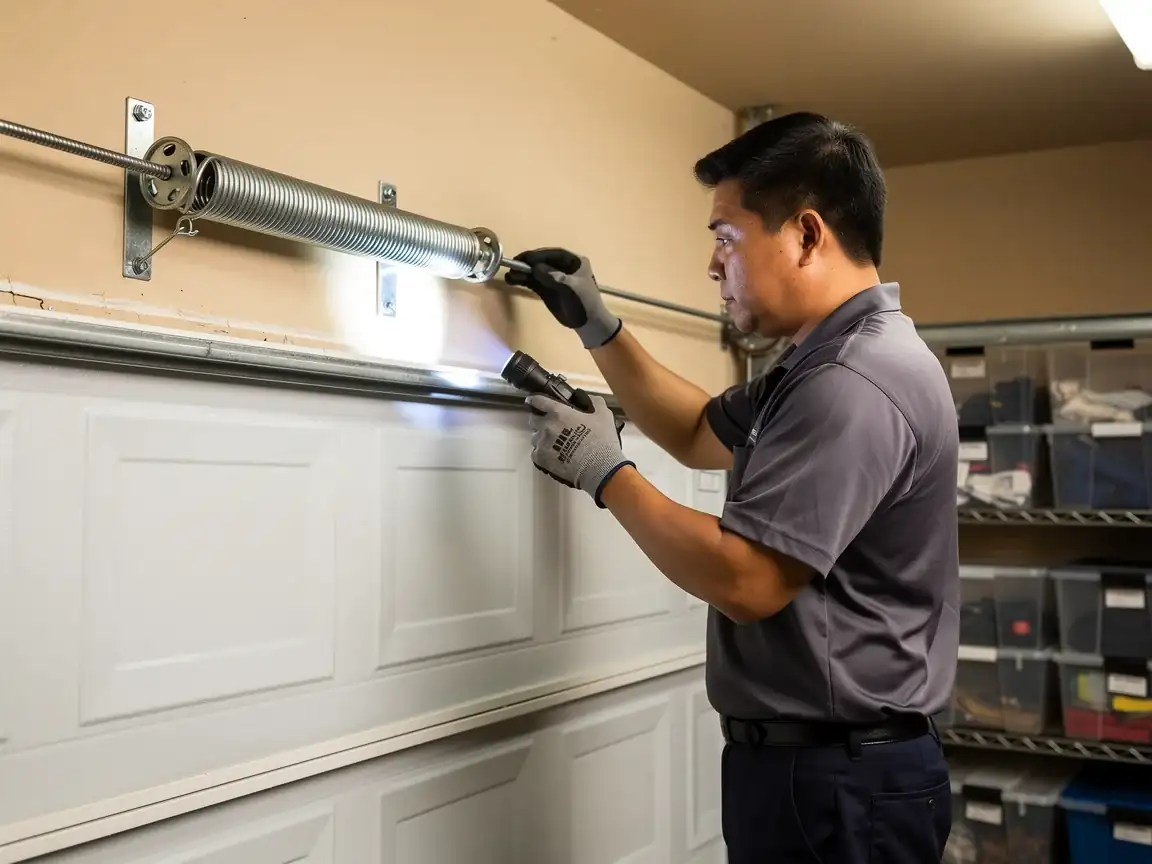
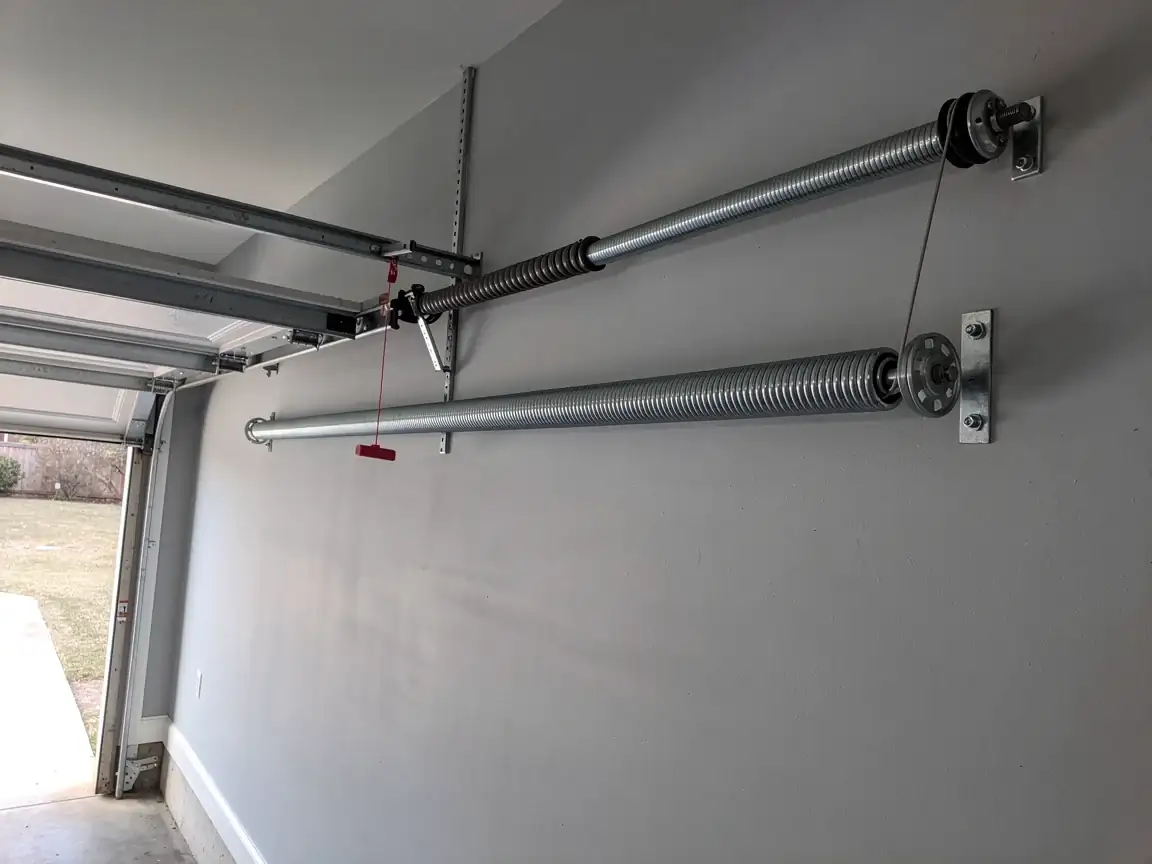
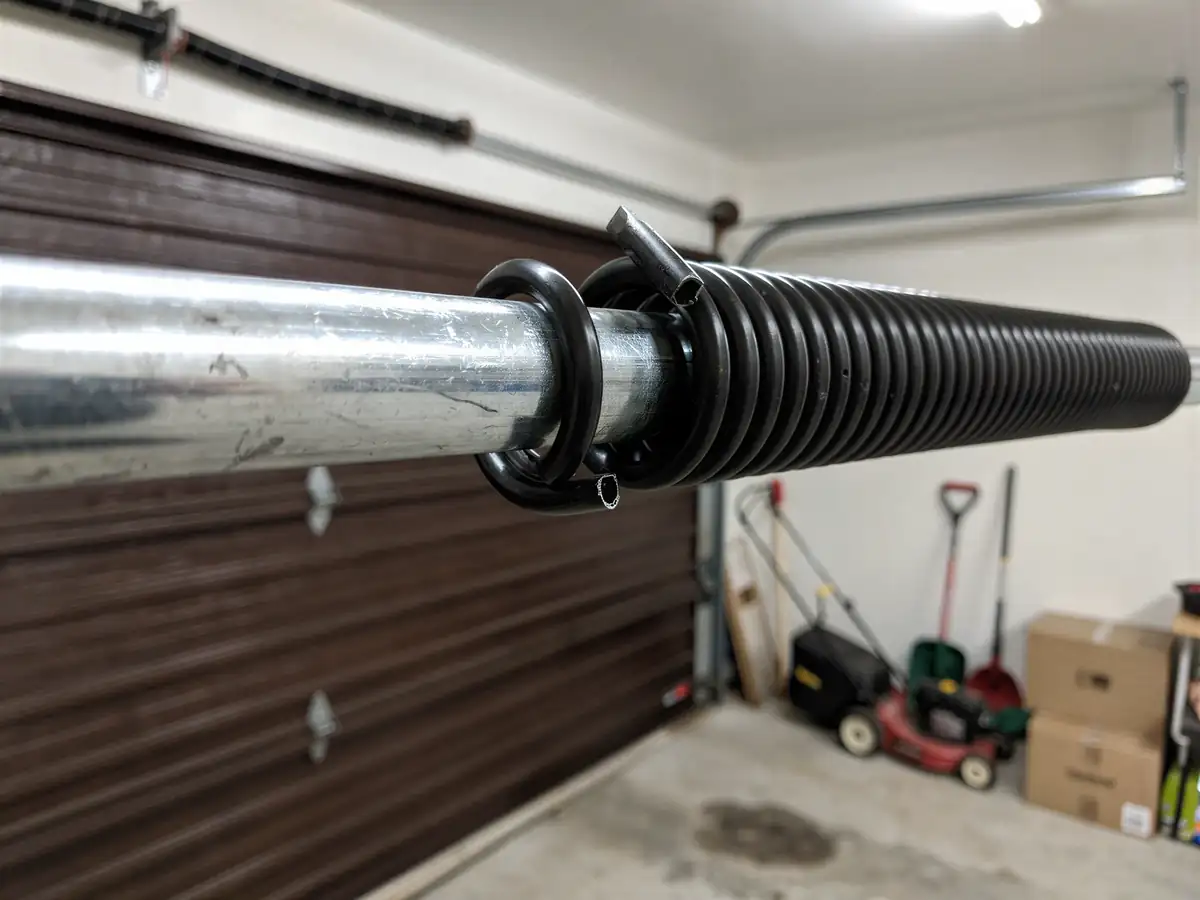
If someone tried the opener before calling, you might hear the motor straining or see the door shudder and reverse - that's the opener trying to do a spring's job and failing. A visible gap in the coil, usually right at the top near the center bracket, means the spring has already separated; don't try to open the door by hand or with the opener once you see that gap.
Sometimes it's not a full break yet
A loud bang from the garage, often early morning when the metal is coldest, is frequently a spring letting go under load even if nobody touches the door right after. If the door feels unusually heavy when you lift it manually, or one side drops faster than the other when you release it a few inches, that's a spring losing tension, not a balanced failure.
On double doors with two springs, one can go while the other still holds some tension
The door will open but it'll be crooked, straining on the side with the working spring. Keep the door closed and call rather than cycling it; running a garage door on one spring or no spring stresses the opener drive gear and the cables, and that turns a spring job into a bigger bill.
How We Fix It
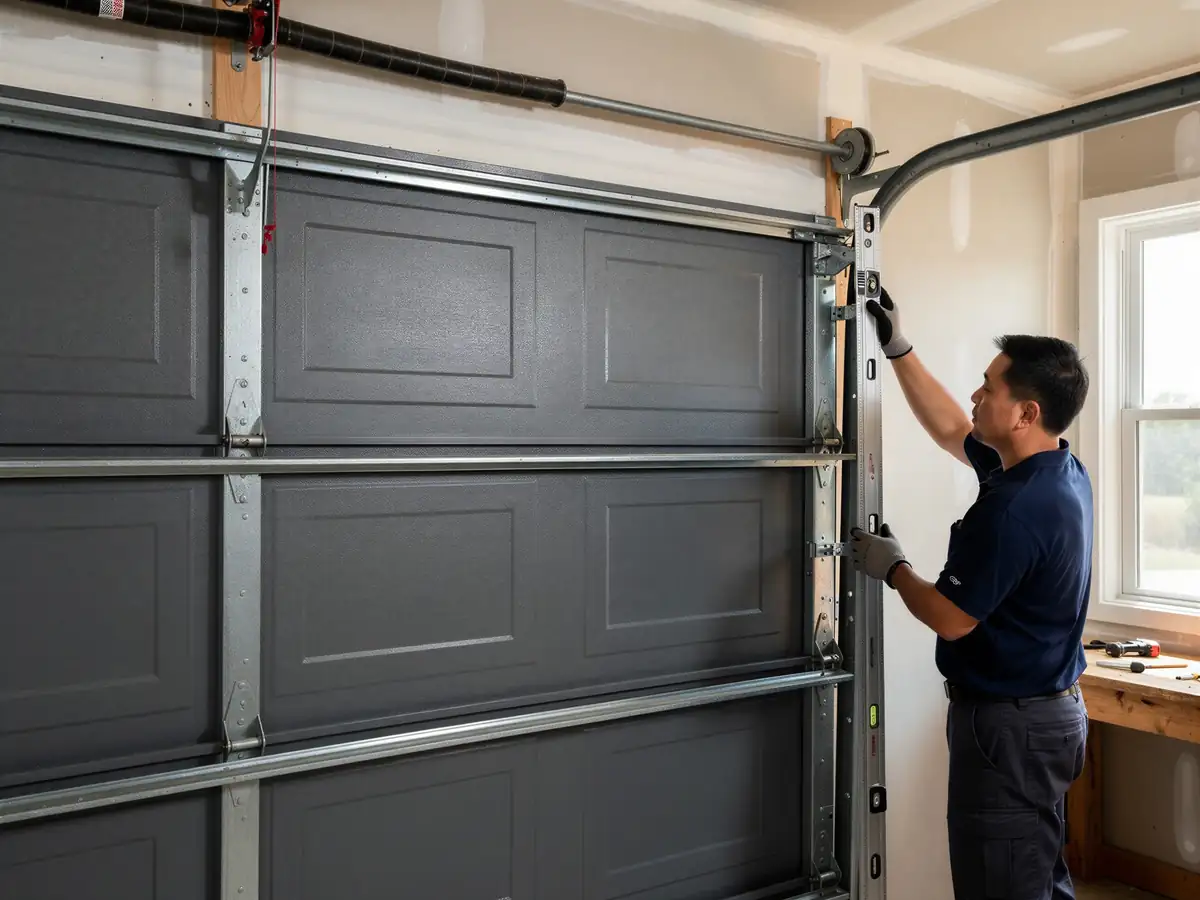
We size the spring to your door's weight and drum setup rather than swapping in whatever's closest - wrong wire gauge or wrong wind direction leaves a door that opens unevenly or slams down too fast. On a double door we replace both springs together even if only one broke, since the other is carrying the same cycle count and is close behind it.
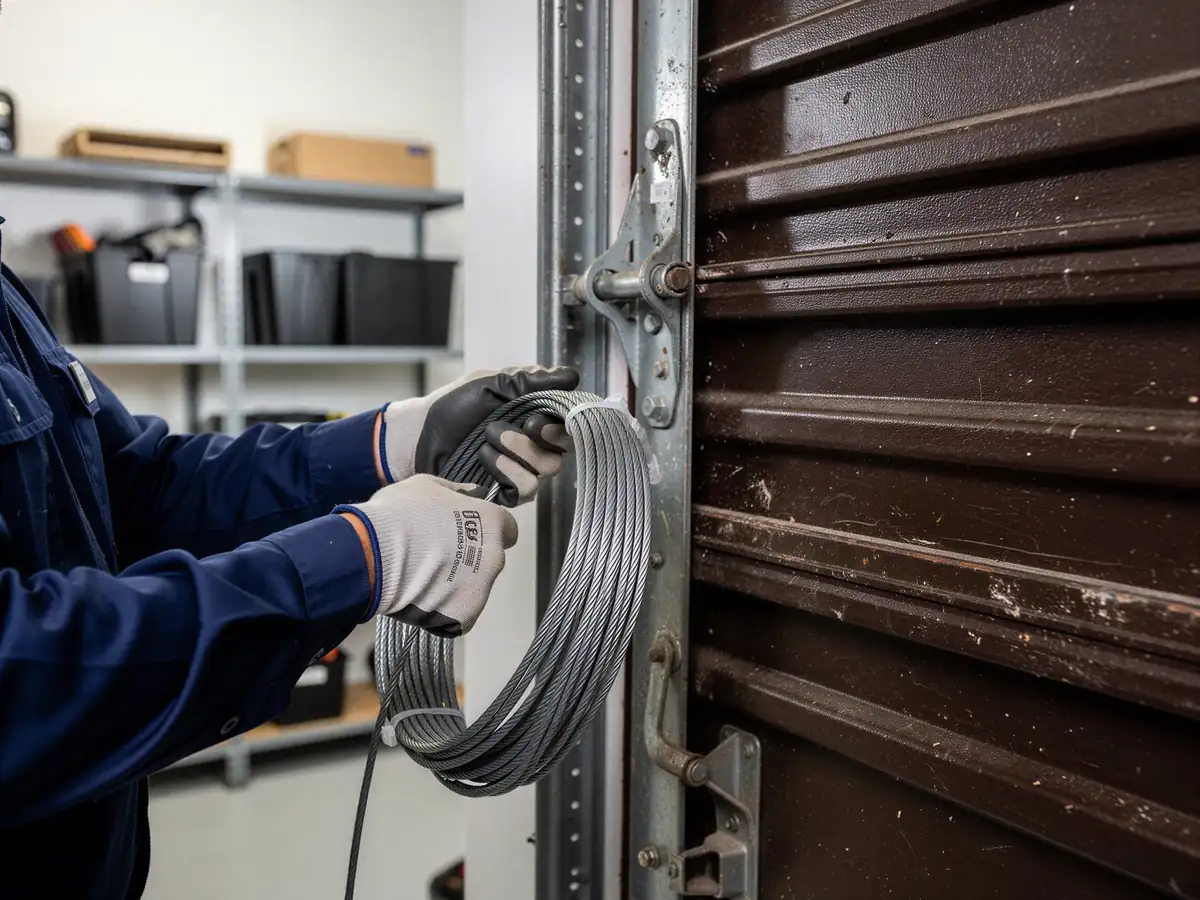
Part of the job is checking what the spring break did on its way out: cables, drums, and the center bearing all take a jolt when a spring snaps, and we inspect those before closing up rather than after a callback. If the bearing plate or cable shows wear from the failure, we'll flag it and quote that separately rather than bundling it in without asking.
Once the new spring is set, we balance the door - lift it by hand to roughly waist height and it should hold there on its own. That balance test is the real check, more than whether the opener can move the door, because an opener will force a poorly balanced door for a while before the strain shows up in the gears or the belt.