Where This Job Goes Sideways
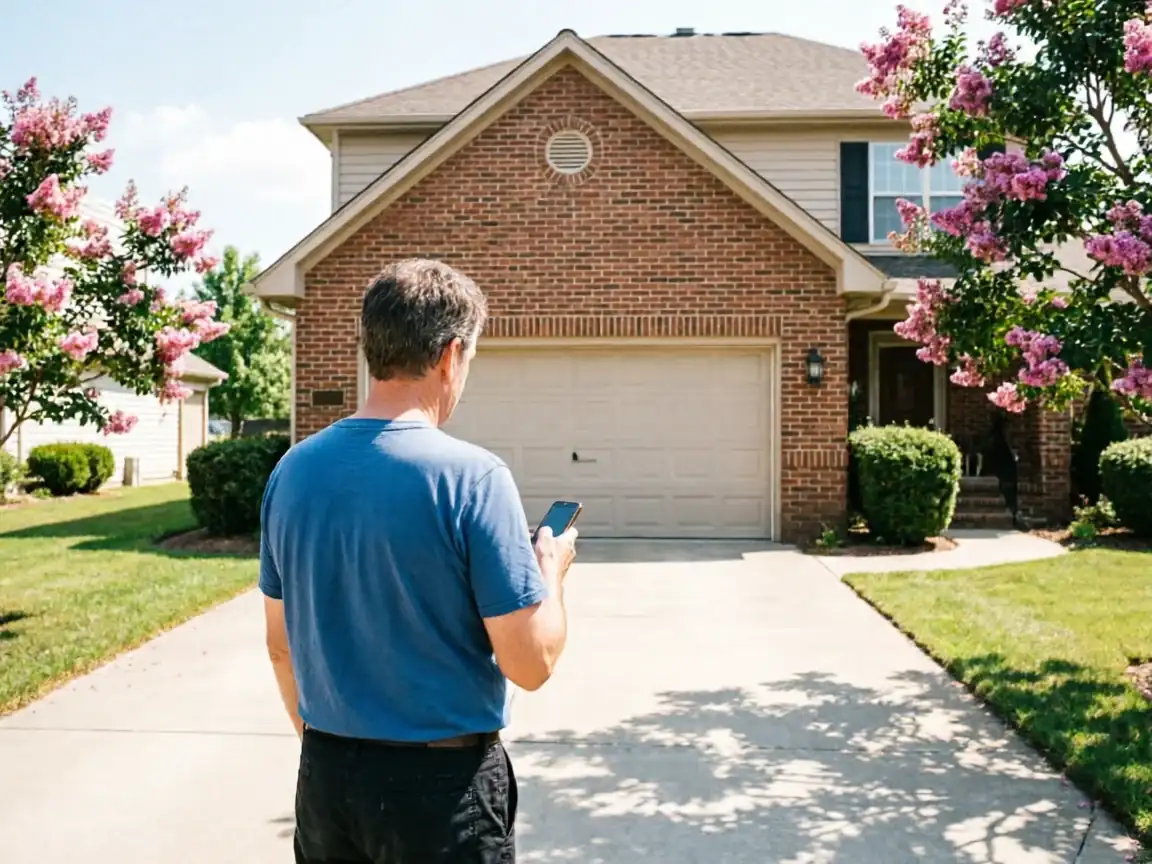
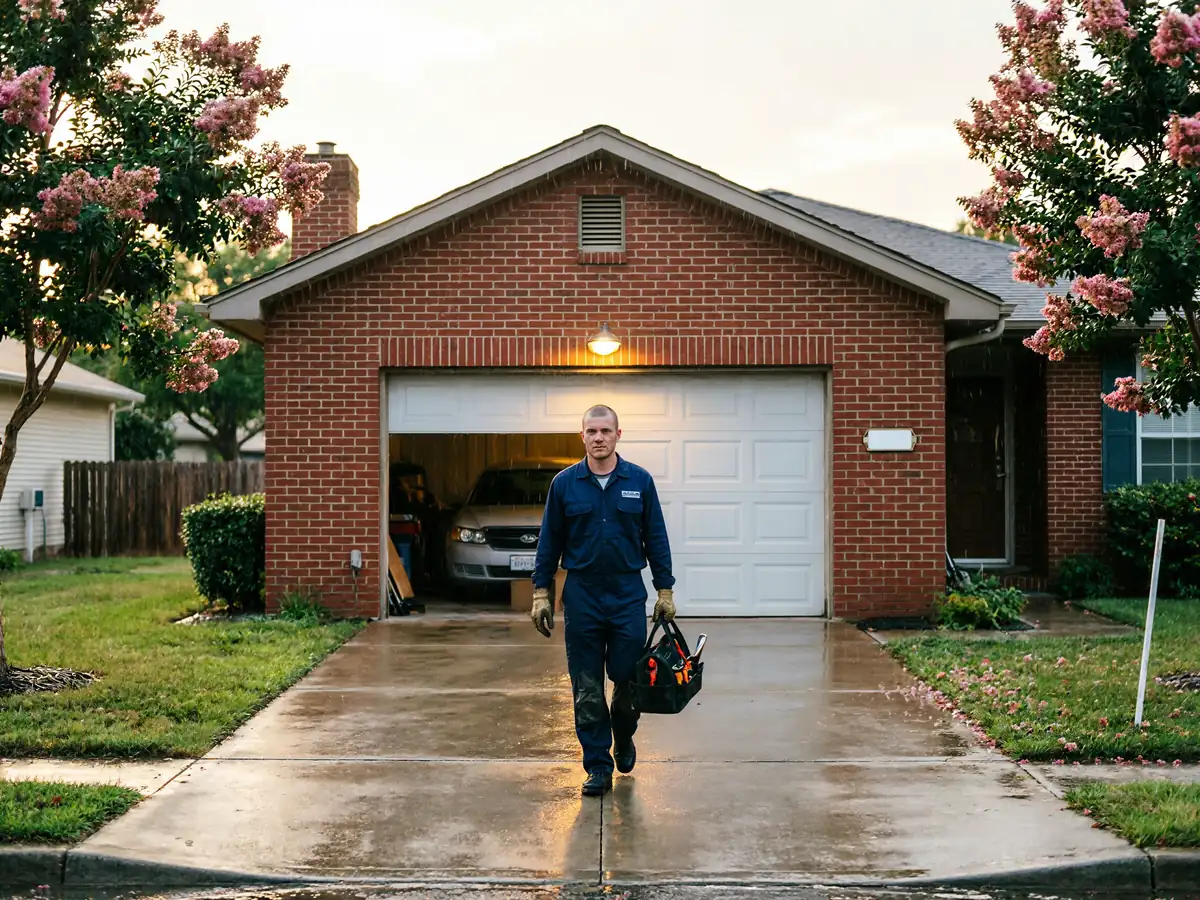
Fifteen miles is the number that matters before any tool comes out of the truck. That's the drive from our Hutto shop to Serenada, and it means a repair call here isn't a drop-everything trip the way it might be for a street two minutes from the shop. We build the day around it: when you call, we're figuring out what parts a 1981-era door is likely to need before we ever turn onto your road, because showing up without the right torsion spring size or the right opener gear means a second trip, and a second trip means another fifteen miles each way.
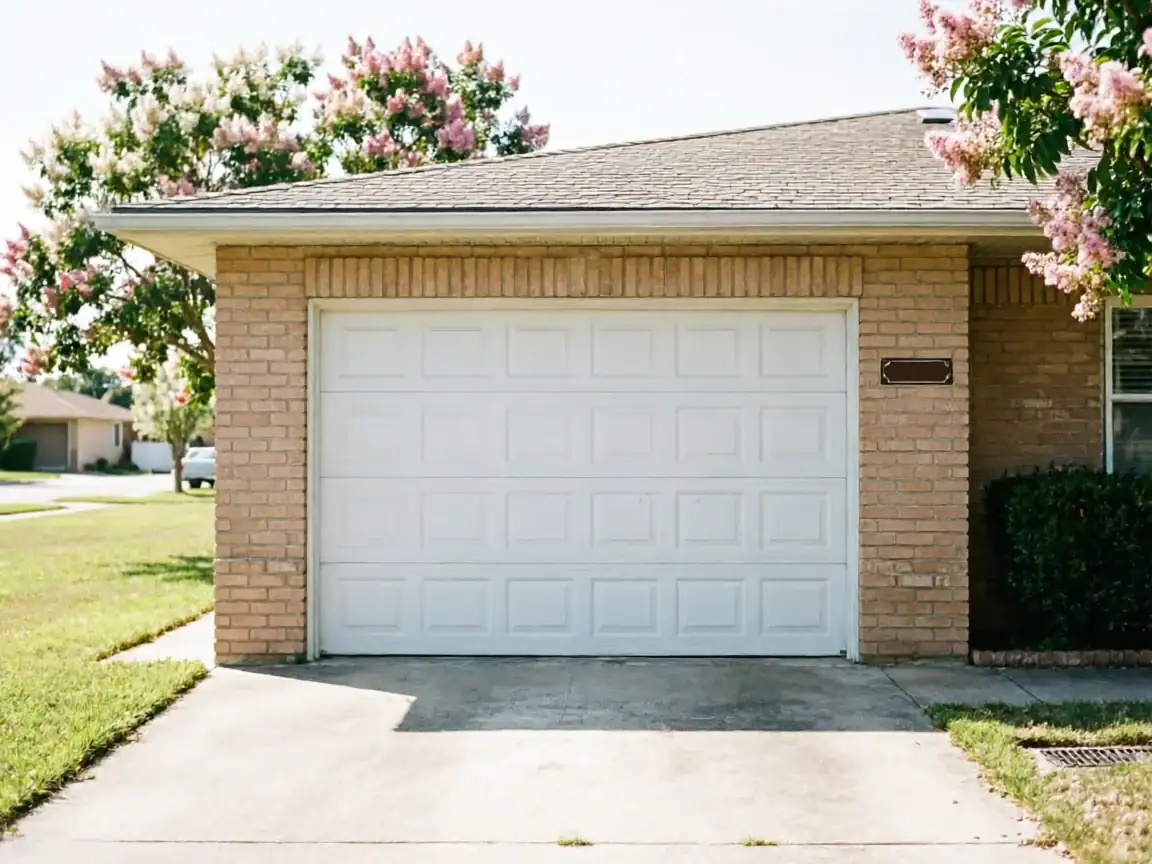
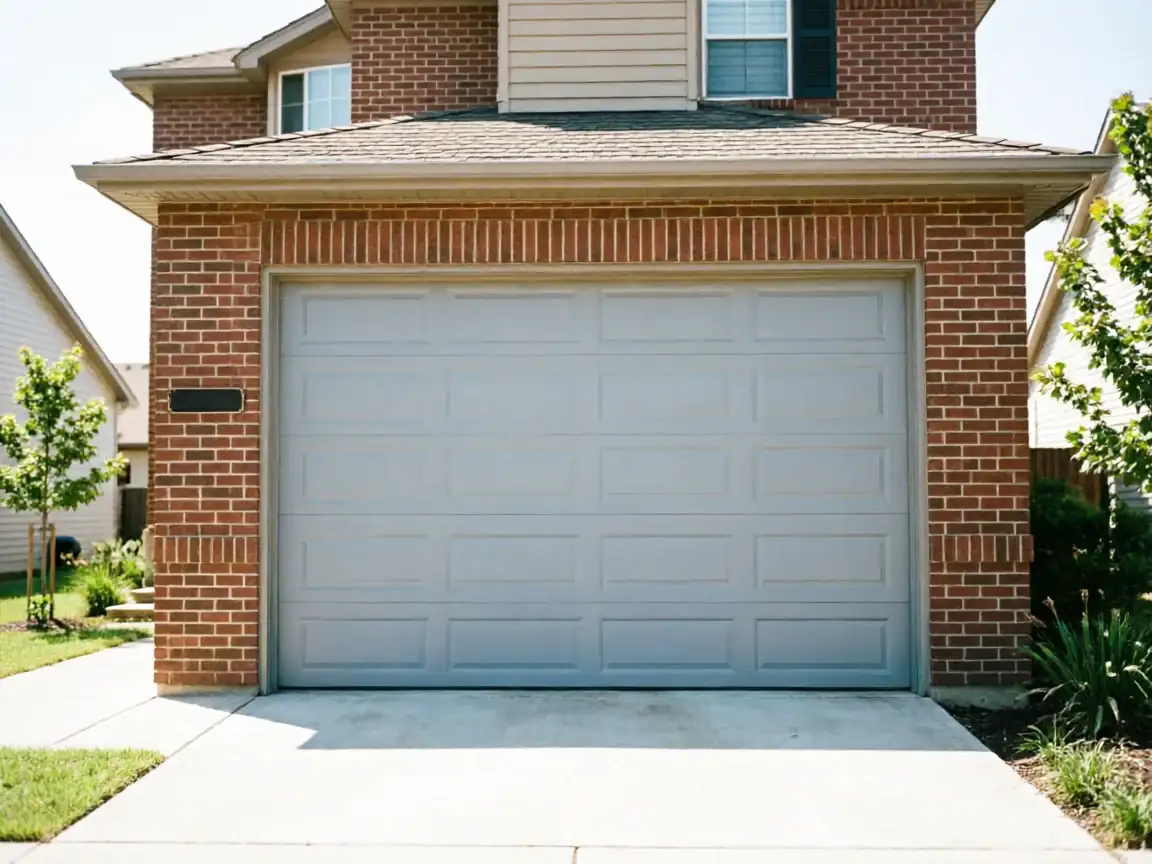
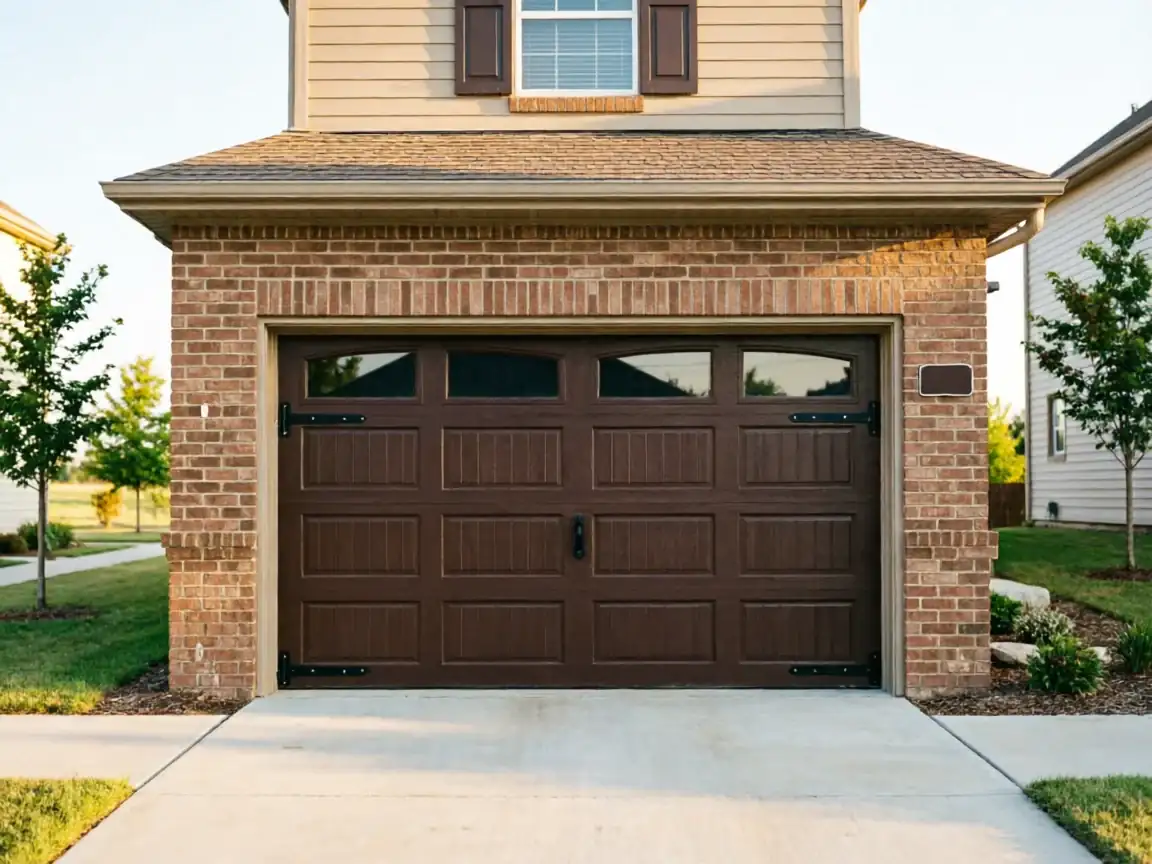
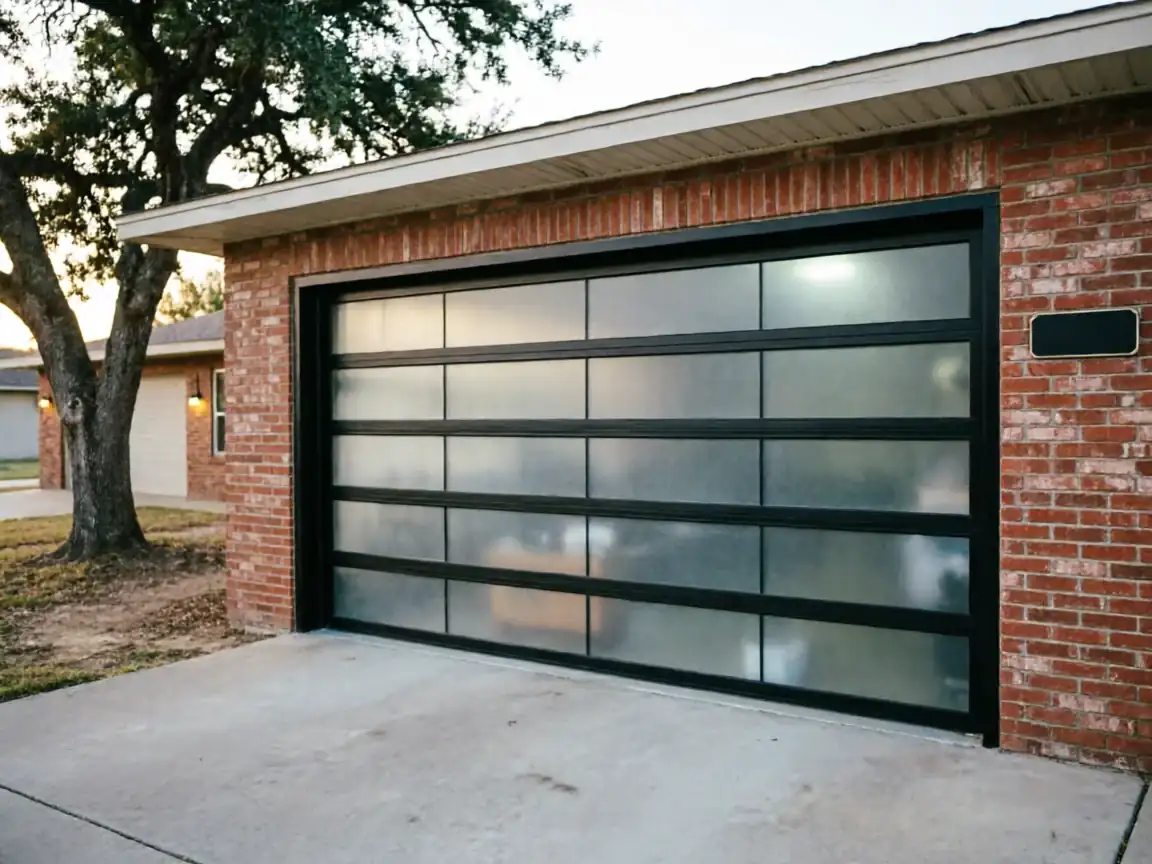
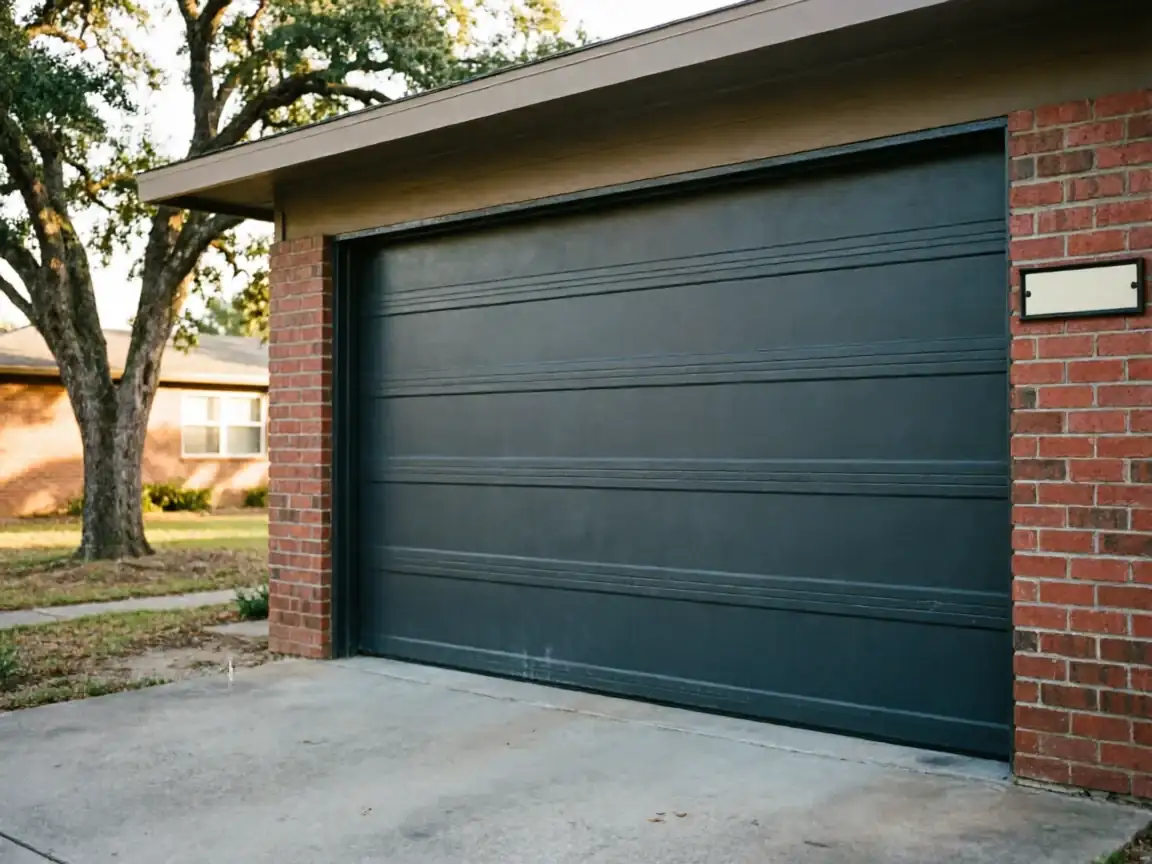
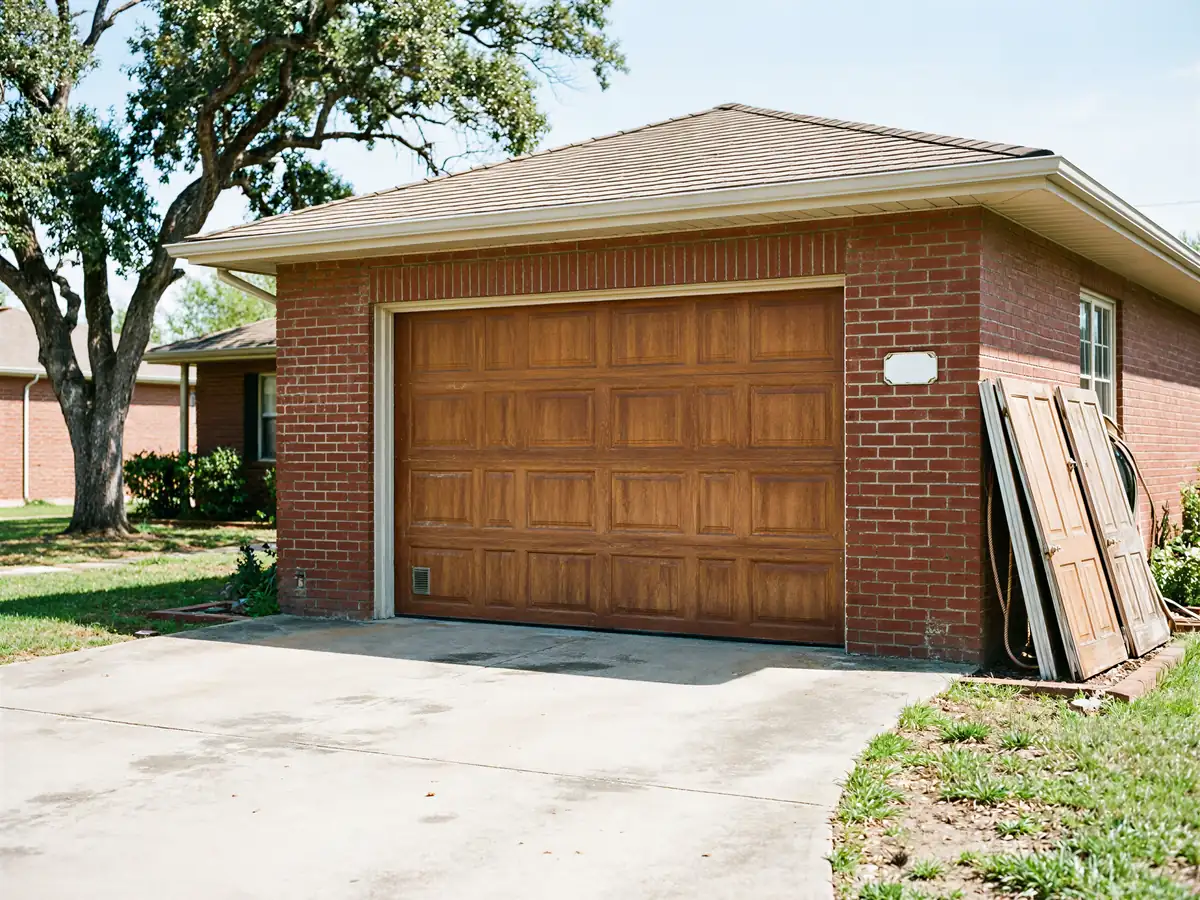
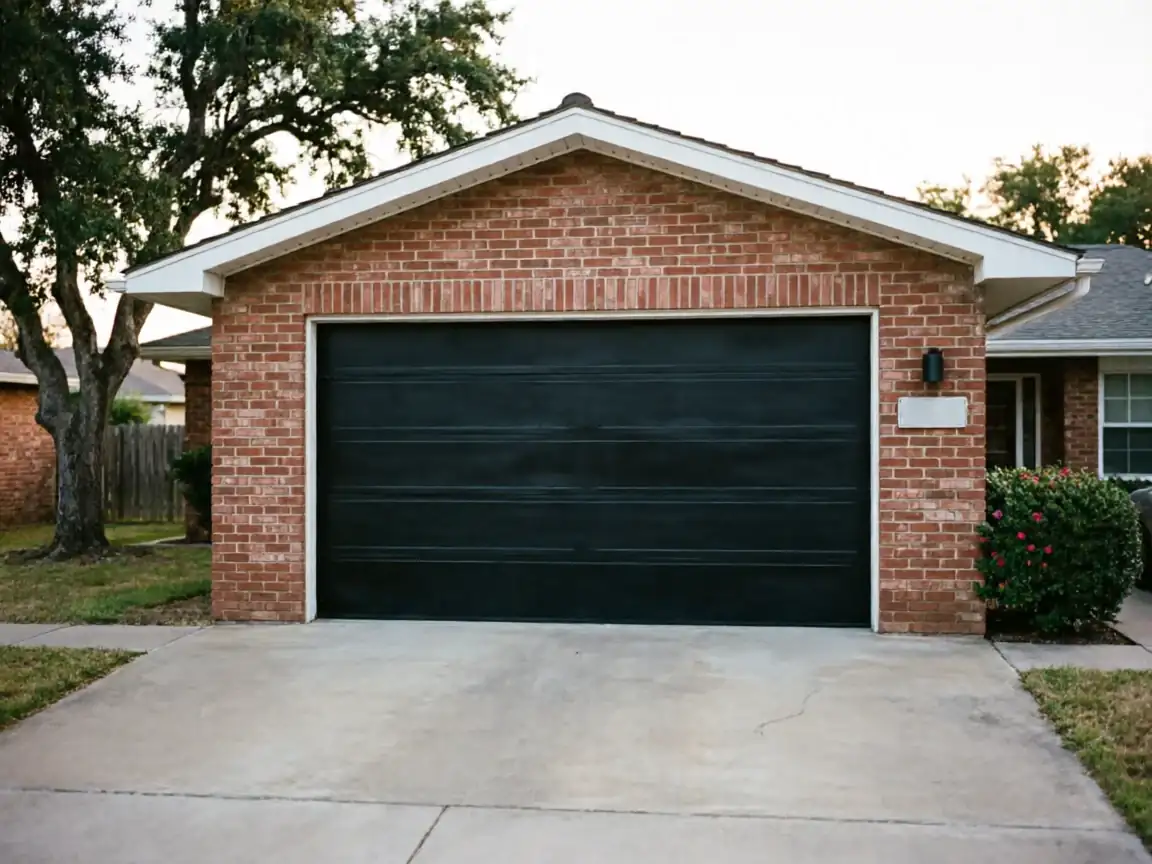
Most of the housing stock around here went up in the early 1980s, which puts Serenada doors at a different point in their service life than the newer builds closer to Hutto proper. A door installed in 1981 or so is on its second or third spring by now if anyone's kept up with it, and on its first if nobody has. That's the detail that decides whether we're doing a quick spring swap or finding out the drums, cables, and rollers all need attention at once because one worn part has been quietly loading the others for years.
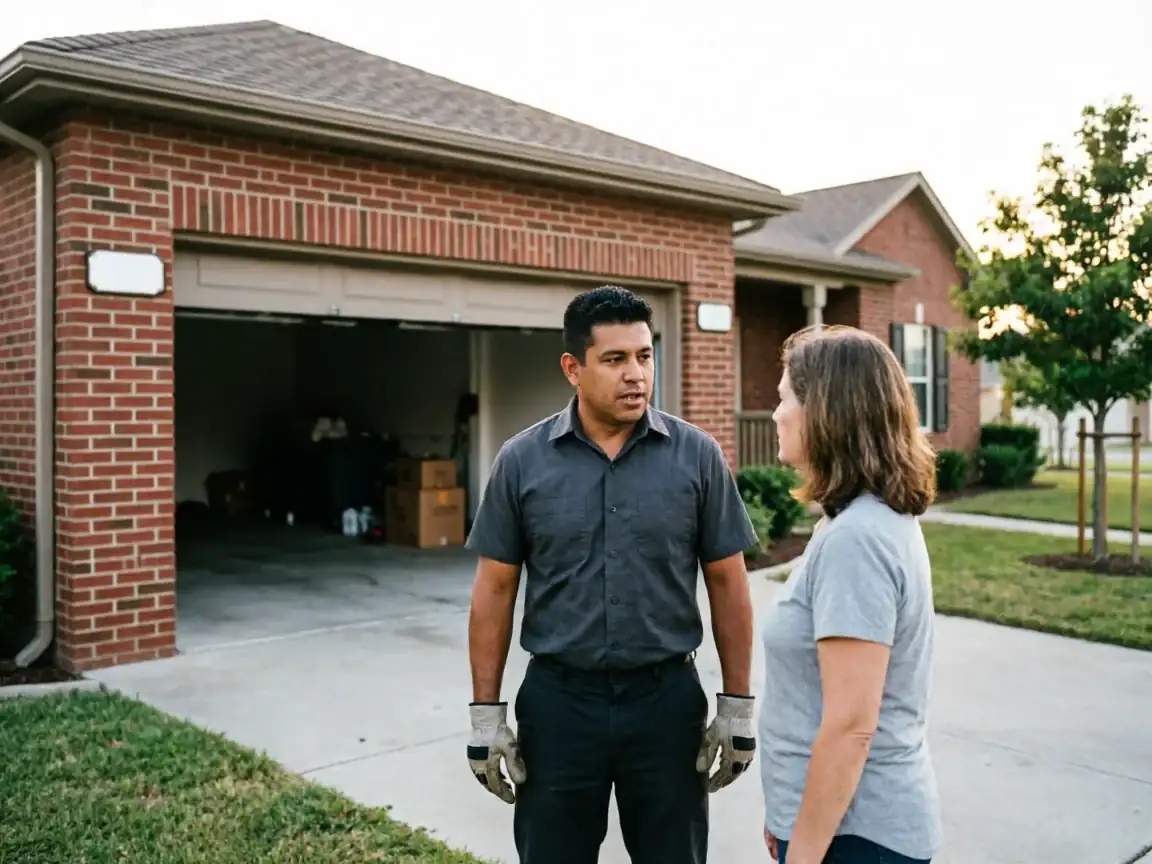
We don't guess at this over the phone. We ask what year the house was built, what the door looks like, and what it's doing, and we pack the truck accordingly.
How Long You Are Without the Door
Because the run from Hutto is a real fifteen miles, not a quick hop, the honest answer is that a same-day fix depends on what's actually broken and what's already on the truck. A single broken torsion spring is usually a one-visit job once we're on site. A worn opener gear or a bent track that needs a part we don't carry as standard stock can mean a short wait while we get the right piece, rather than installing something close enough and hoping it holds.
This is the honest limitation worth saying out loud: we're not a shop around the corner from Serenada, so we can't promise the kind of instant turnaround a depot five minutes away could offer. What we can do is diagnose it right the first time so the wait, if there is one, is for a part and not for a redo.
The DIY Question
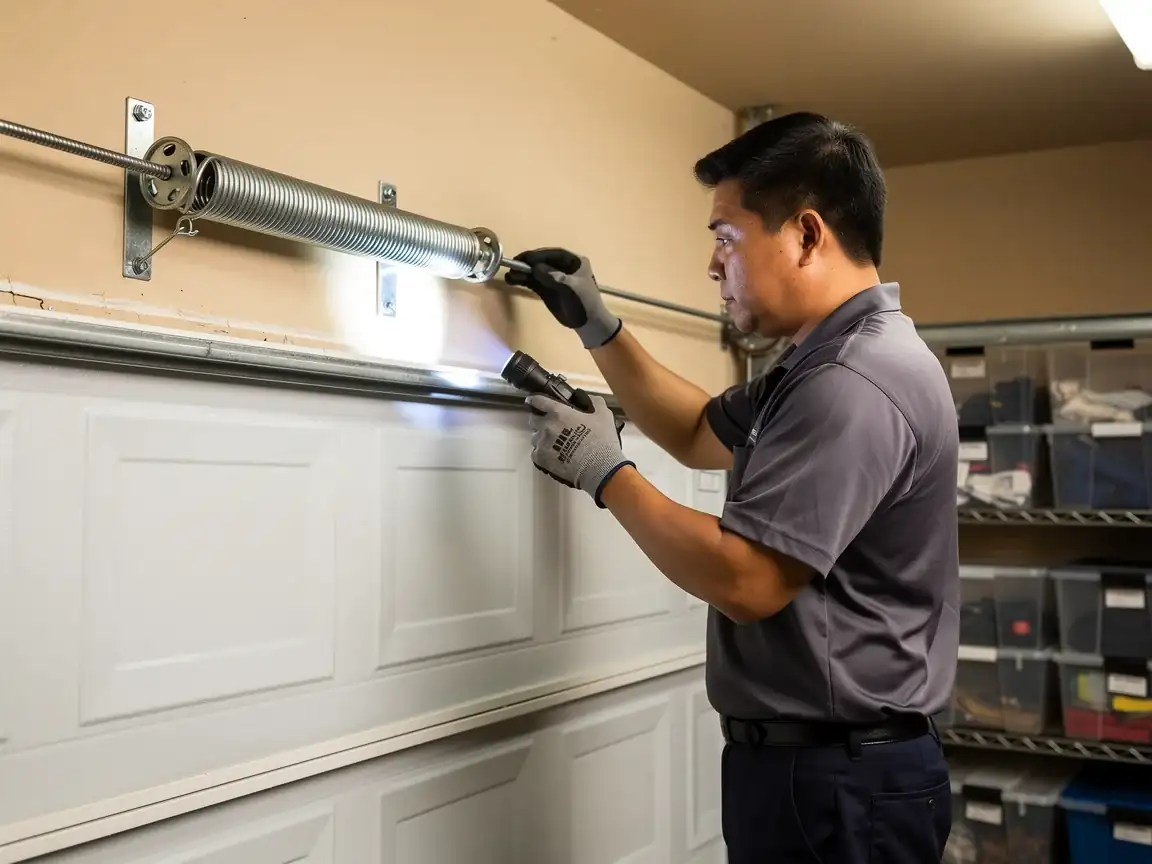
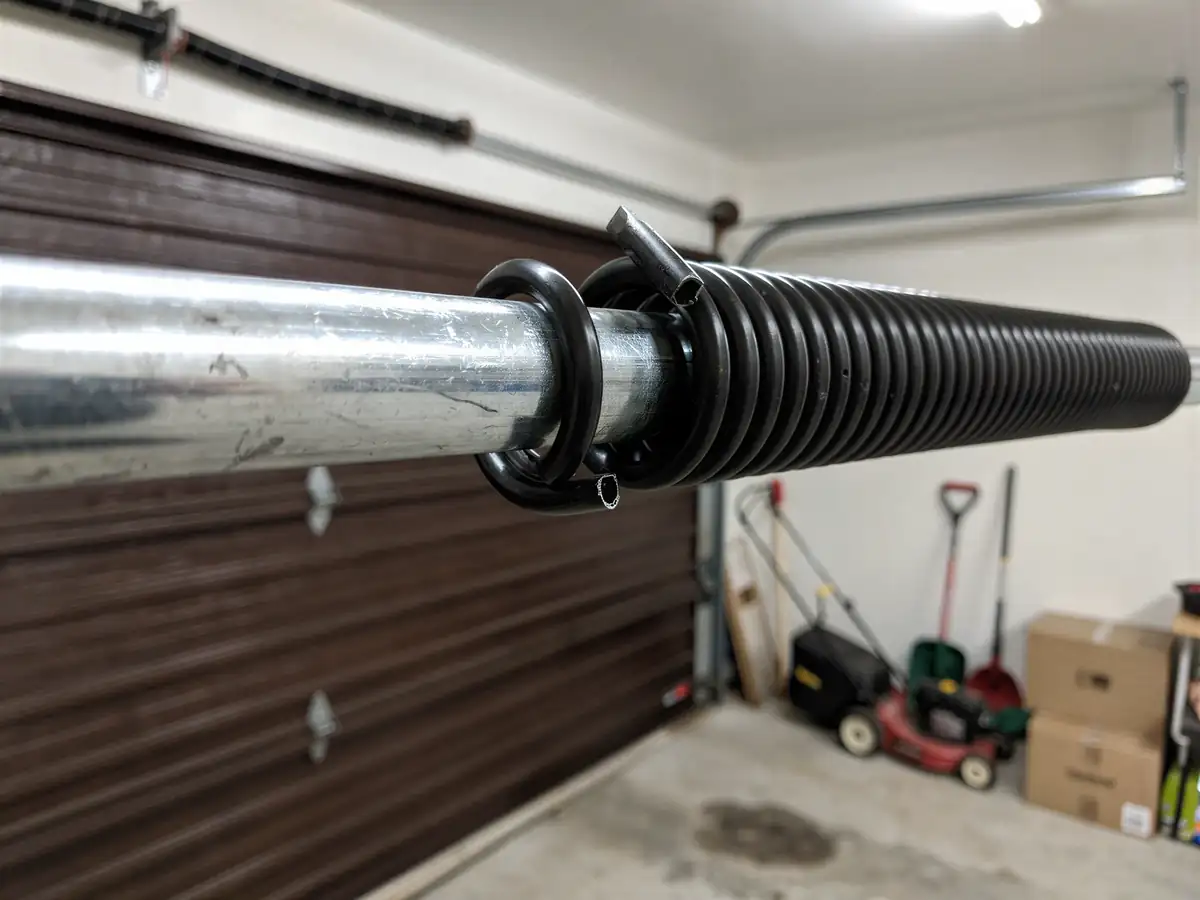
A door built in the early 1980s often still has its original torsion spring setup
And torsion springs are not a weekend project regardless of the house's age. The spring is wound under enough tension to do real damage if it lets go while you're working on it, and on a door this old the mounting hardware itself may have corroded or loosened in ways that aren't obvious until you're mid-job.
What you can safely check yourself
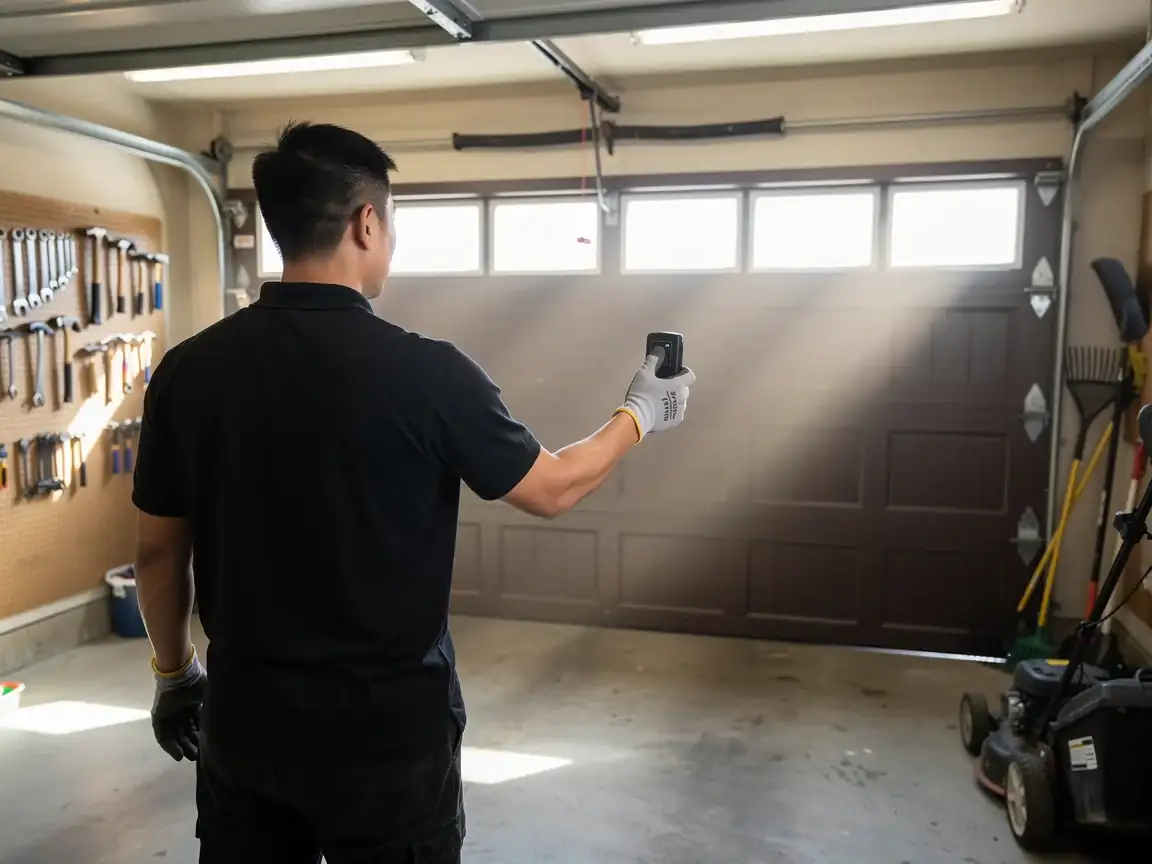
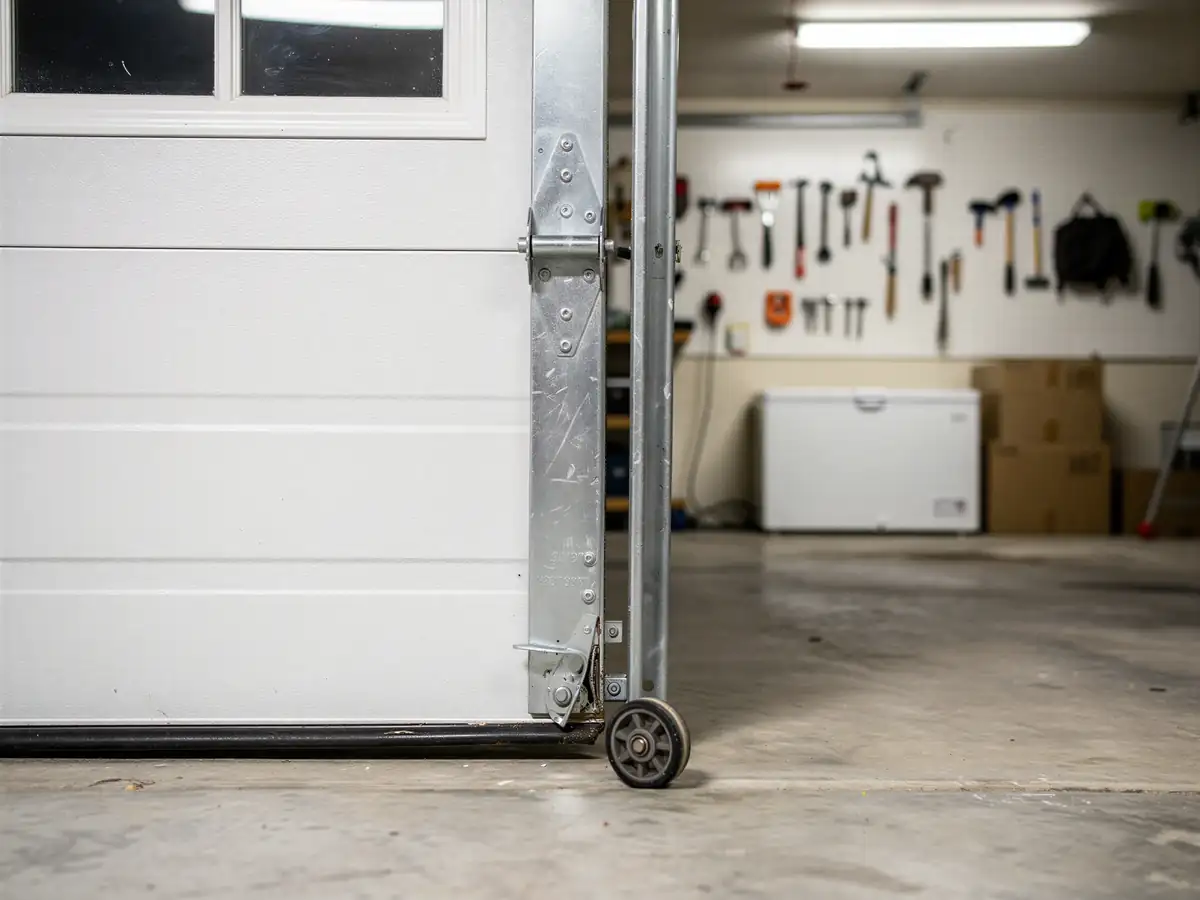
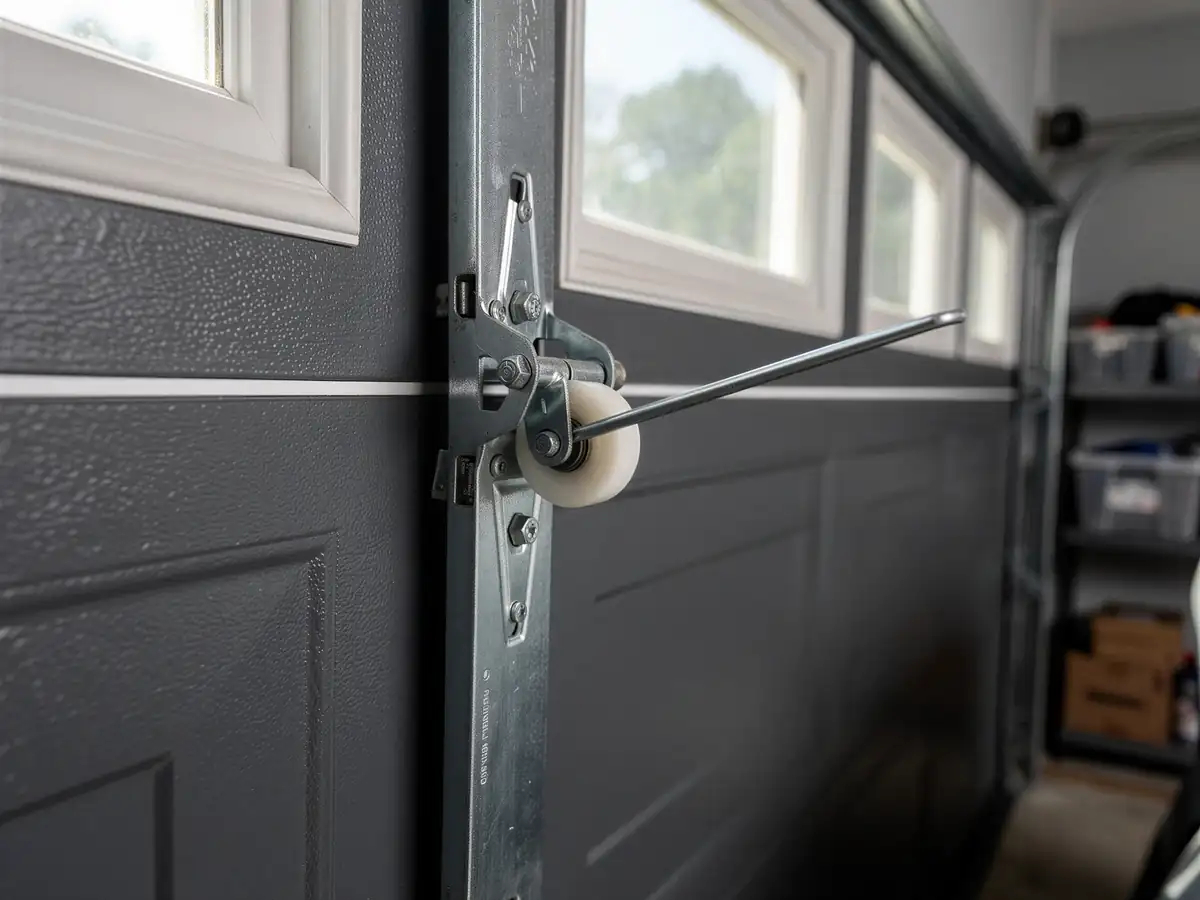
The track for visible dents or gaps, the rollers for cracking, and whether the door reverses properly when it hits resistance going down. If the door is off its track, making a grinding noise, or the spring is visibly separated, that's a call, not a project.
How We Fix It
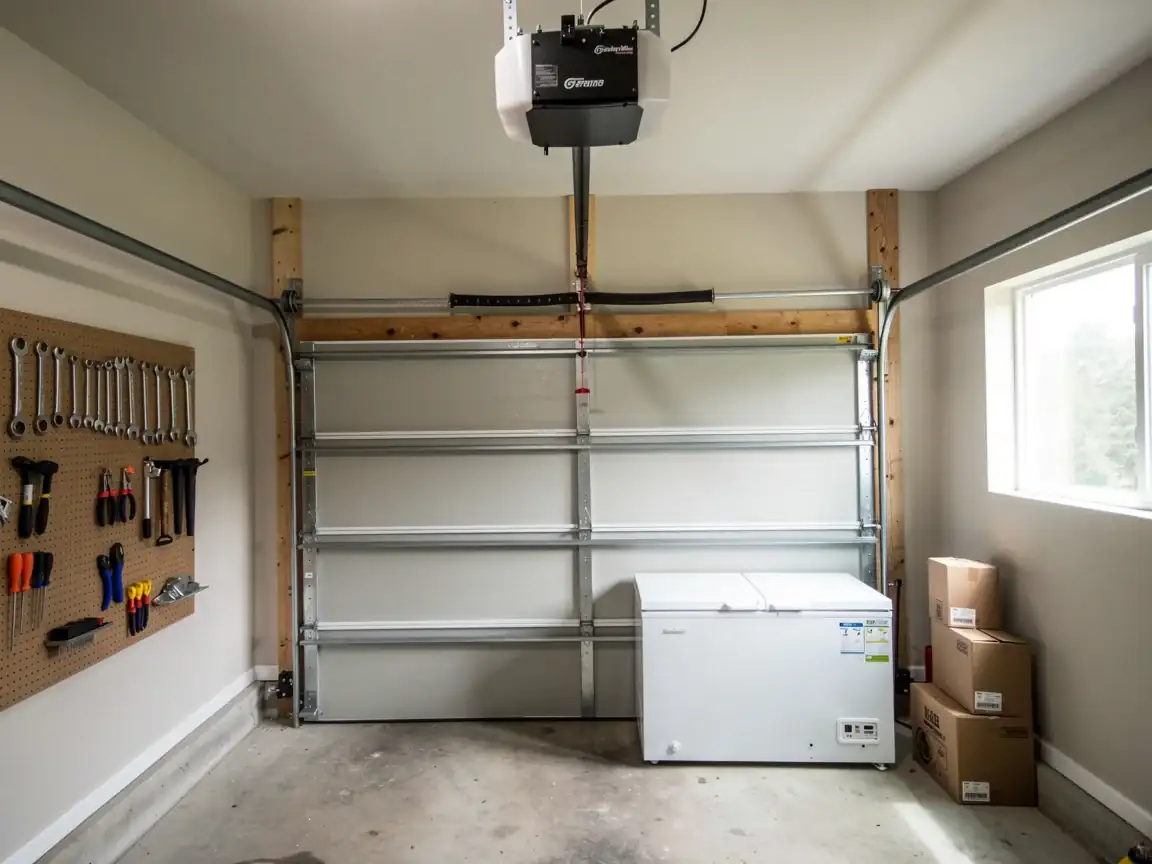
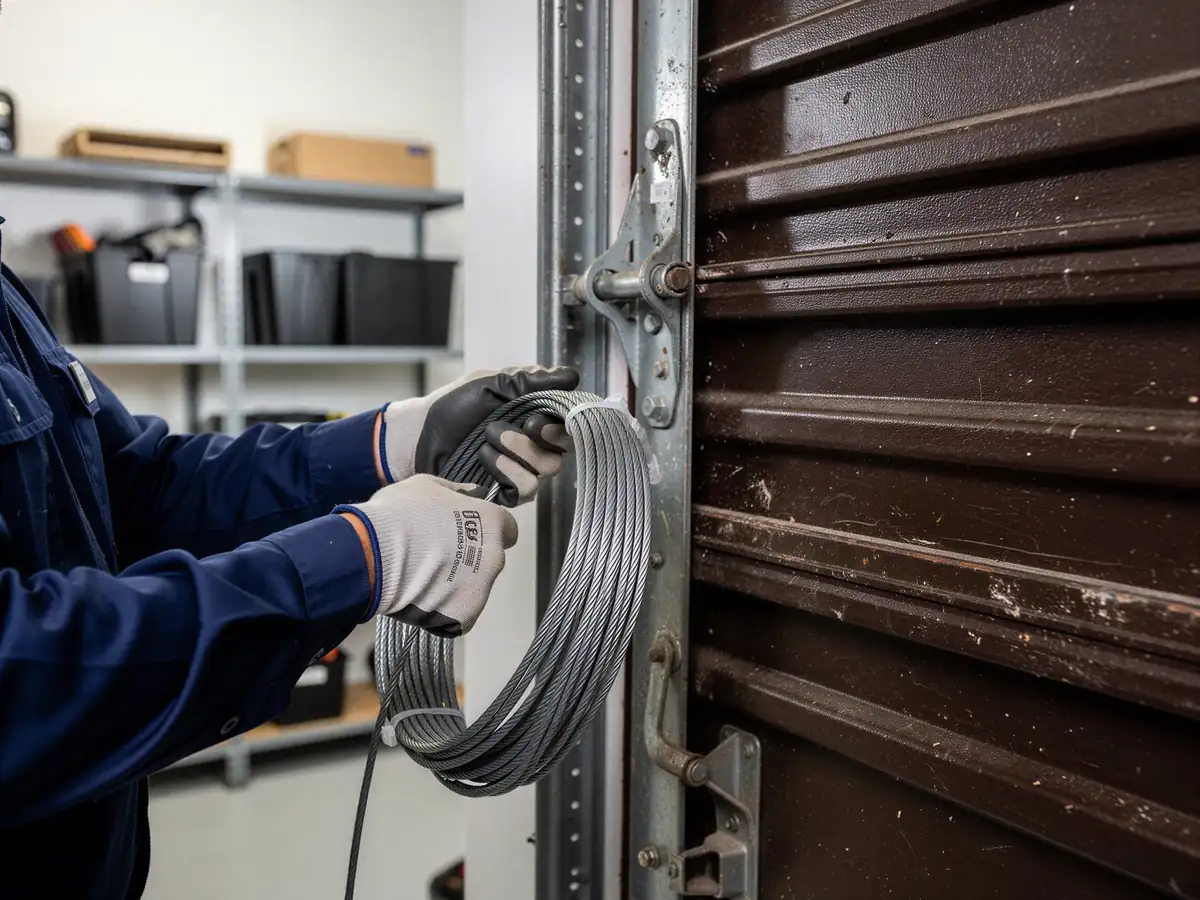
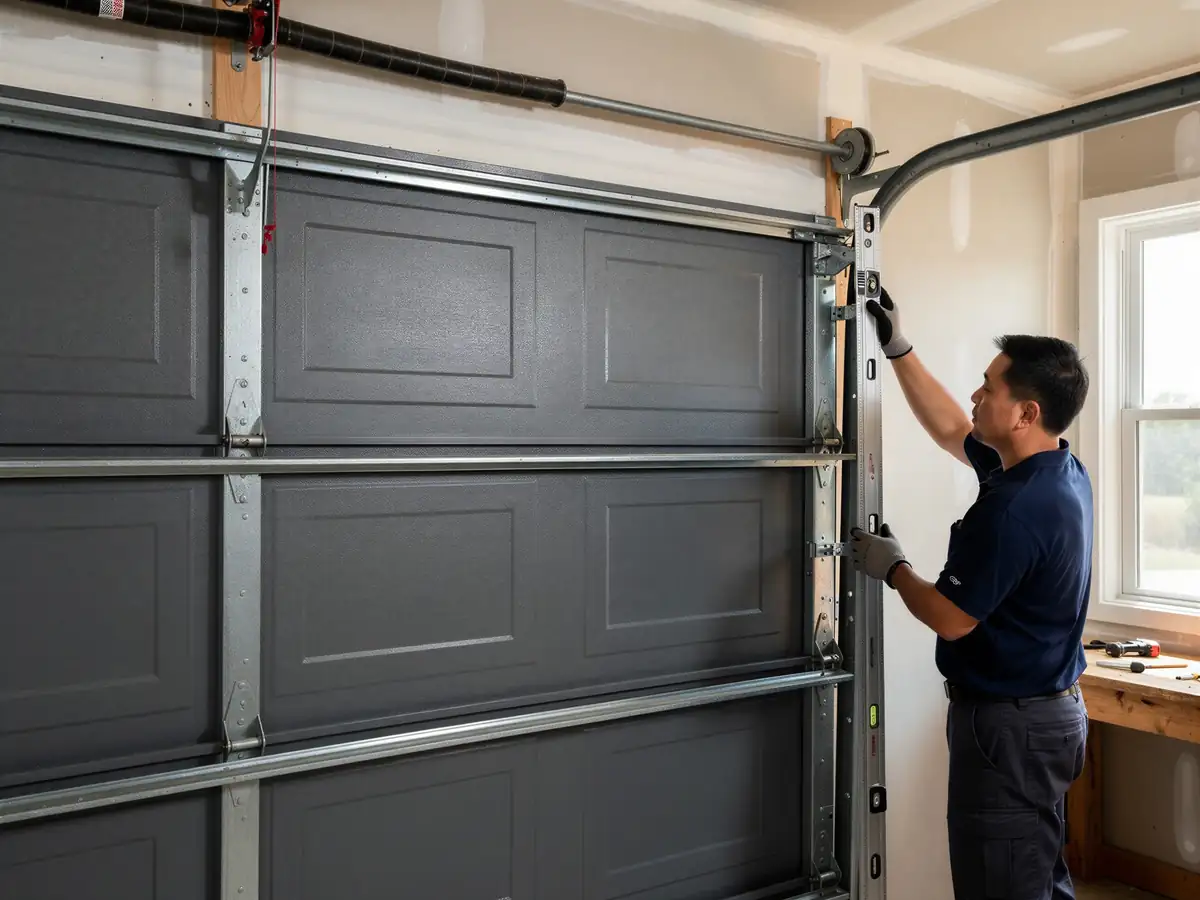
We start with the door's age and what that tells us about likely hardware - a house built around 1981 points us toward older torsion spring winds, heavier steel sections, and openers that may already be on a second or third unit. From there it's a straightforward sequence: check the springs and cables under load, check the track alignment, check the opener's force and limit settings, and test the safety reverse before we call the job done.
Servenada's climate doesn't throw the extreme swings some parts of the country deal with, but the occasional freeze still stiffens up old grease and tightens metal-to-metal tolerances on hardware that hasn't been serviced in a while. That's often enough to turn a sluggish door into a stuck one on the one cold morning a year it matters. We lubricate and re-tension as part of the fix, not as an upsell.
What You Are Seeing
A door that slams the last foot instead of settling usually means the spring has lost tension - common on original hardware from a 1981 build that's never been replaced. A door that reverses for no reason, or won't close at all, often points to the opener's sensors or force settings rather than the door itself.
Grinding or popping from overhead usually means a roller or the drum assembly, not the spring, and it's worth telling us that sound specifically when you call, since it changes what we bring. A door that's heavy to lift by hand with the opener disconnected is carrying a spring problem no opener adjustment will solve.
With roughly 573 households in Serenada and a median income above $97,000, we see a fair number of these calls as scheduled maintenance rather than panic repairs - owners catching the sluggish door before it becomes the stuck one.