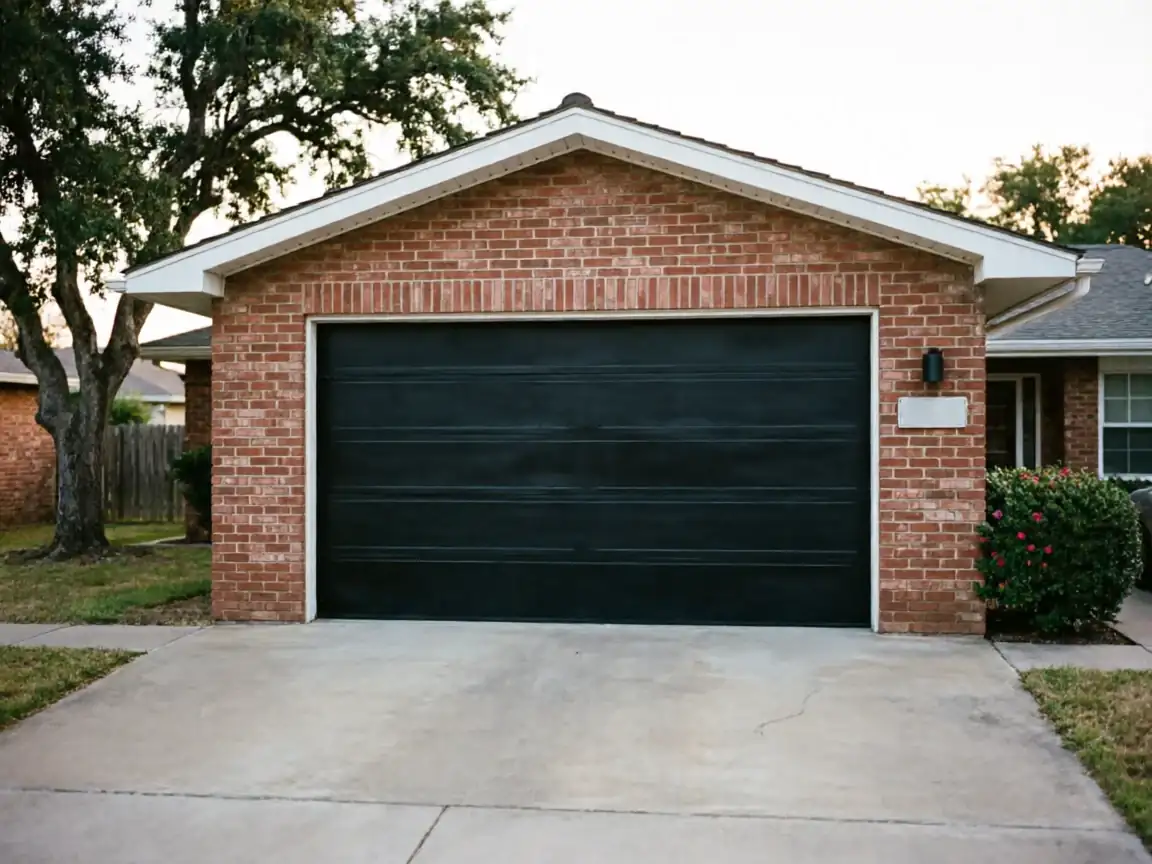
Where This Job Goes Sideways
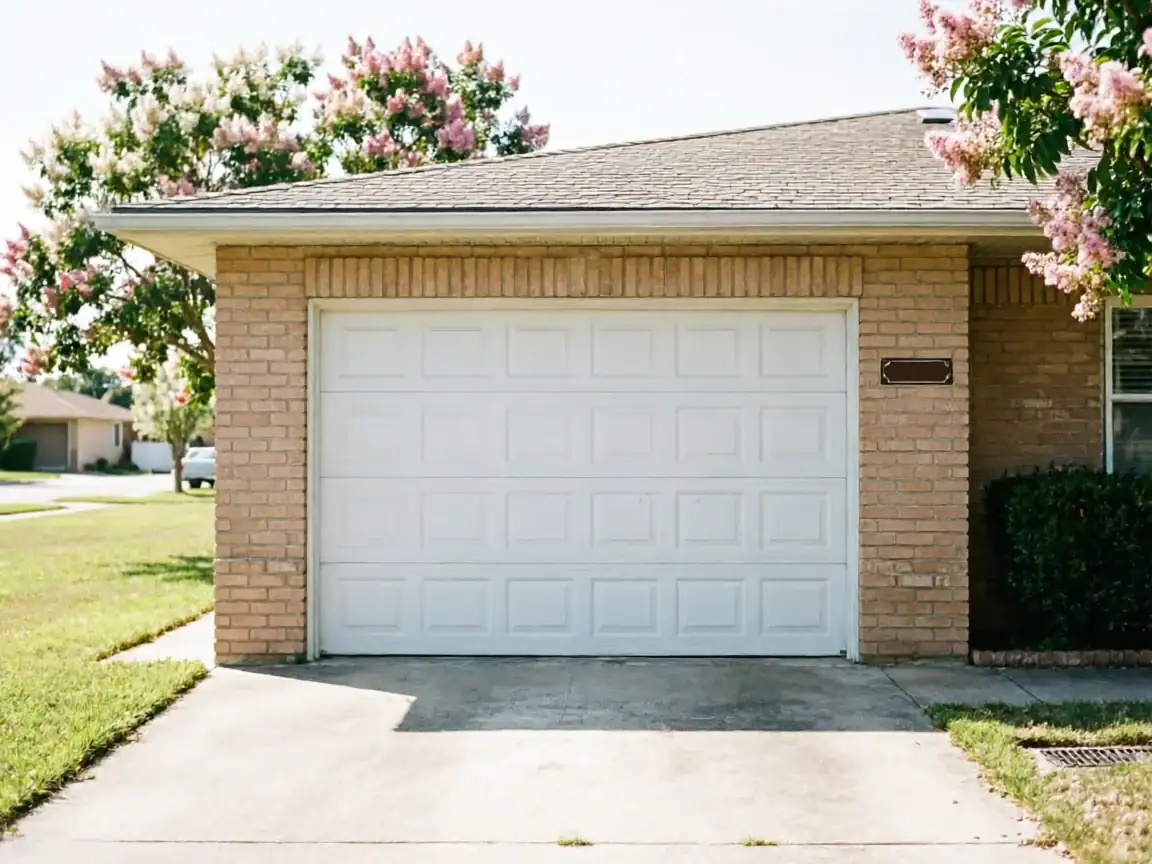
Taylor is a smaller town inside our service area - about 6,587 households, against roughly 33,440 across the whole territory we cover out of Hutto. That smaller number matters less for how busy we are and more for what kind of calls come out of it: a tighter town means fewer builders, fewer door models, and a housing stock that leans older than the area average.
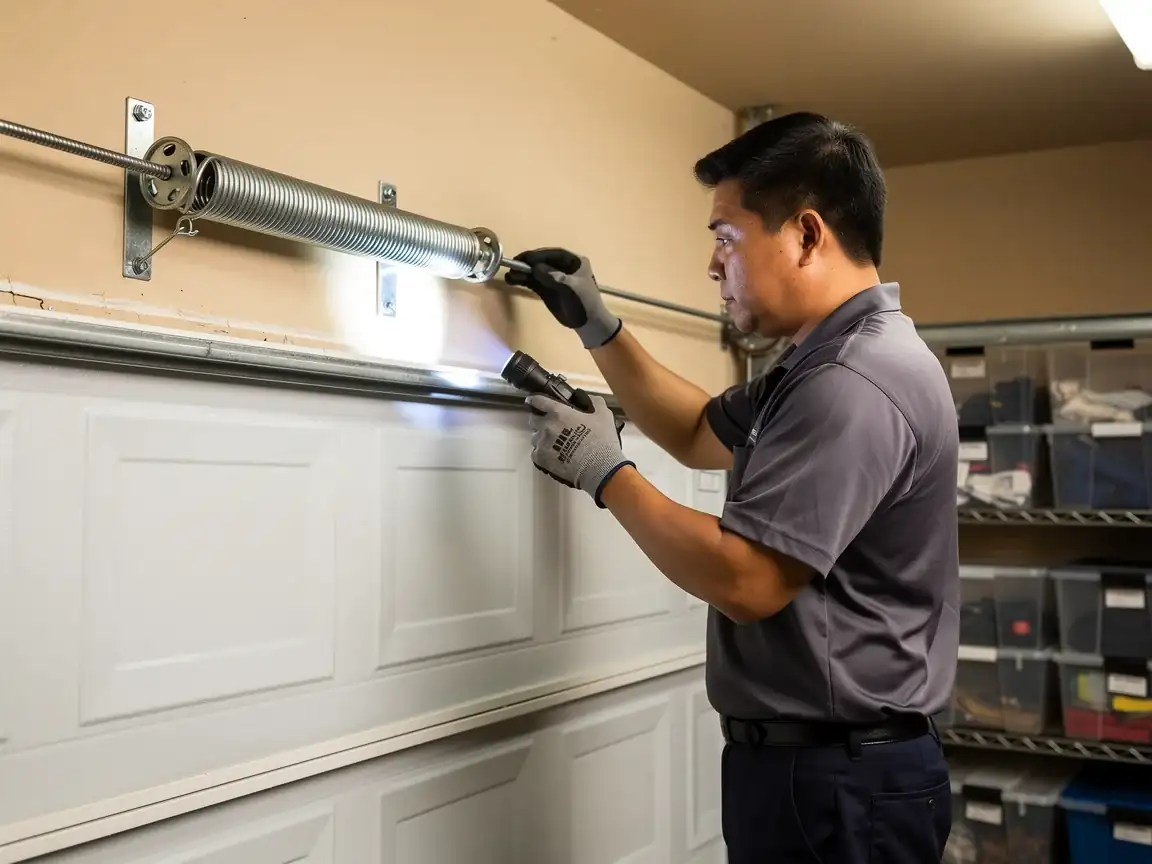
Across the service area, most houses went up in the 1980s and 90s, with a median build year of 1984. Taylor runs older than that - median year built here is 1978. Those six years put a chunk of Taylor's garage doors into an earlier generation of hardware: steel doors on extension springs instead of torsion, lighter-gauge track, openers that have already been replaced once or are due. When something breaks here, it's less often "the opener board died" and more often "the spring, the cable drum, or the track is original and finally gave out."
We're not guessing at a neighborhood - we don't have street-level detail for Taylor, just the housing-era numbers. But that one number, 1978 versus 1984, is enough to know what we're walking into before we open the door panel.
What Is on the Truck
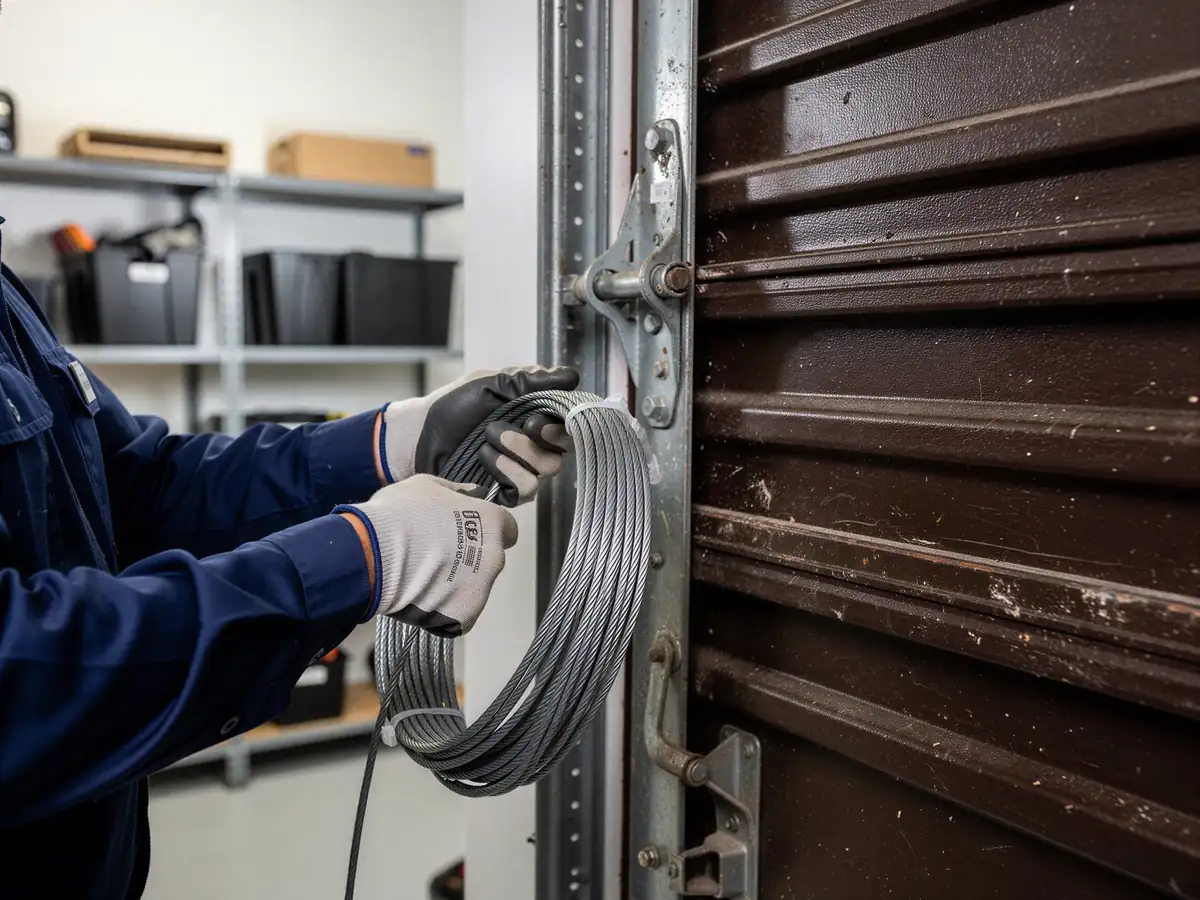
For a town with housing this age, the truck needs extension-spring hardware and older-style track brackets more often than it does in the newer parts of the service area. We carry parts for both spring types, because a Taylor call is more likely to be a frayed extension cable or a worn pulley than a torsion spring snap, even though we still see plenty of the latter on doors that were upgraded at some point.
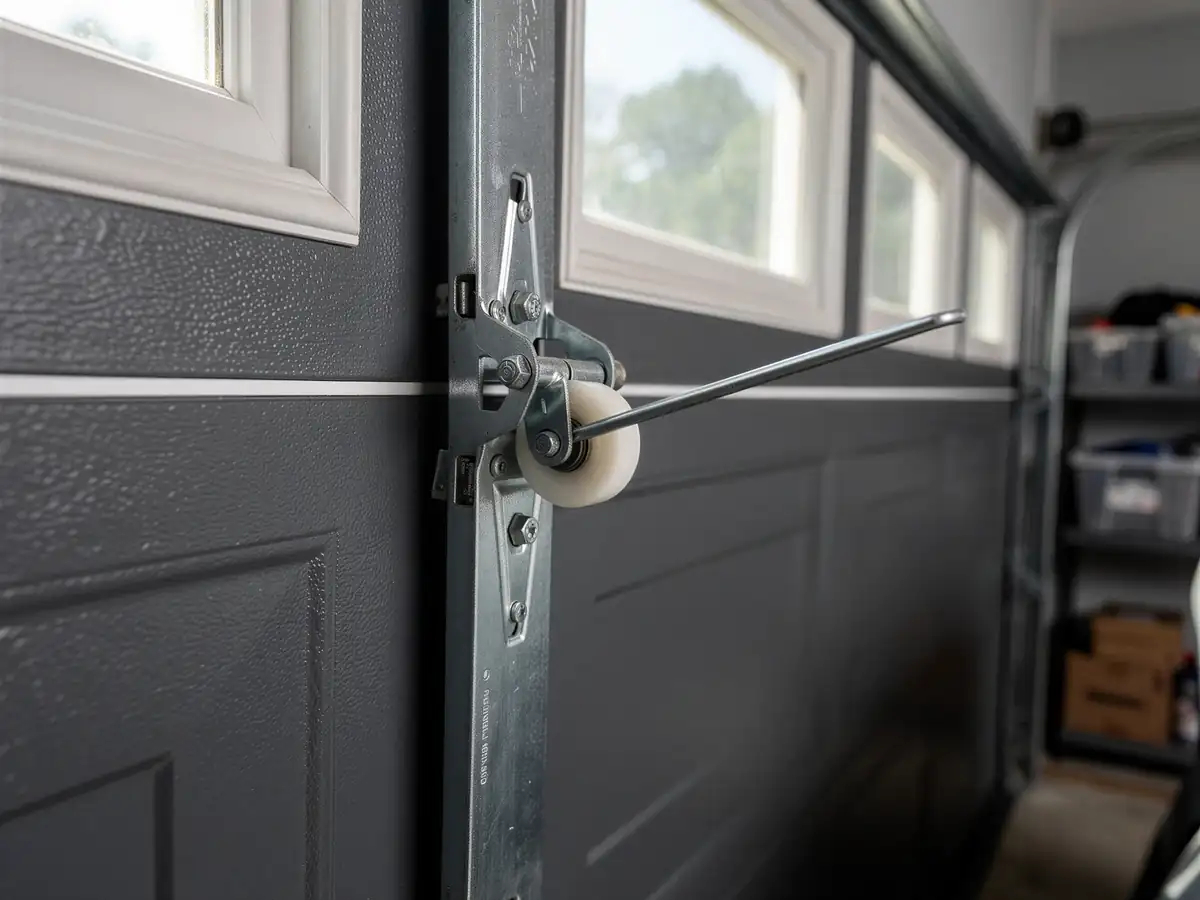
The climate here is mild with occasional freeze days, which doesn't wreck hardware the way a hard freeze-thaw cycle does, but it does stiffen old grease and shrink metal just enough to make a borderline roller or hinge finally fail on a cold morning. We stock rollers, hinges, and cable in the sizes that fit 1970s and 80s door frames, not just current-model replacements.
One honest limit: if a part is specific to a discontinued door model and the manufacturer no longer makes it, we may need to order it rather than carry it on the truck, and that can mean a short wait. We'll tell you up front if that's the case rather than improvise a fix that won't hold.
The DIY Question
On a door this age, the DIY question usually comes down to whether the hardware is original
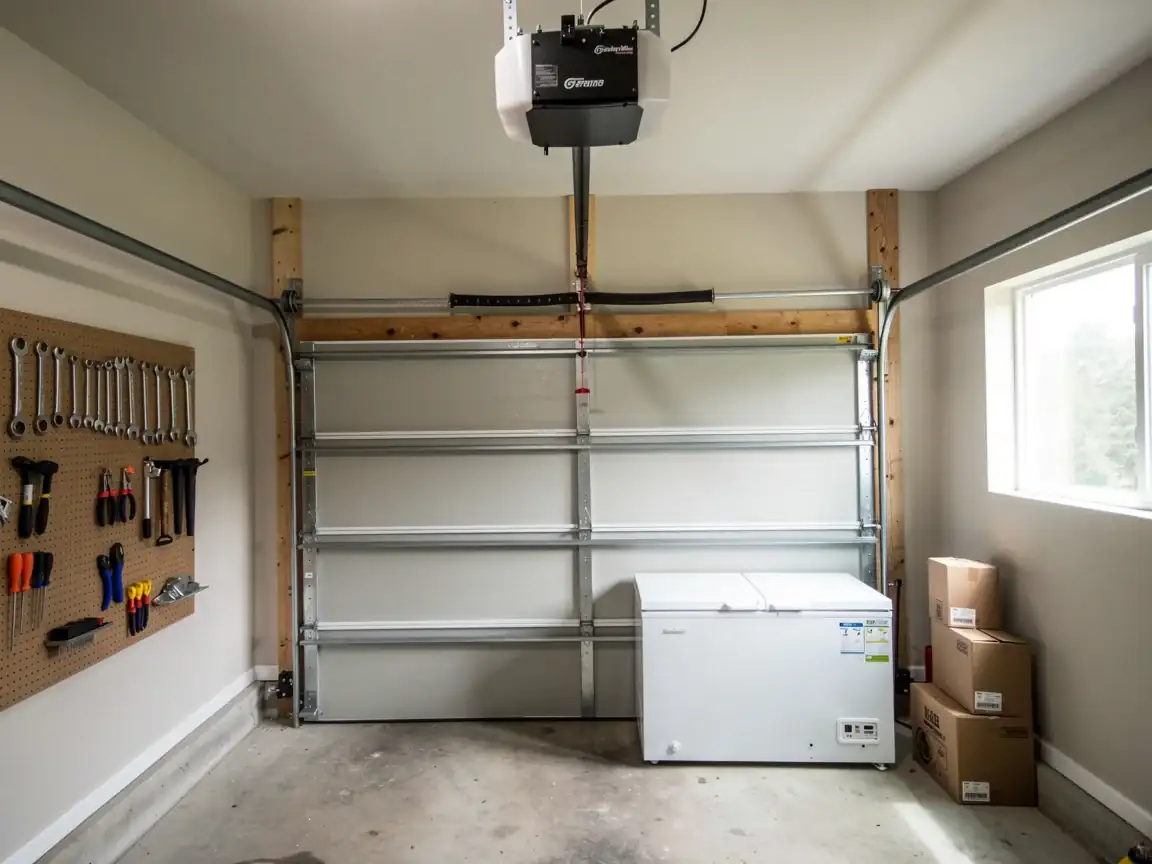
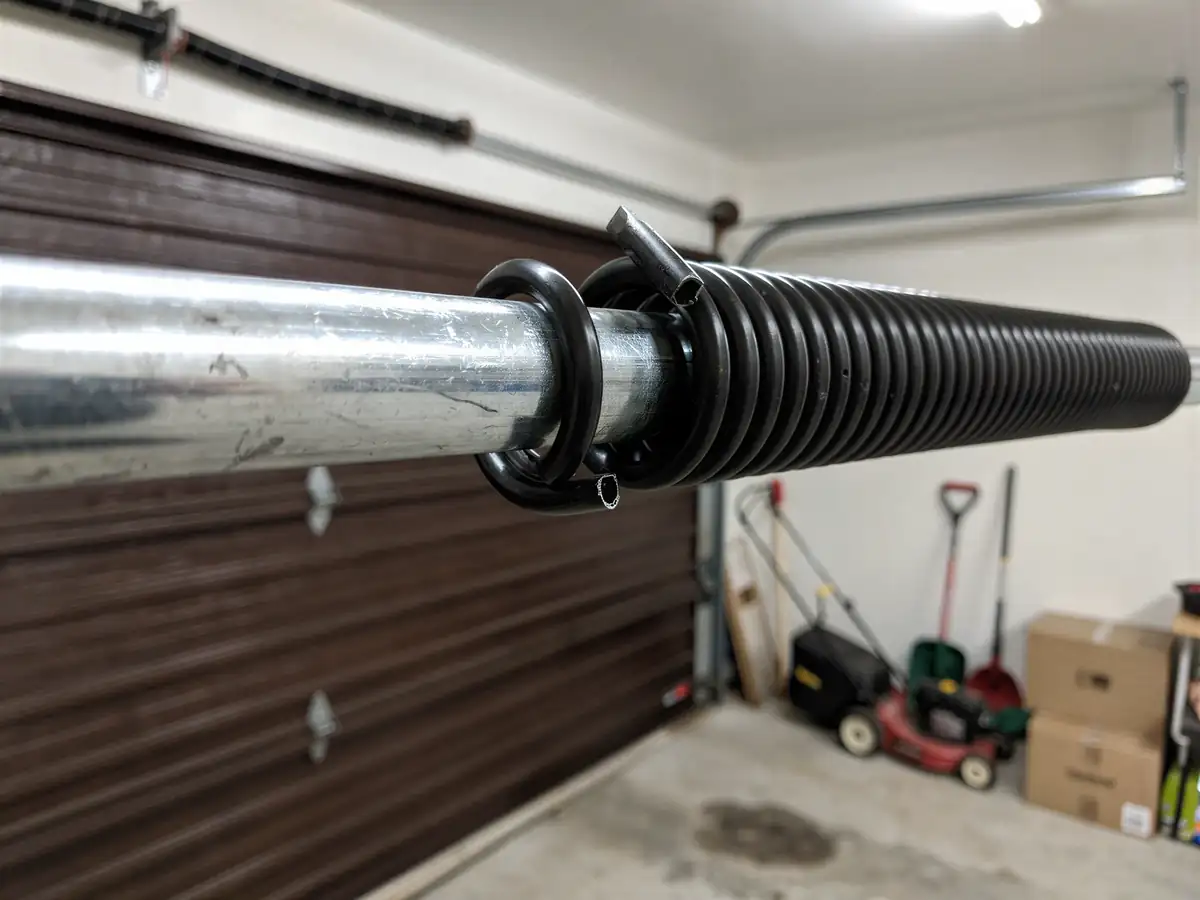
If your door in Taylor was installed close to 1978, the spring system, the drum, and the track are decades past the point where a homeowner should be loosening anything under tension. Extension springs store less force than torsion springs per unit, but they're also more likely to be worn thin with age, and a cable that's frayed can snap without warning.
What's safe to check yourself
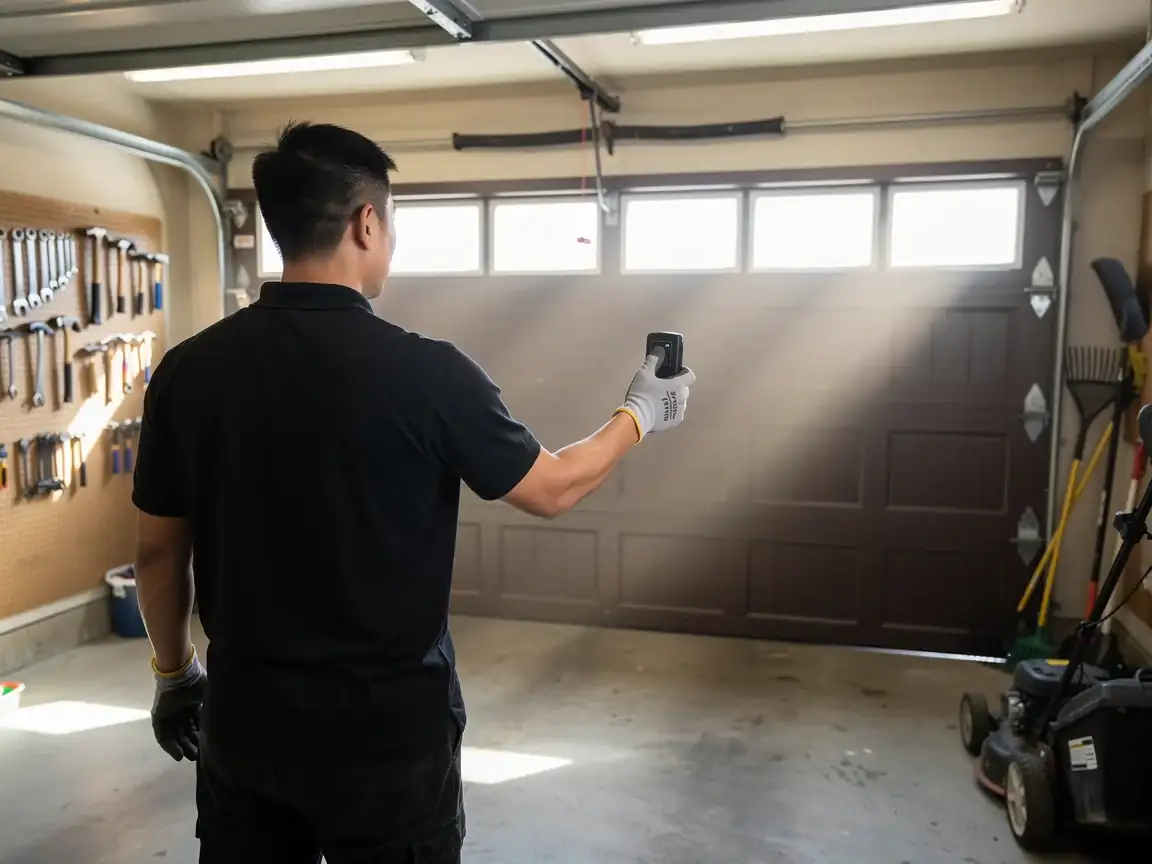
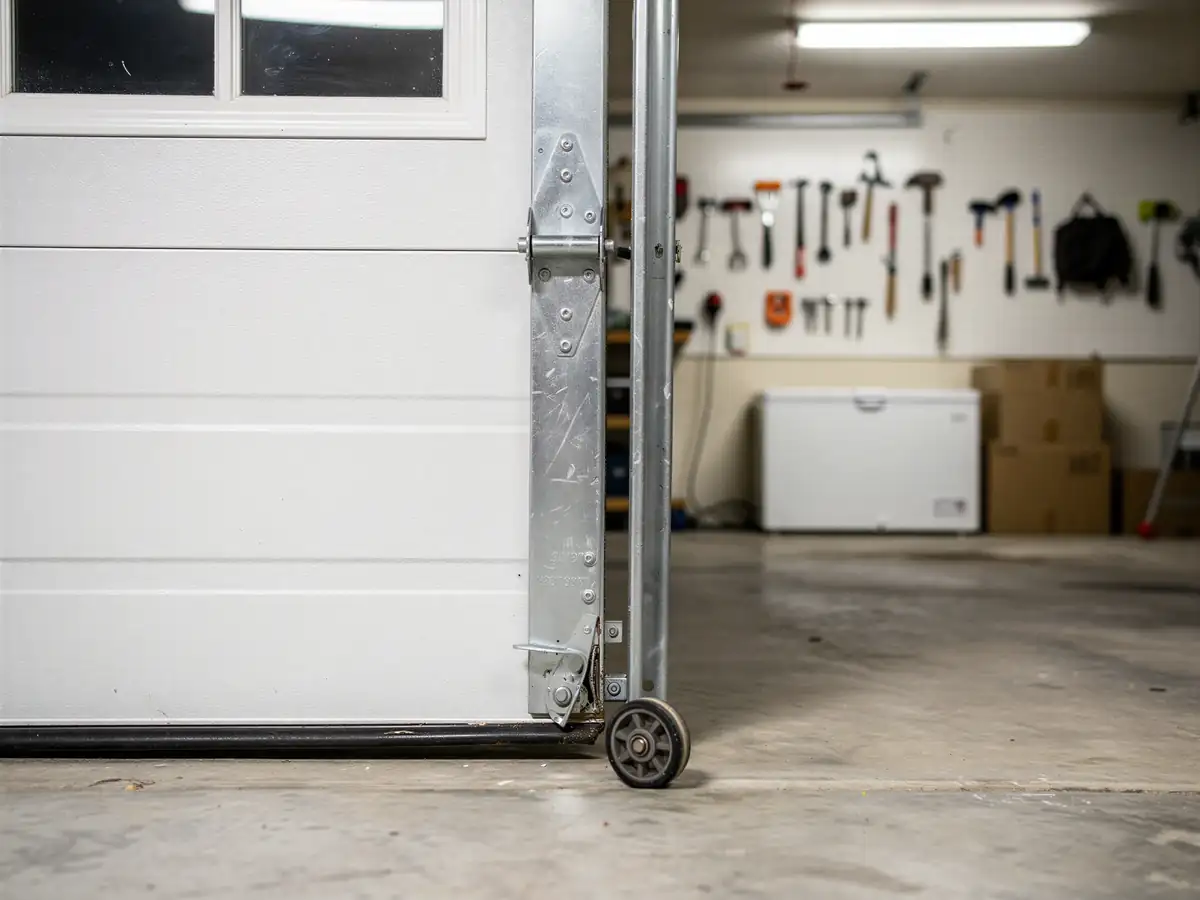
The weatherstripping at the bottom, whether the tracks are visibly bent, whether the opener's safety sensors are aligned and blinking steady. What's not safe to touch yourself: anything holding the door up against gravity - springs, cables, the drums they wind onto.
Given the age of a lot of Taylor's stock
We'd rather talk you out of a repair on a door that's cheaper to replace outright than to keep patching 45-year-old track and brackets piece by piece. That's not every door here, but it's worth asking about before you spend money chasing a fix.
What You Are Seeing
With a median income of $71,665 in Taylor - lower than the $86,477 median across the full service area - we see more homeowners asking us to repair rather than replace, and that's a reasonable call on most doors from this era as long as the track and frame are still square. The spring and cable failures track with the 1978 median build year: original hardware that's simply run its course, not damage from a storm or an accident.
We also see more single-spring extension setups than the torsion-everywhere pattern you'd find in newer construction elsewhere in the service area. Openers in Taylor skew toward units that have already been swapped once, since chain-drive openers from the 80s and 90s rarely make it 40-plus years without a motor or gear replacement.
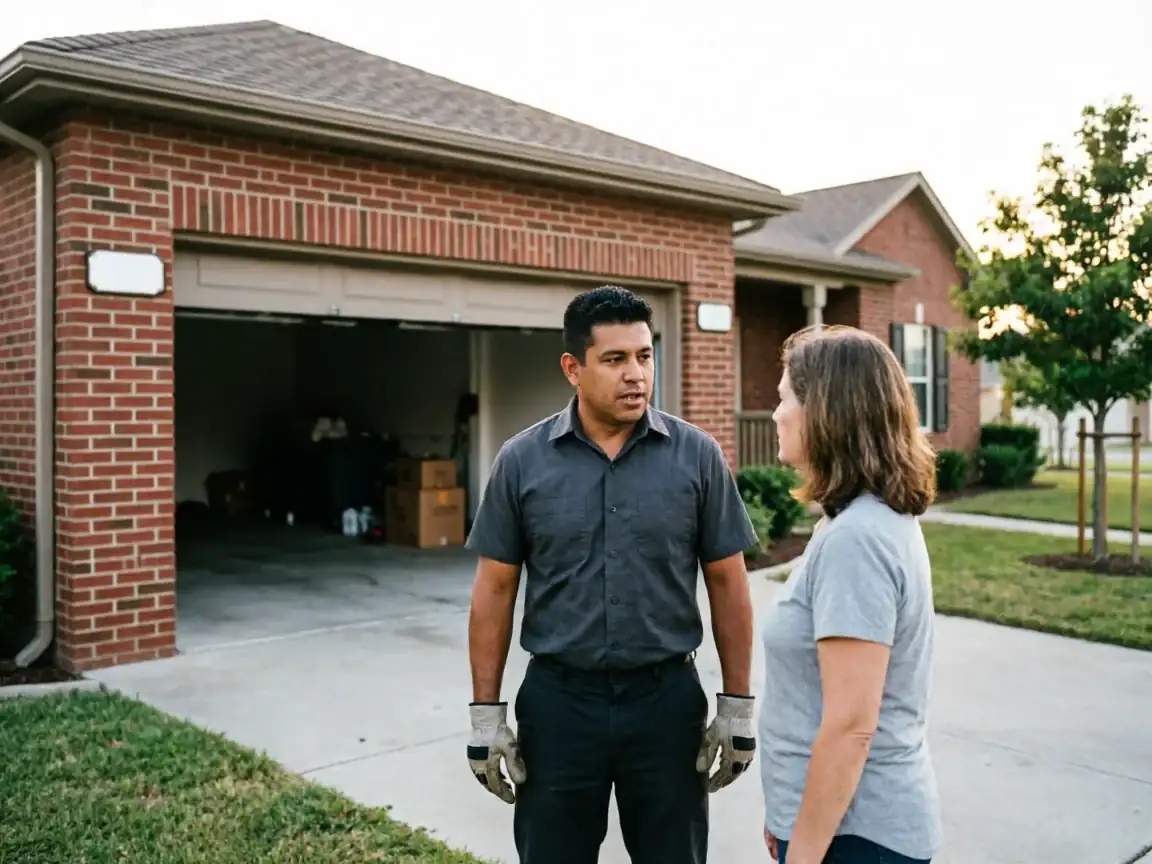
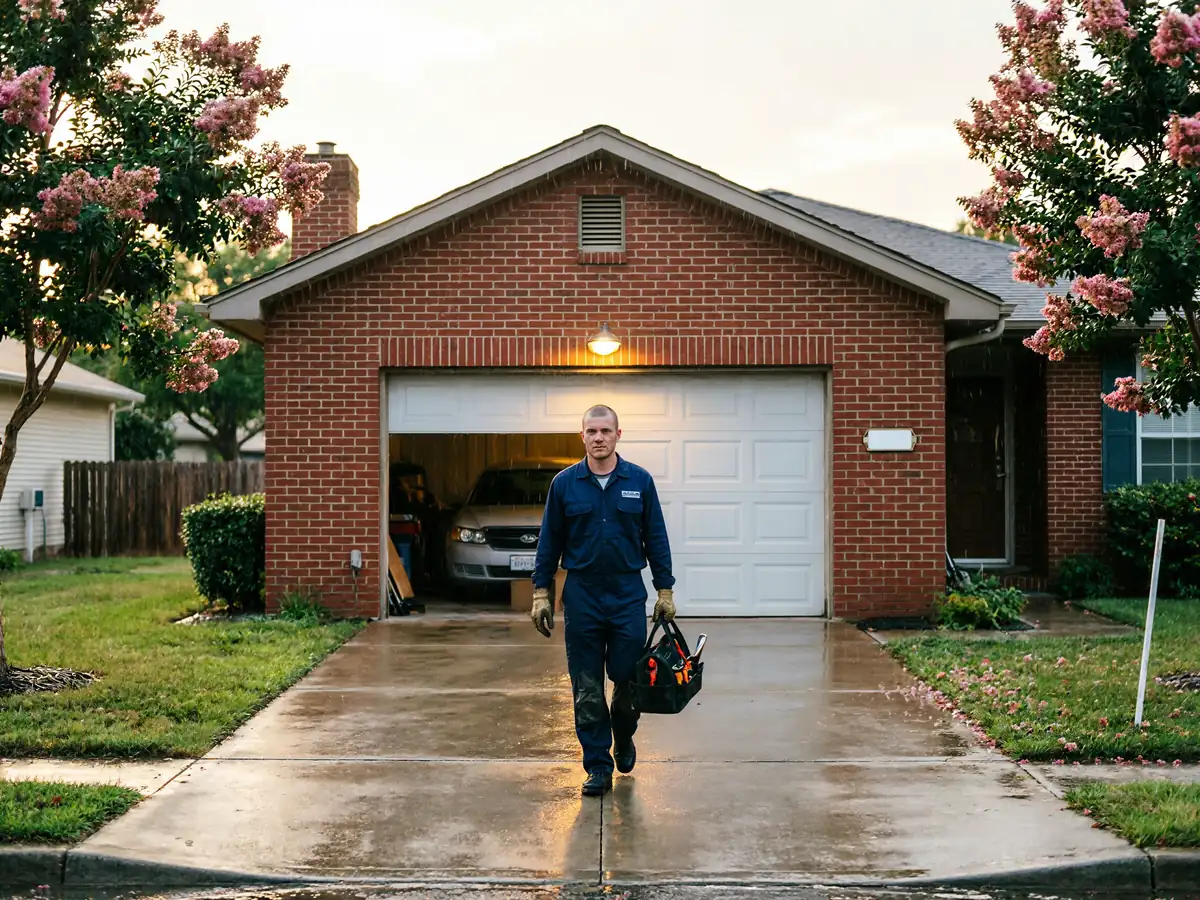
Taylor sits about 7 miles from Hutto, which is where we run the truck from - there's no branch or counter in Taylor itself, just the drive over for the call. That distance doesn't change what we bring; it just means we plan the route before we load the parts.