What Causes It Around Here
Elgin sits 16 miles out from our shop in Hutto, and that drive shapes how we plan a cable call before we ever touch a door. A broken cable isn't an emergency we can reach in ten minutes, so when you call, we ask what you're seeing and load the truck for the right repair the first time instead of guessing twice.
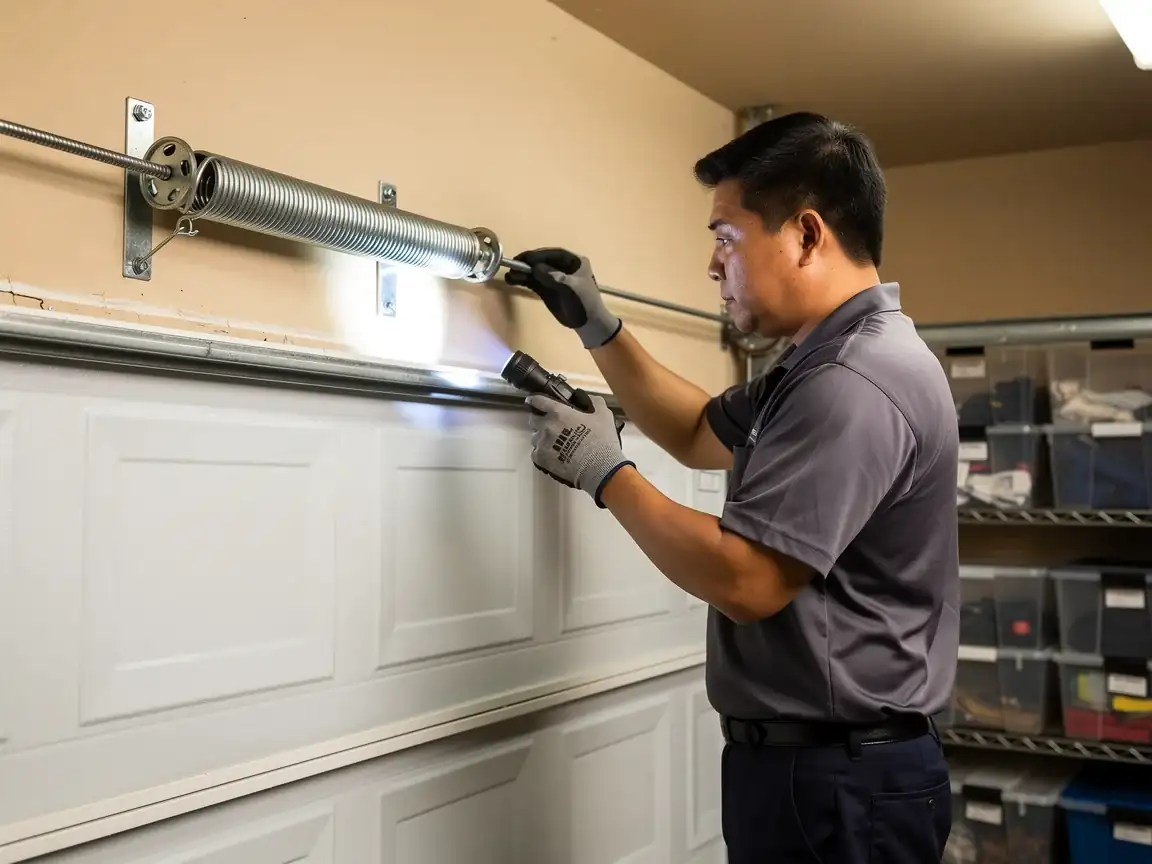
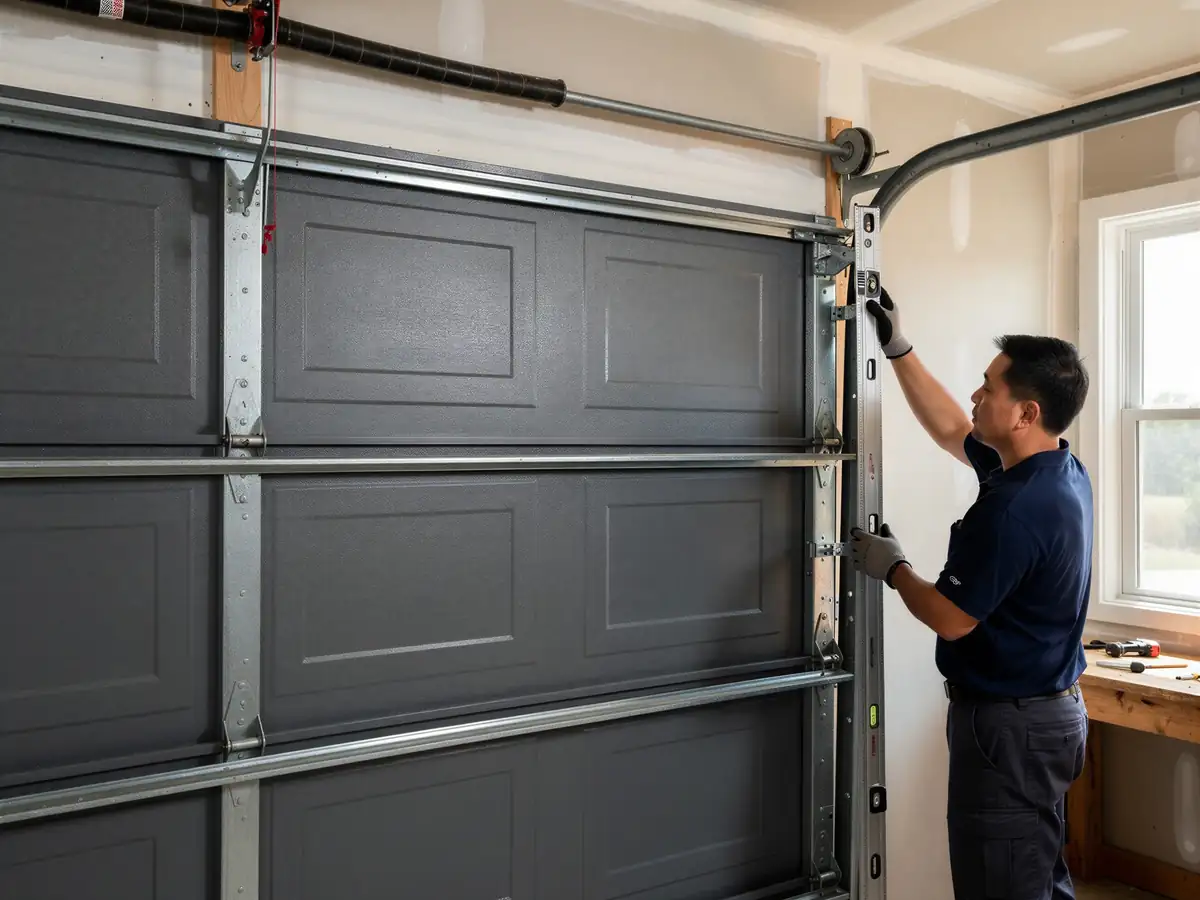
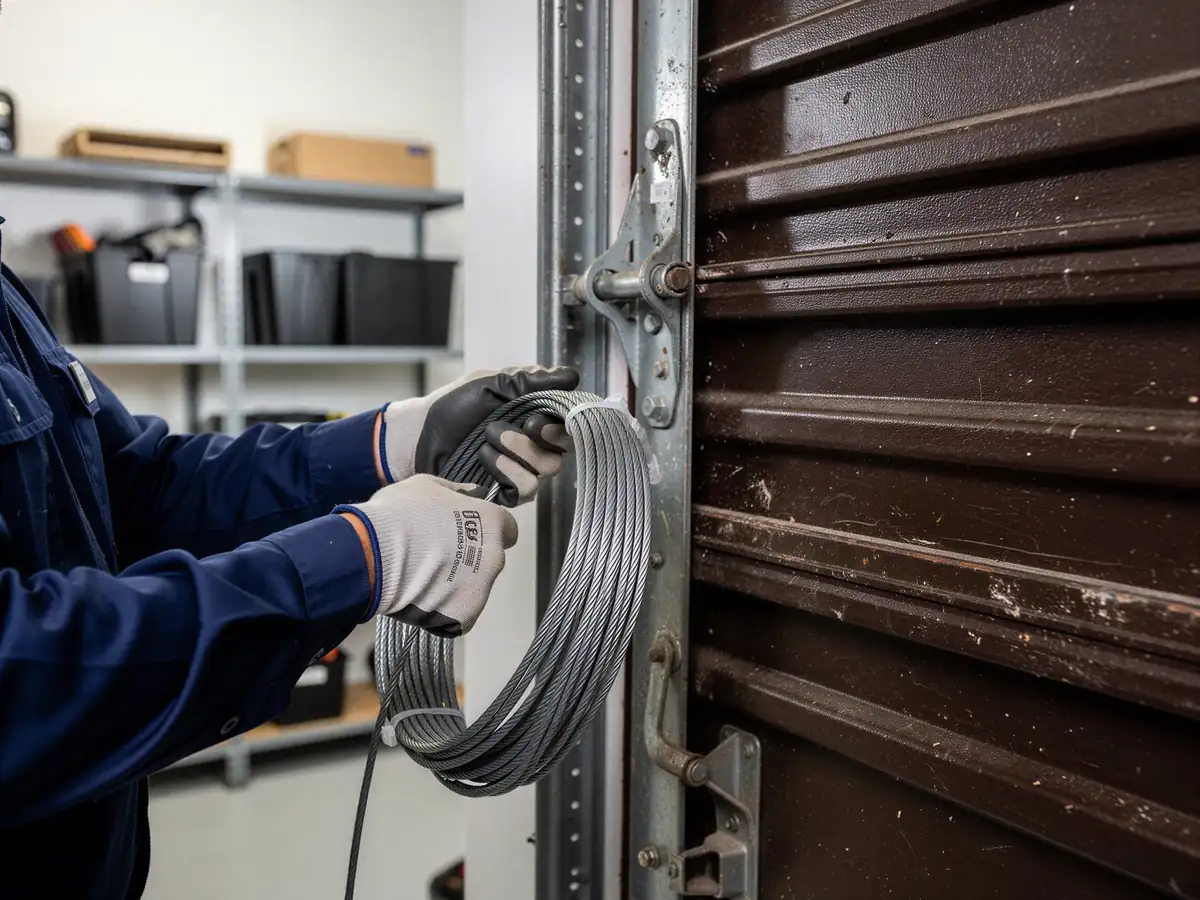
The houses here tell us a lot before we arrive. Median build year in Elgin is 1979, which puts most garage doors here on hardware that's older than what we see in the newer pockets of the service area. A lot of these doors run on extension springs with lift cables routed over pulleys at the top corners of the door, not torsion springs with a single cable on a drum. Those galvanized cables stretch, the strands fray where they bend around the pulley, and after four decades of summer heat and winter snap-freezes, the fraying usually wins.
We also see a fair number of cable failures tied to the drum or pulley wearing a groove over the years, which lets the cable walk sideways and kink. On a door this old, the cable is rarely the only thing worn - it's just the part that gives out first.
The DIY Question
A broken cable on a door this old is not a safe DIY repair, and I'll say that plainly: the spring on the other end of that cable is still under load, and extension springs from the late 1970s don't have the safety cables that code calls for now. If a spring lets go while you're working on the cable, it can put a steel rod across a garage at speed.
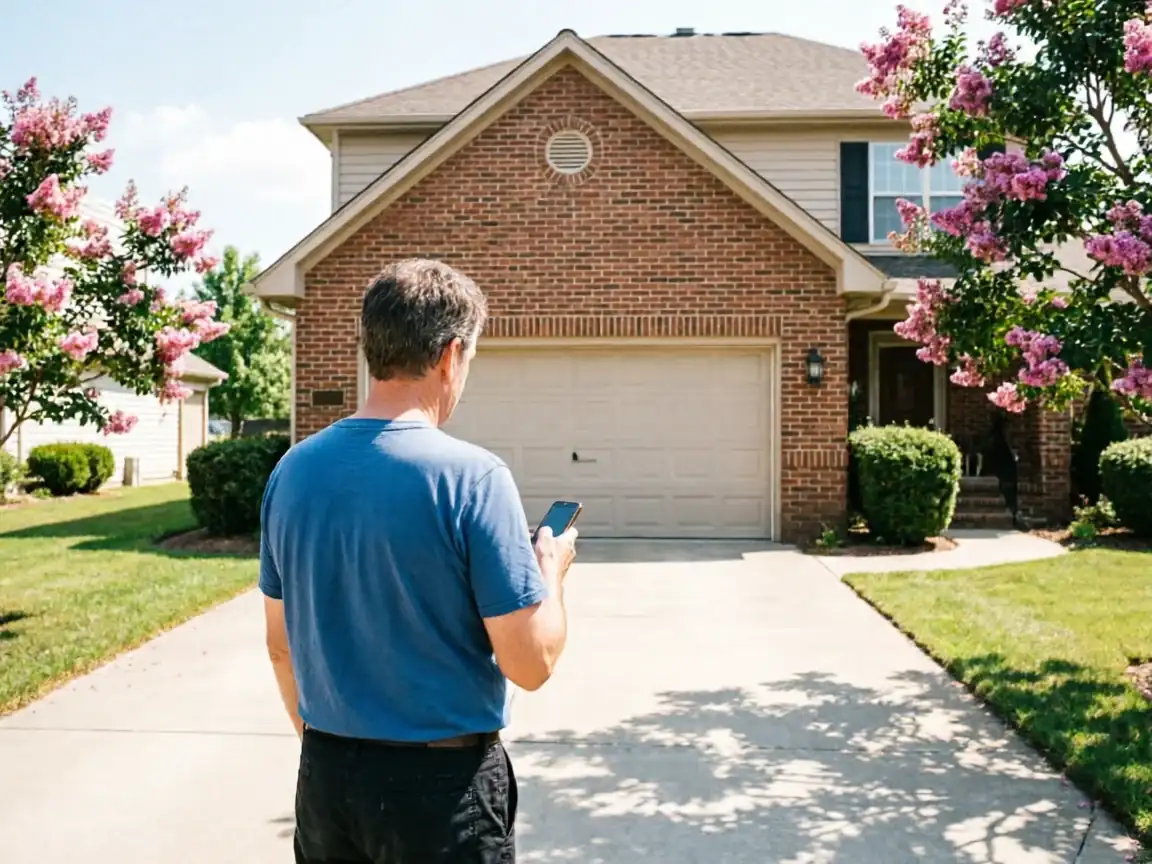
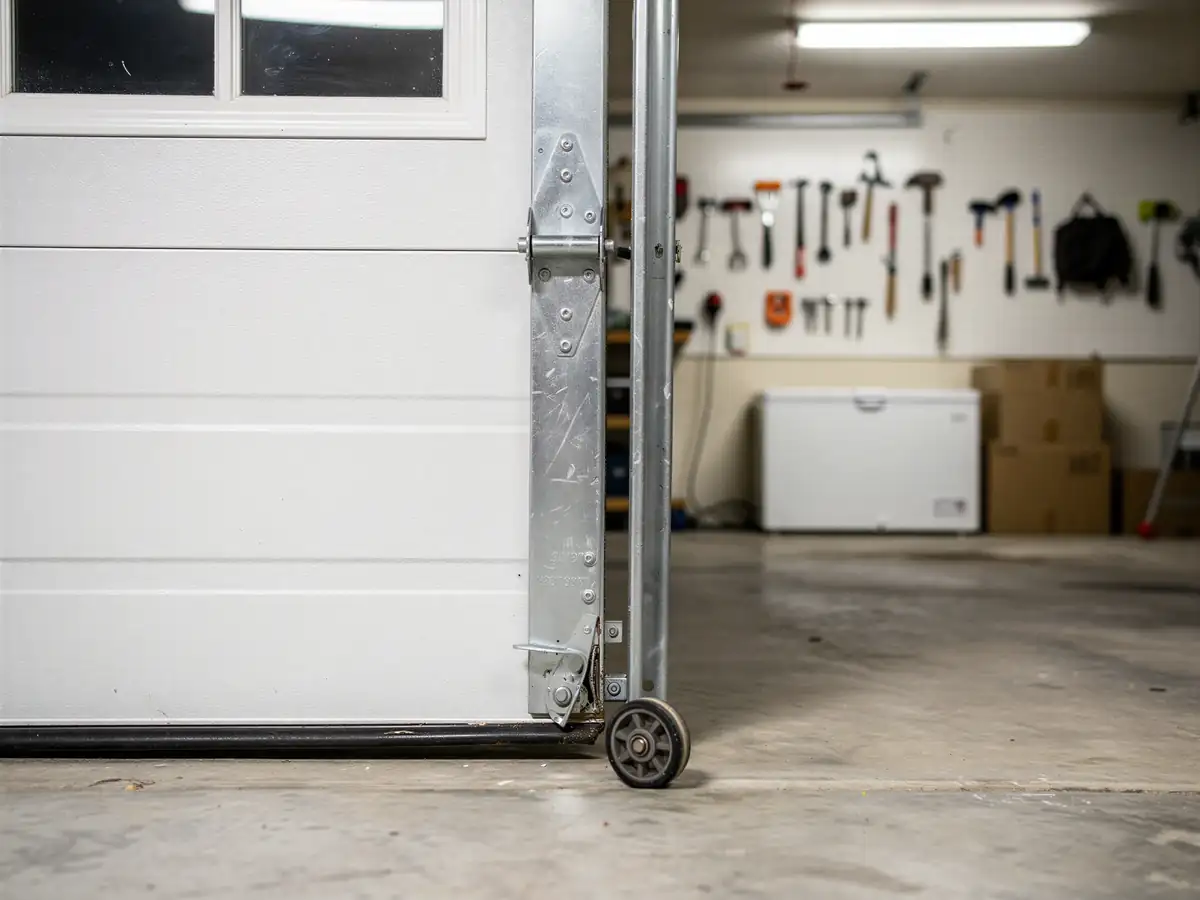
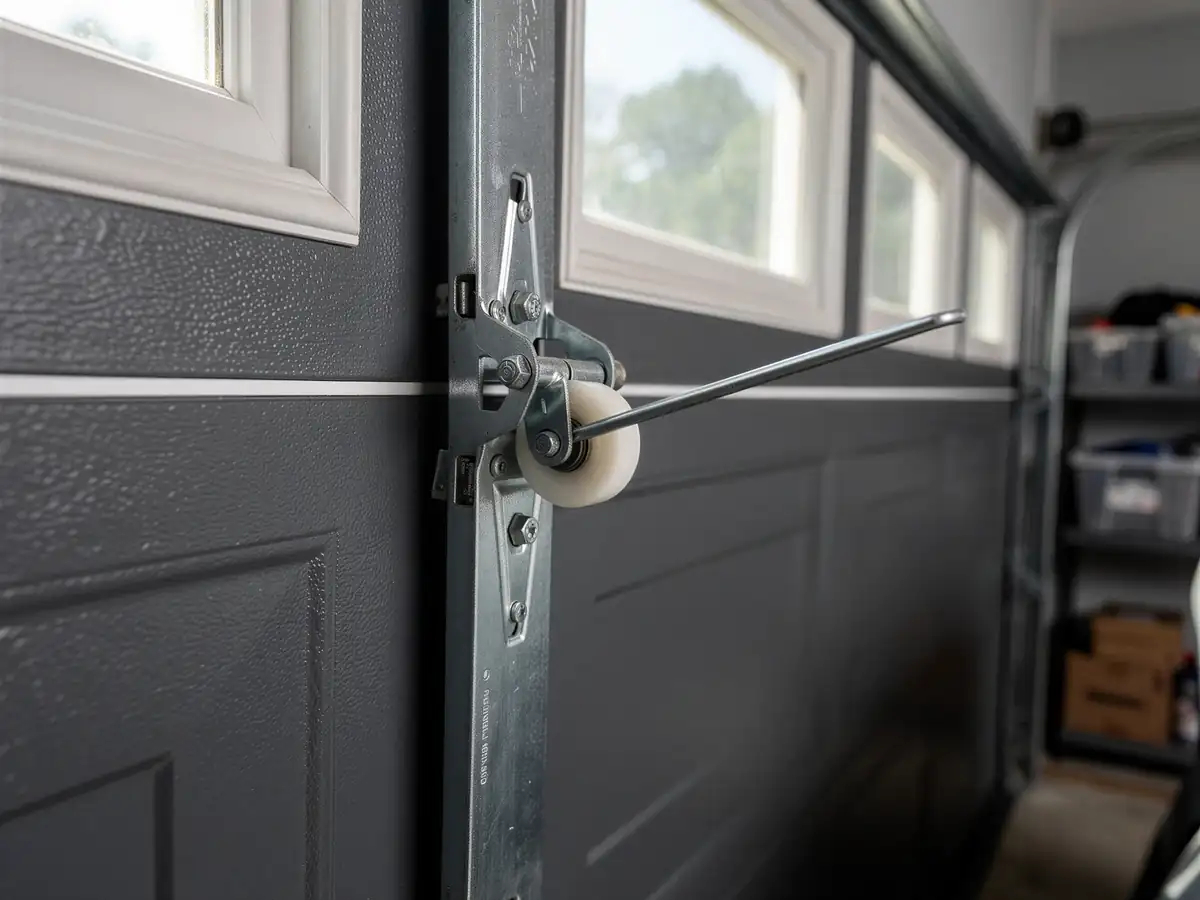
What you can safely do is leave the door down, unplug the opener so nobody tries to run it, and take a photo of the cable and the pulley it rides in before you call. That tells us whether we're bringing a standard replacement cable or dealing with a stretched drum or a bent pulley bracket, which matters more on a door this era than on newer stock.
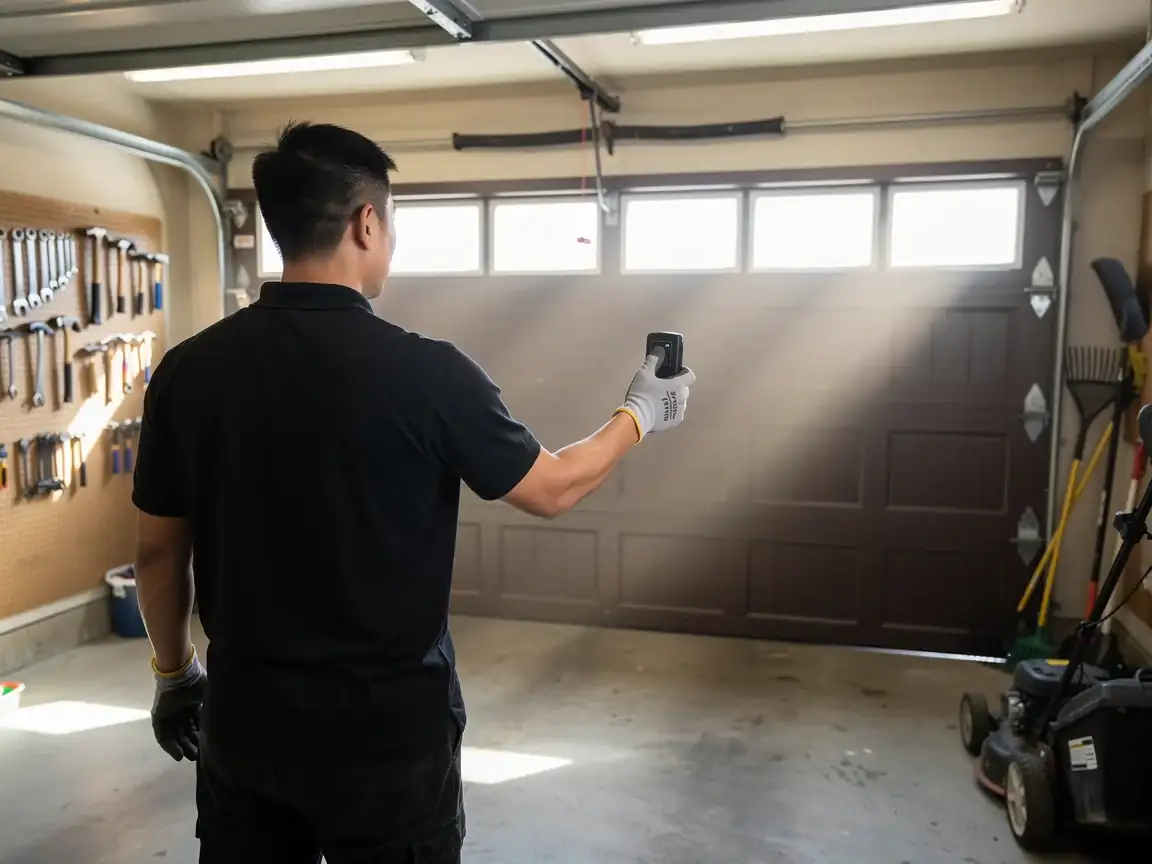
If the opener is still trying to run the door with a snapped cable, stop it. Running a motor against a jammed or unbalanced door on 40-year-old hardware is how you turn a $150 cable job into a cracked panel or a stripped gear.
What You Are Seeing
On the extension-spring doors common to Elgin's 1979-median housing stock
A cable failure usually shows up one of two ways. Either the door drops hard on one side and sits crooked in the opening, cable dangling loose from the pulley, or the whole door won't budge because the cable has jumped the drum track and jammed itself.
A crooked, cocked door is the more common call here
One cable snaps, the opposite side still has tension, and the door racks sideways in the tracks. Don't force it level by hand - the tracks on doors this old are often the original galvanized steel, and bending one means a track replacement on top of the cable.
Less often, we find a cable that hasn't snapped but has frayed down to a few strands at the pulley
That door still moves, just roughly, with a grinding or clicking sound at the top of the travel. That's the lucky version of this call, because we can usually replace both cables as a set before the second one goes.
How Long You Are Without the Door
Because we're running the 16 miles from Hutto rather than working out of a depot in Elgin, the honest answer depends on when in the day you call and whether the job needs a part we carry on the truck versus one we have to source. Standard lift cables for extension-spring systems are stock items we carry, so most straightforward cable jobs get done in one visit.
Where it stretches out is when the cable failure has taken the drum, pulley bracket, or track with it - more likely on hardware installed in the late 1970s and early 1980s, which describes a good share of Elgin's housing. We won't quote you a same-day guarantee for Elgin specifically; the drive is real and we'd rather tell you that up front than promise a window we can't hit from Hutto every time.
Where This Job Goes Sideways
The job goes sideways when someone replaces the cable and ignores the pulley or drum it was riding on. On doors from Elgin's 1979-median build era, we regularly find a pulley with a worn groove that will fray the new cable in under a year if we don't swap it at the same time. A cable-only fix on a bad pulley is a callback waiting to happen.
It also goes sideways when the door has been run crooked on a broken cable for a while before anyone calls. Elgin's median household income here, $85,666, means most homeowners are financially fine to fix this properly, but a door that's been forced or driven on with the opener while racked can bend a track or crack a hinge, turning a cable repair into a bigger parts list.
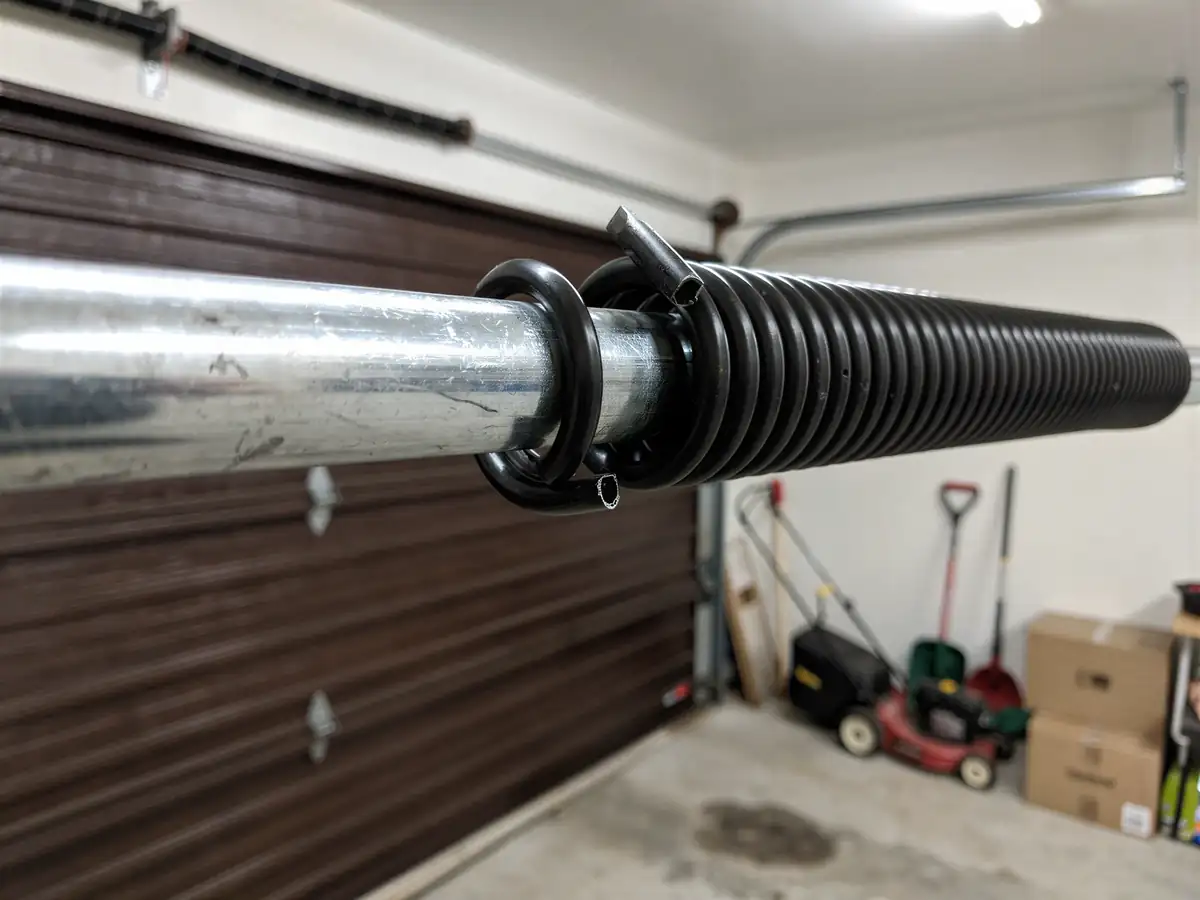
One honest limit: if the drum or torsion tube shows pitting or rust-through along with the cable failure, we're not going to patch around it. On hardware pushing 45 years old, replacing the worn load-bearing part is cheaper than a second truck trip in six months.