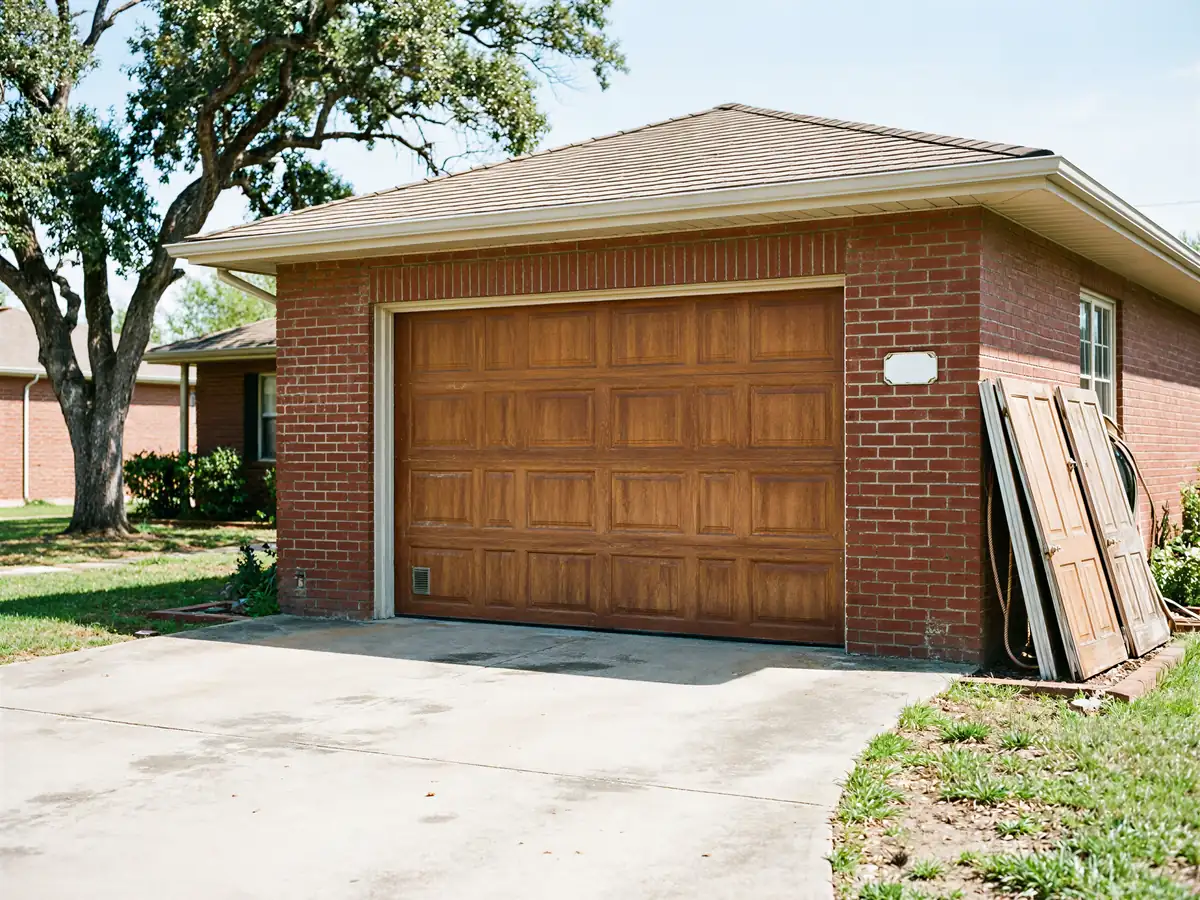
How We Fix It
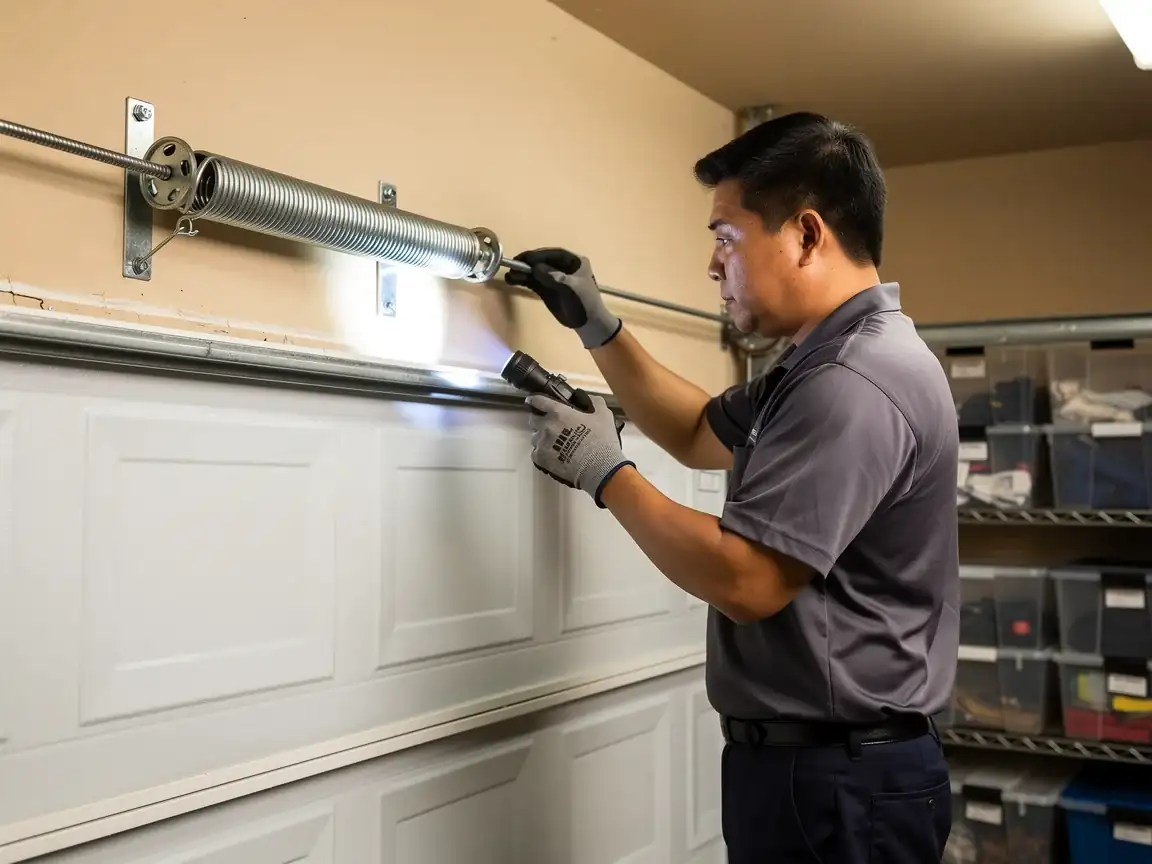
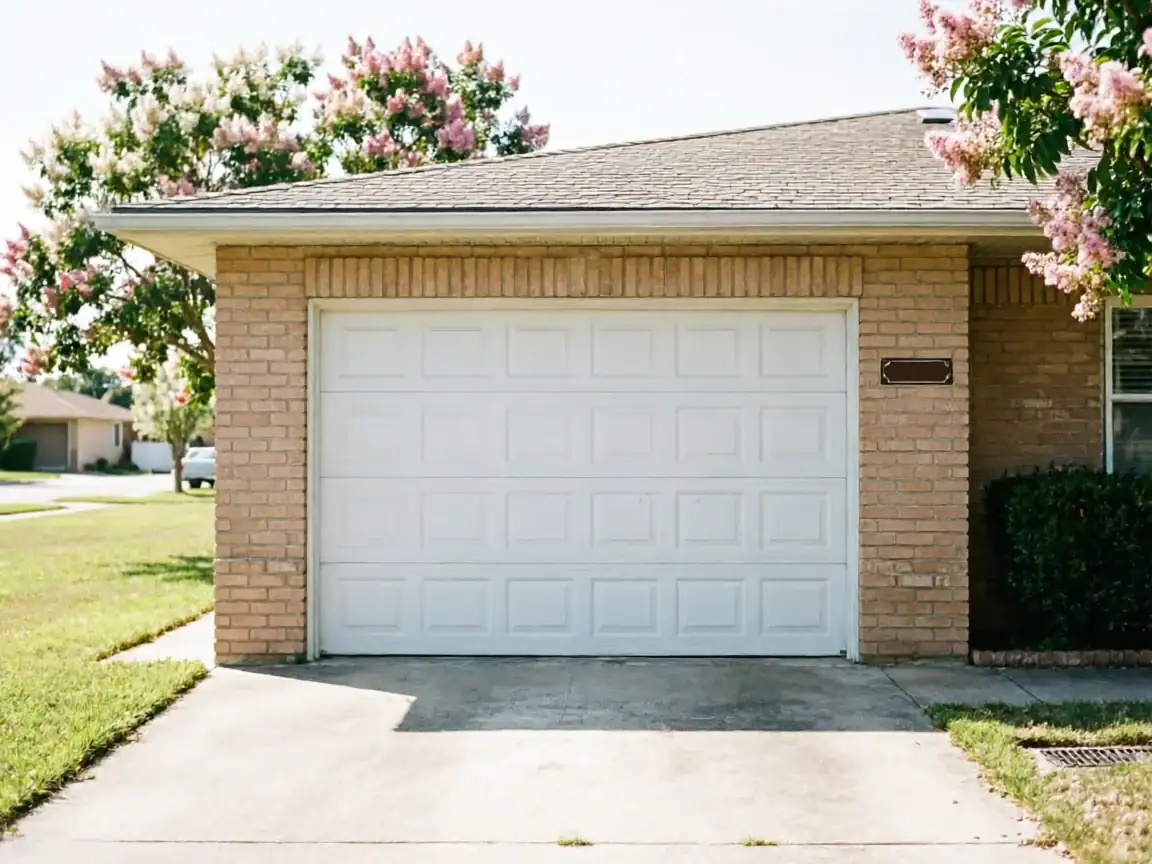
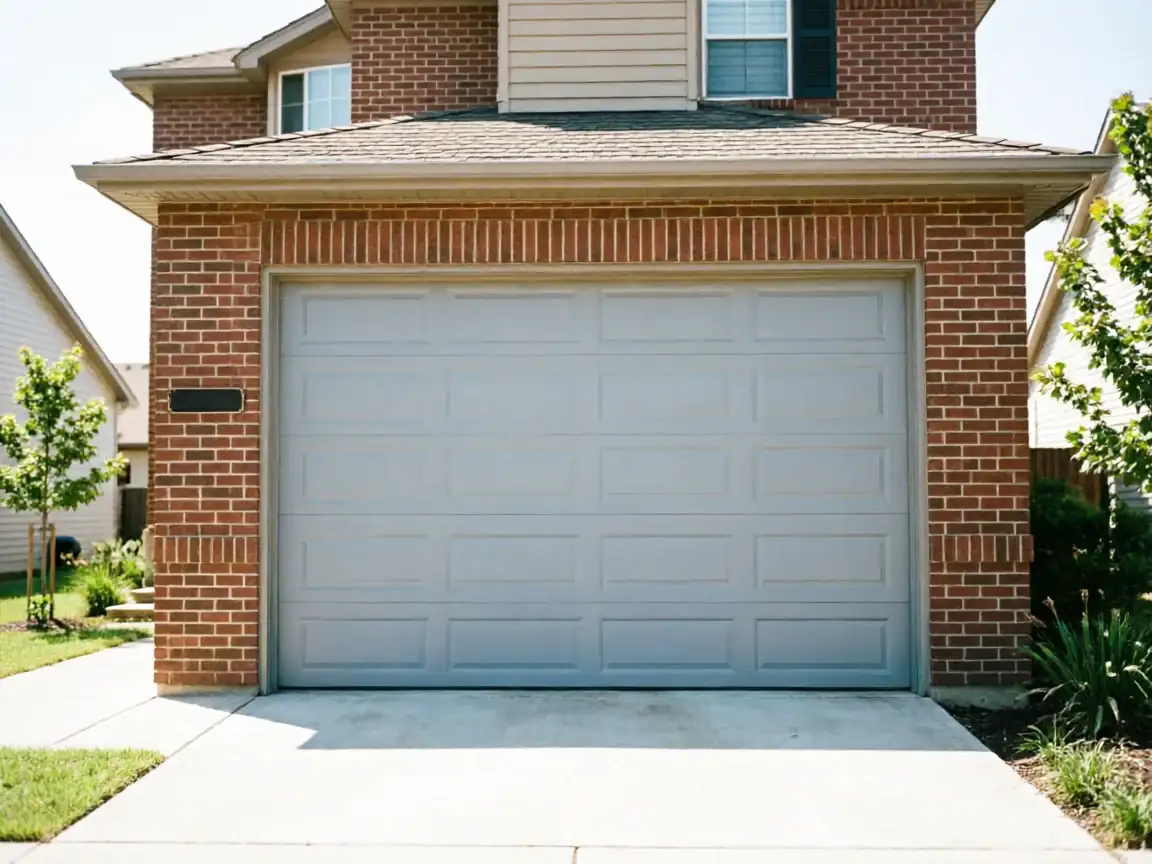
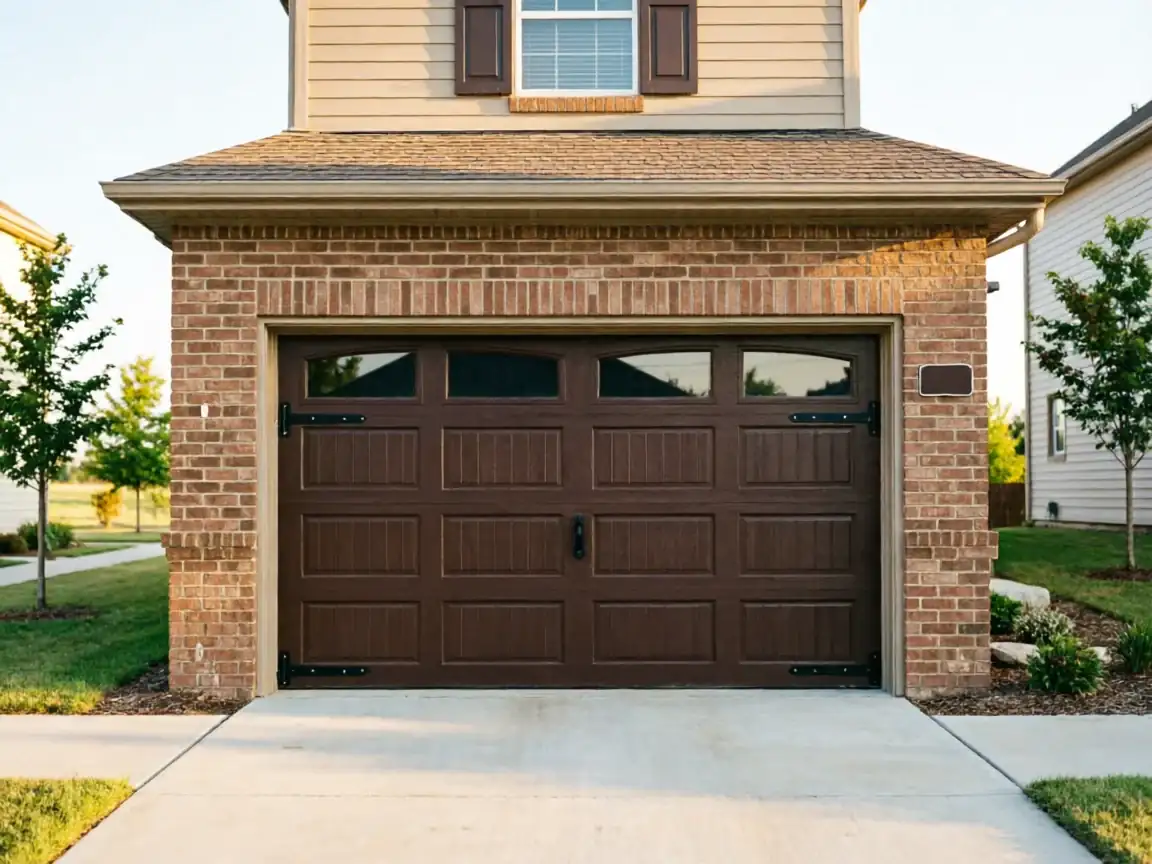
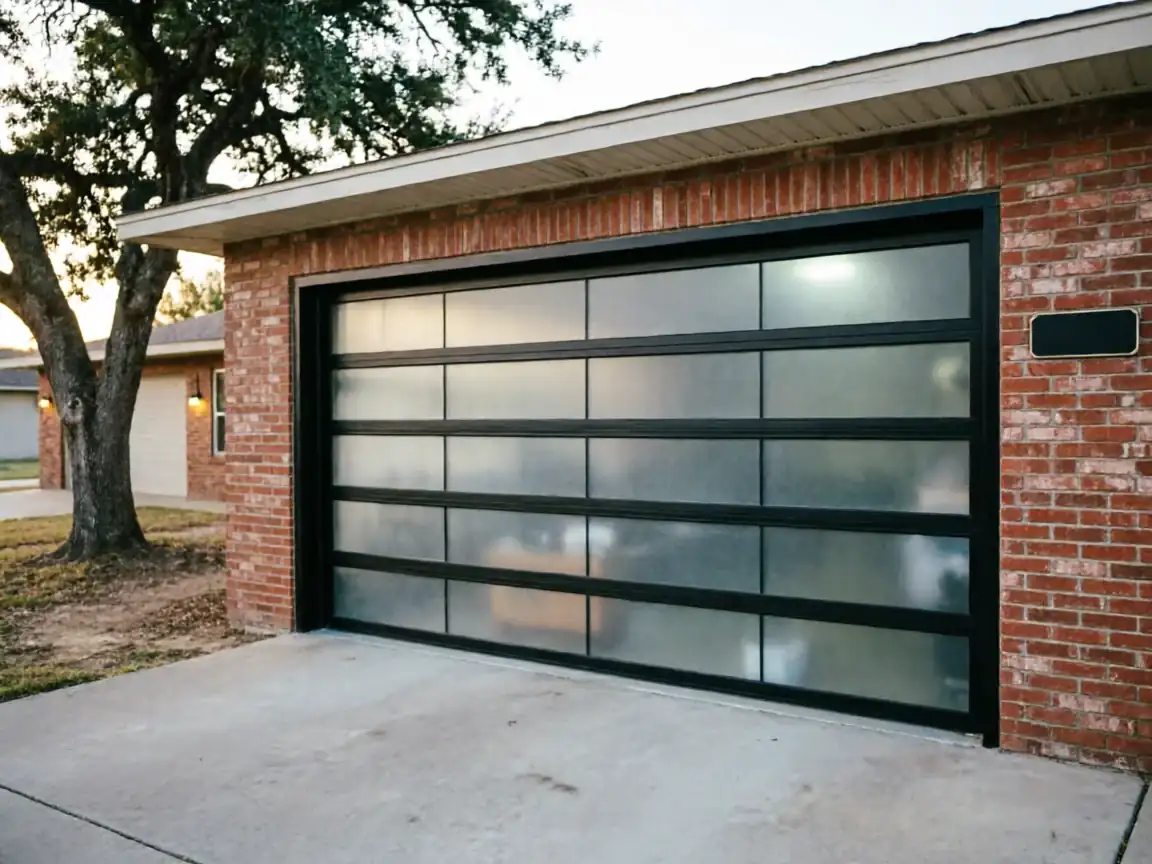
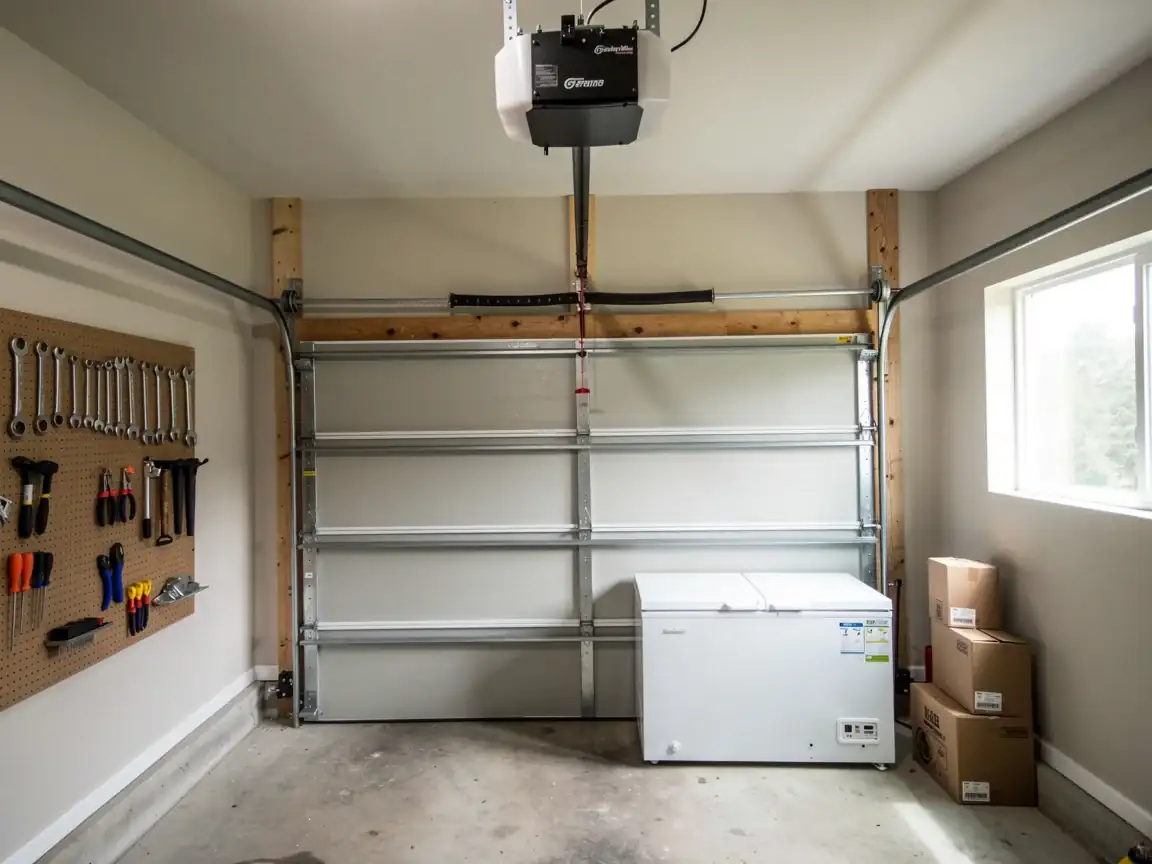
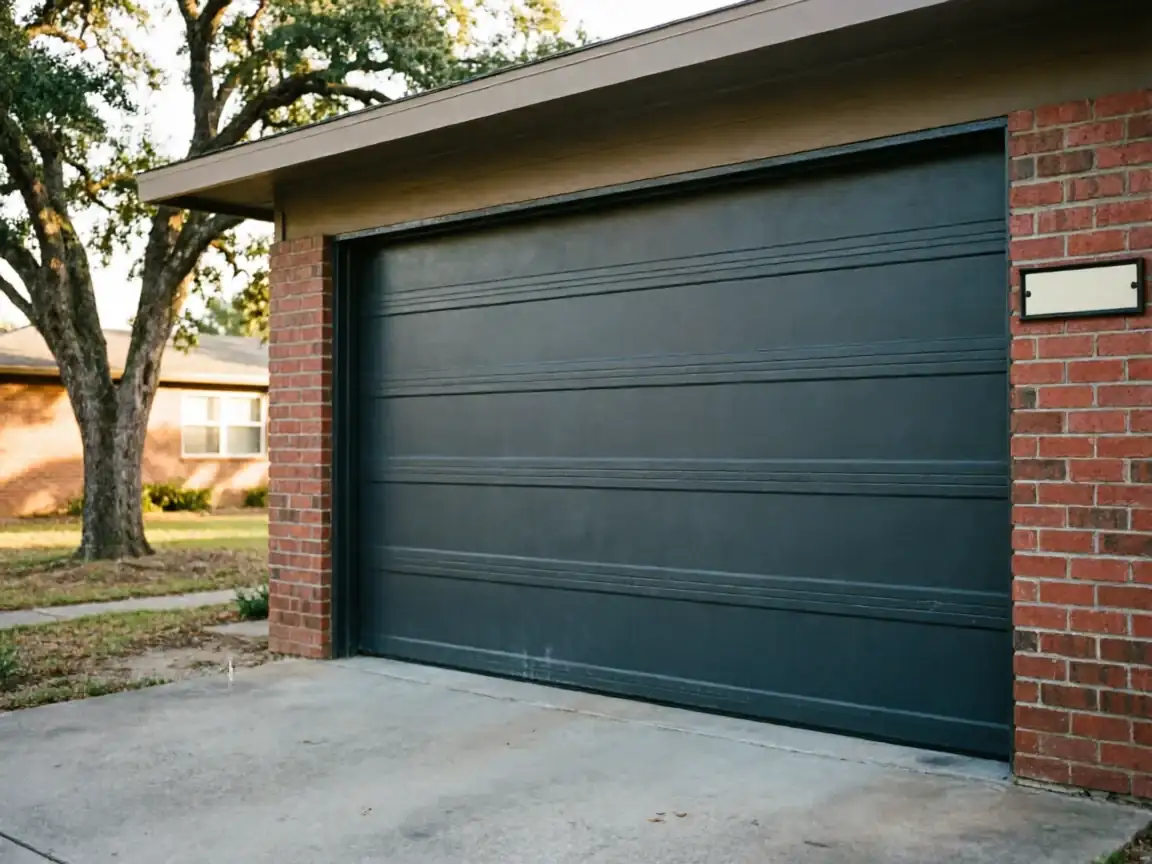
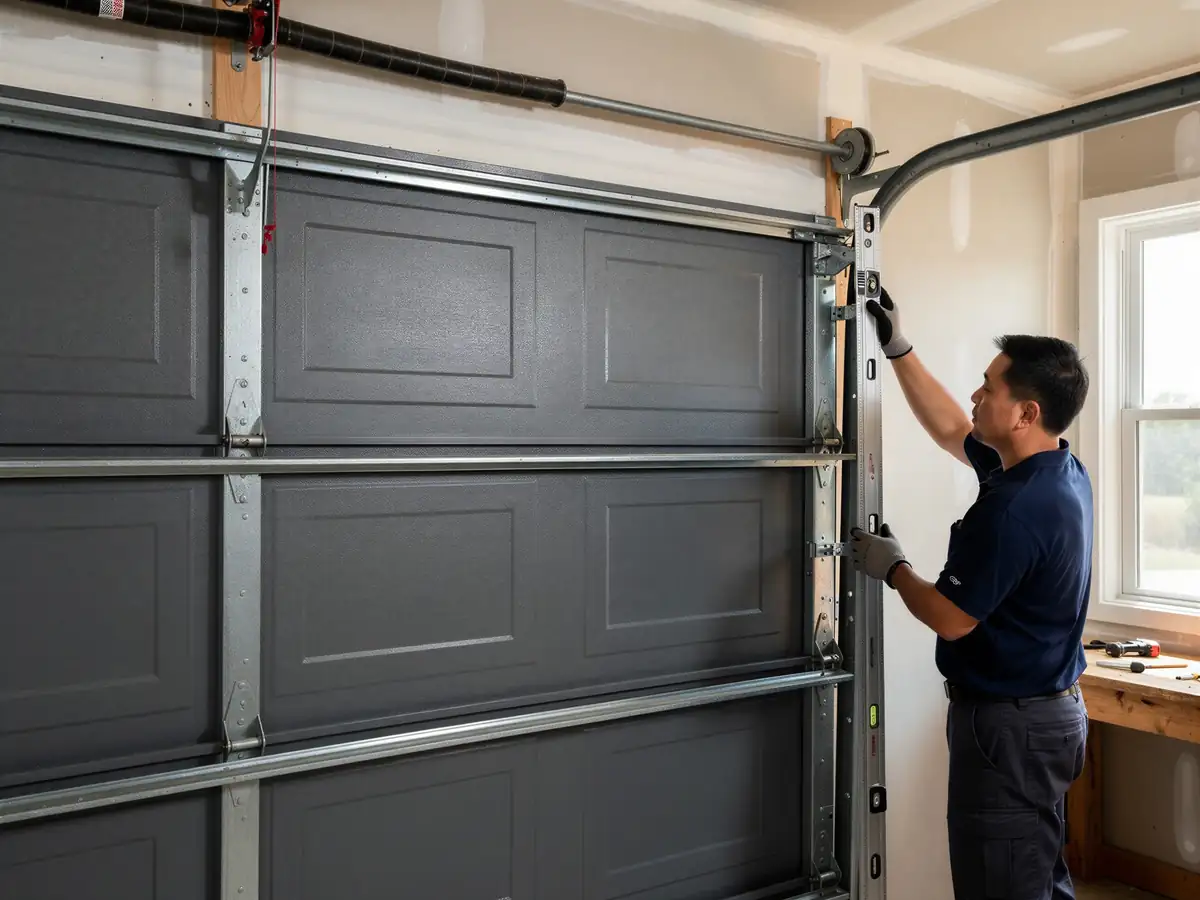
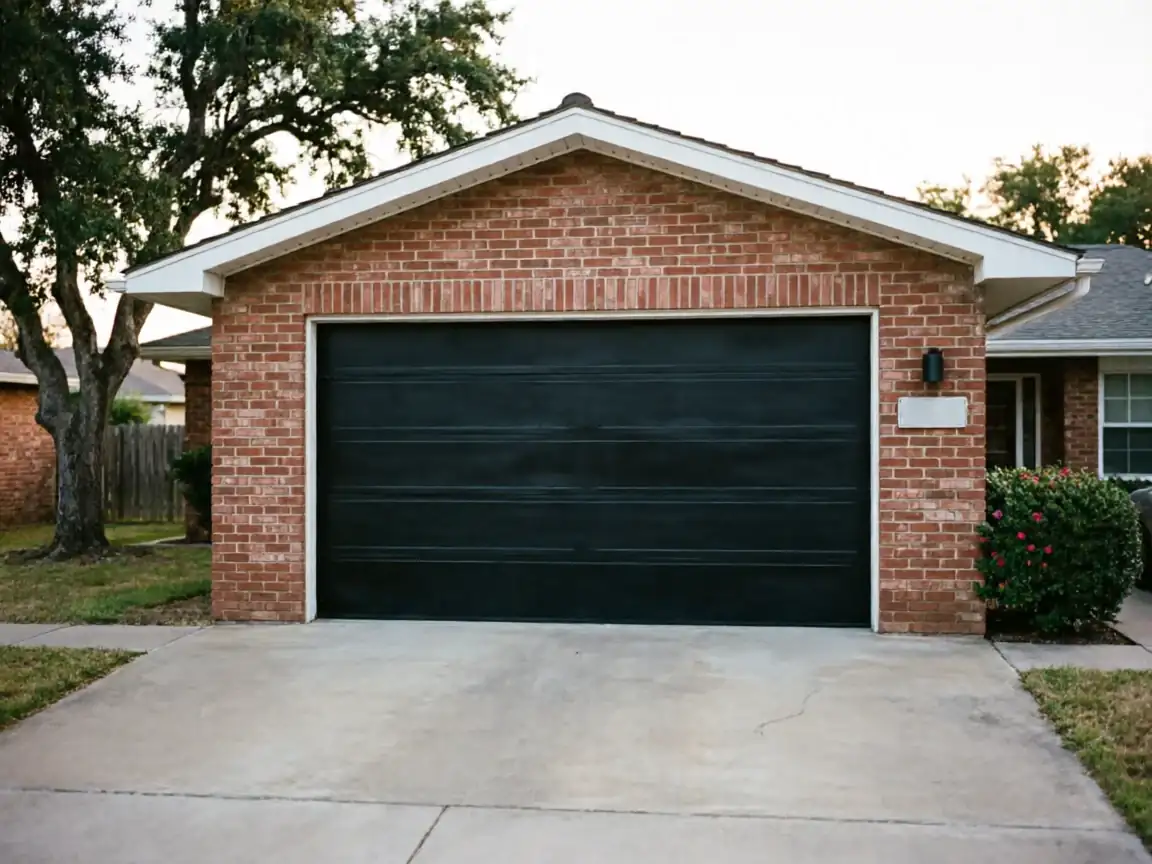
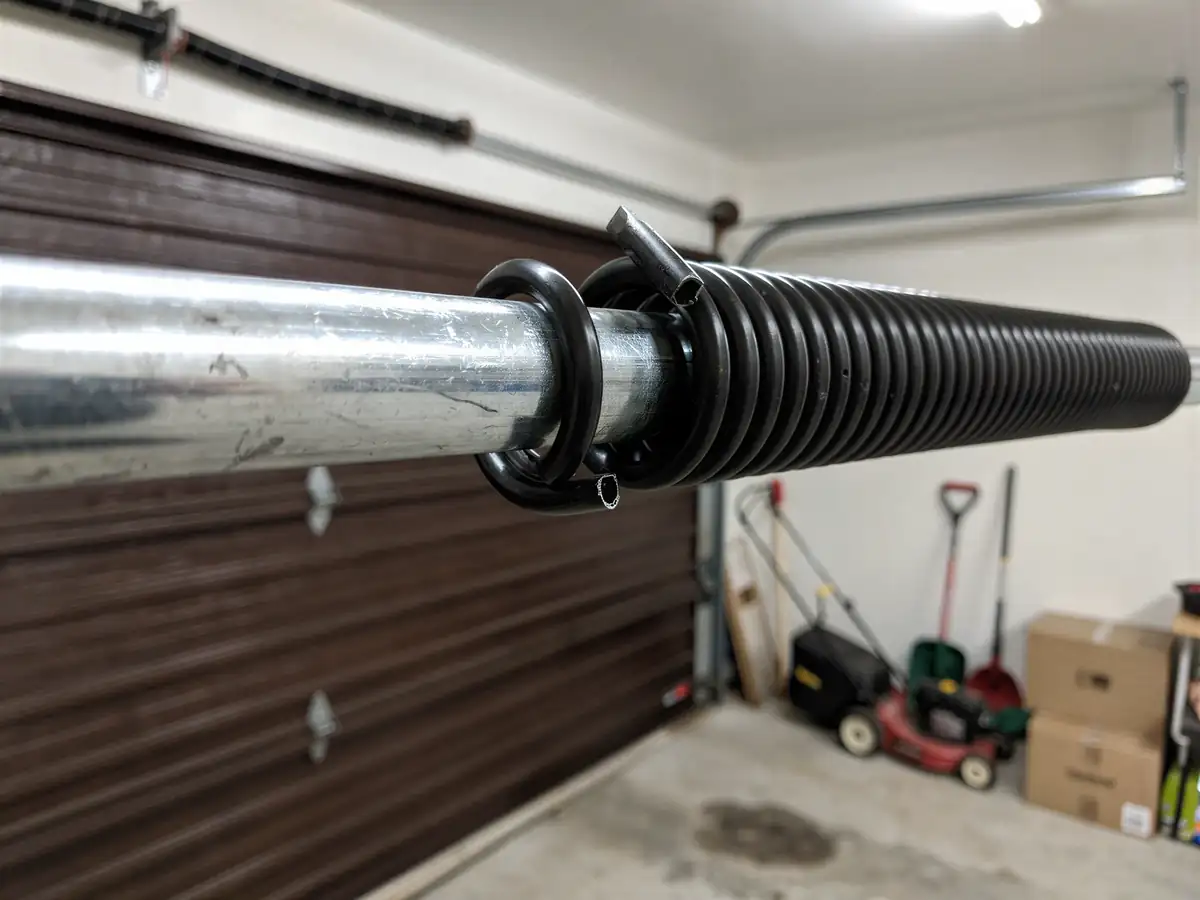
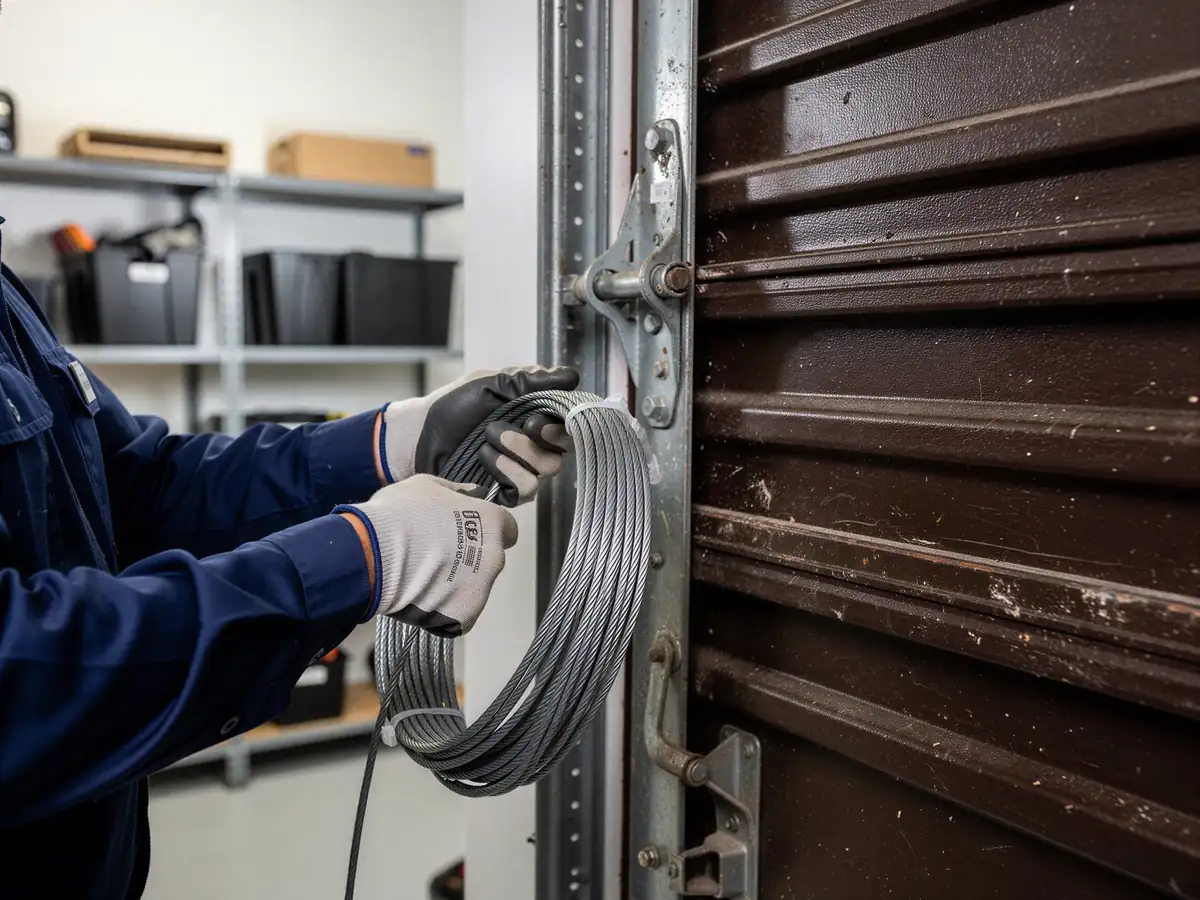
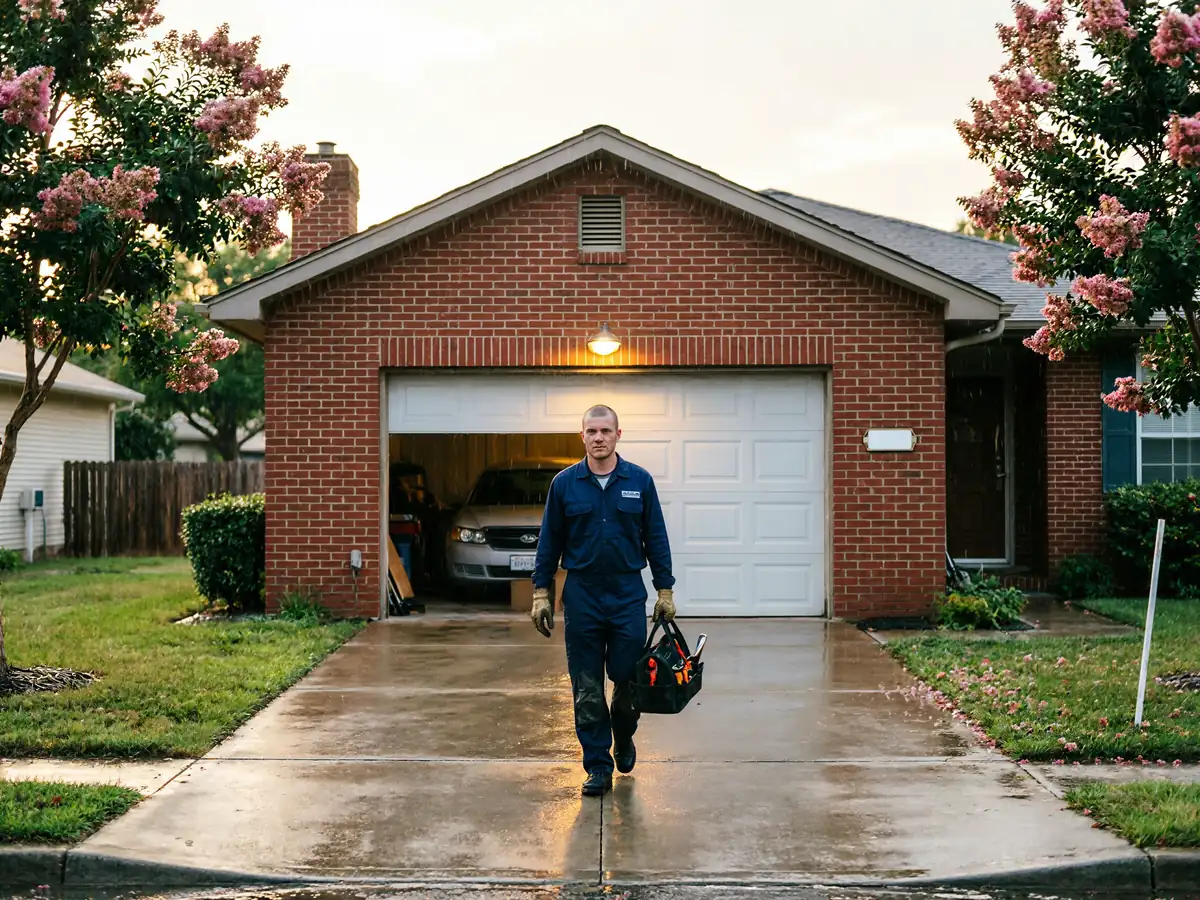
Most houses in Brushy Creek went up around 1995, a good decade newer than the typical build year across the rest of our service area. That matters for installation because a door going up in the mid-90s almost always came with a steel sectional panel on a torsion spring system, not the older one-piece or extension-spring setups you find on houses from the 1960s and 70s. The opener on that door was likely one of the first generations required to carry a photo-eye safety sensor, since federal rules mandating that feature took effect in 1993. So when we install new in this neighborhood, we're usually not retrofitting old hardware to new code - we're replacing a door and opener that were already built to roughly today's baseline, just thirty years worn. The torsion spring on a door that age has typically used up most of its rated cycle life. We size the new spring to the actual door weight and track setup rather than reusing a spring that was matched to the old panel. Track alignment is usually straightforward on this stock since the framing is square and standard 7-foot garages are common in houses from this era, which keeps labor predictable and lets us focus budget on the door and opener instead of structural fixes.
The DIY Question
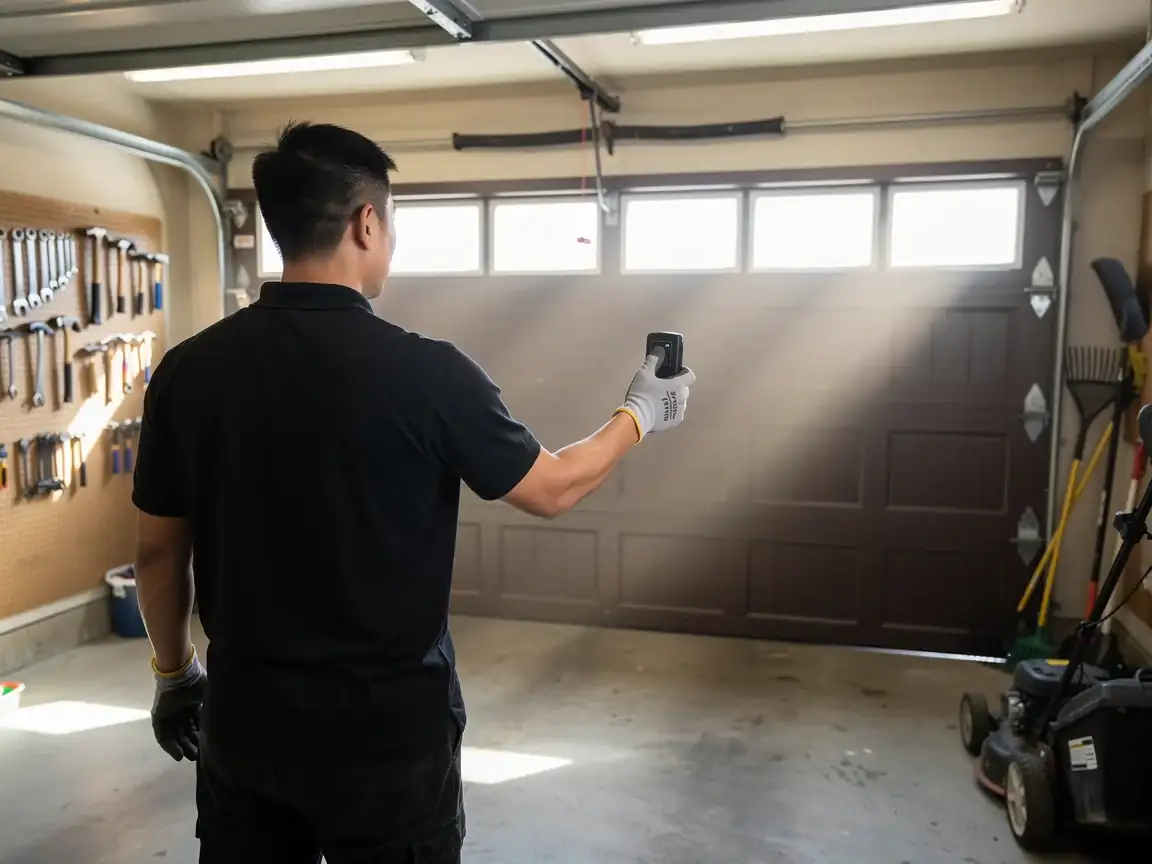
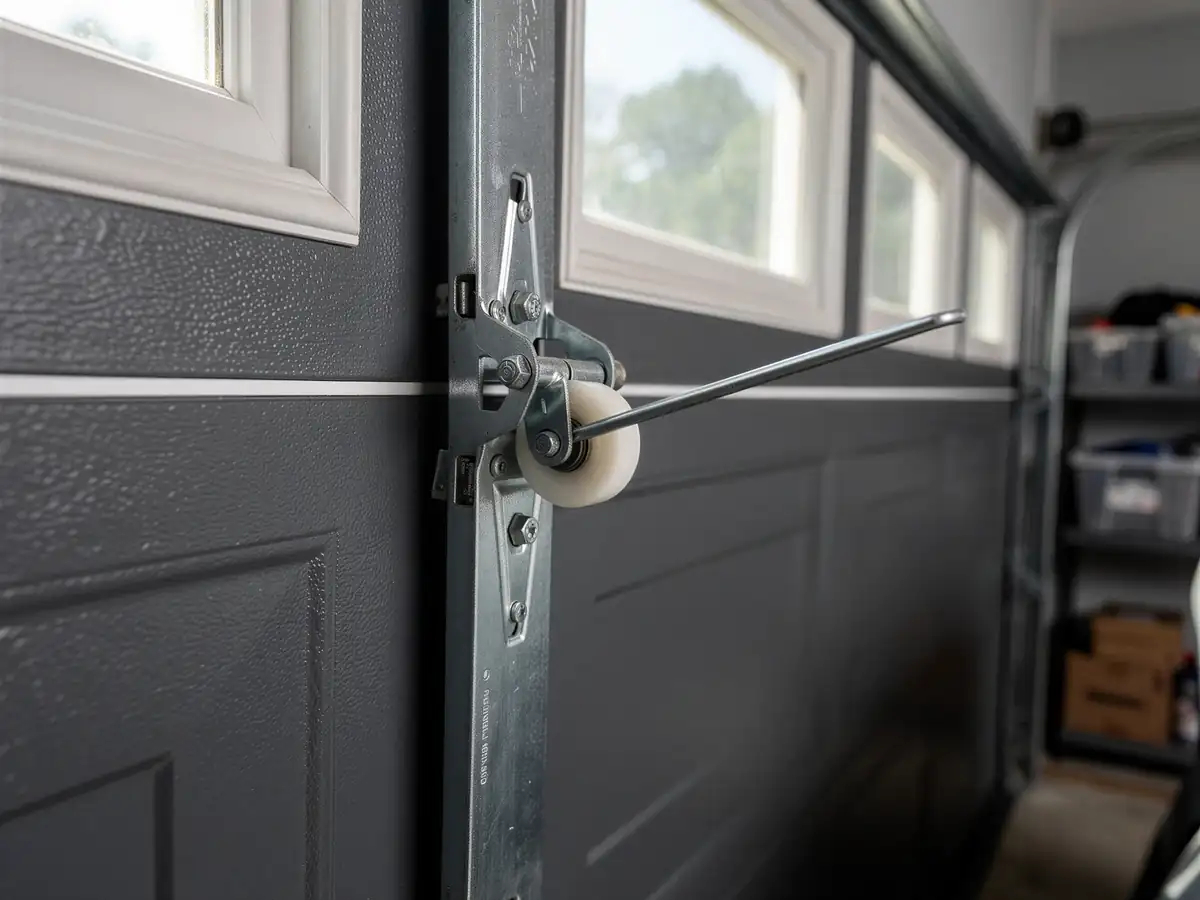
A homeowner handy with tools can hang a new garage door, and some in Brushy Creek do. What we don't recommend doing yourself is the spring conversion or torsion setup, especially on a double-wide door, which is standard in newer construction and carries a heavier panel than the single bays common on older houses. A torsion spring under tension can put someone in the hospital if the winding bar slips, and getting the spring rate wrong for a door built this century - heavier insulated steel than what was common decades earlier - means premature cable wear or a door that won't hold position. If you're comfortable swapping weatherstripping, repainting a panel, or replacing rollers on a track that's already aligned, go ahead. Full installation, including the opener's safety reversal calibration, is where we'd rather you call. We're honest that this isn't a hard rule for every house - a single lightweight door on a detached garage is a different job than a heavy insulated double on an attached one - but we'd rather tell you that upfront than have you find out the hard way.
What You Are Seeing
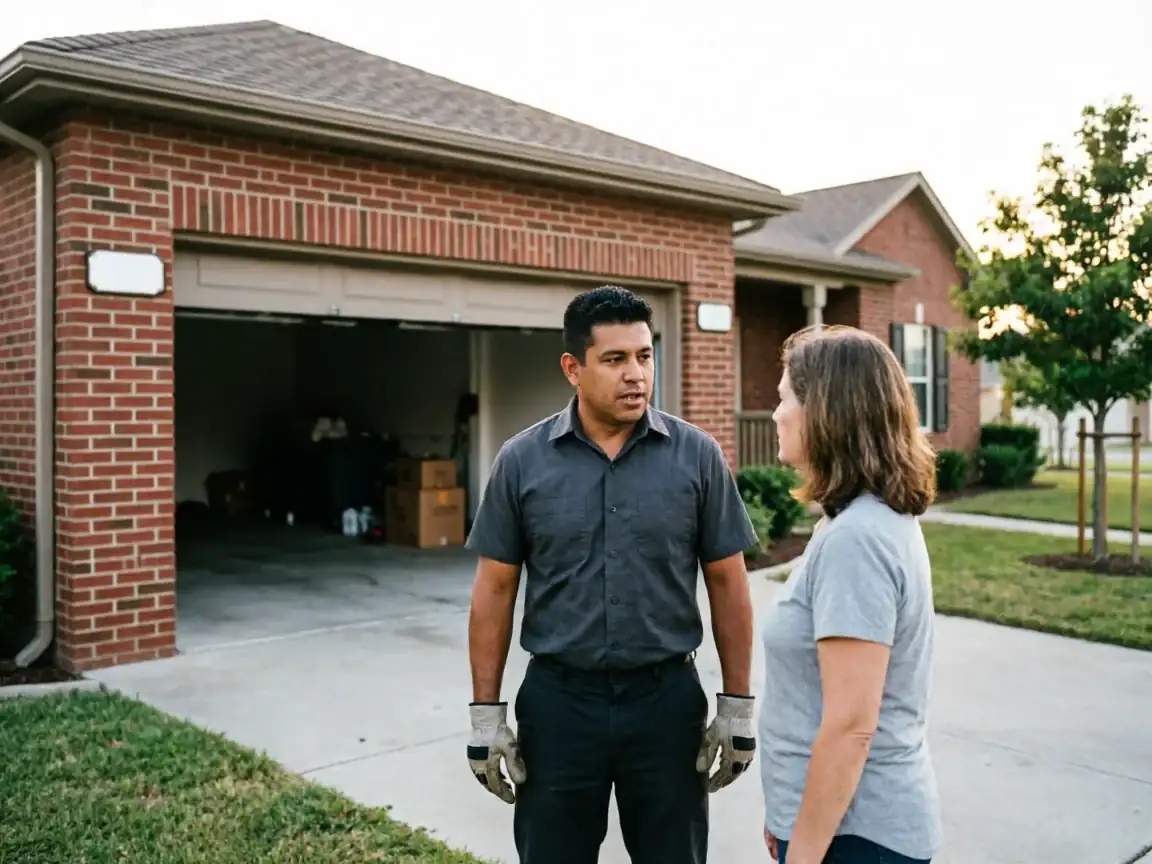
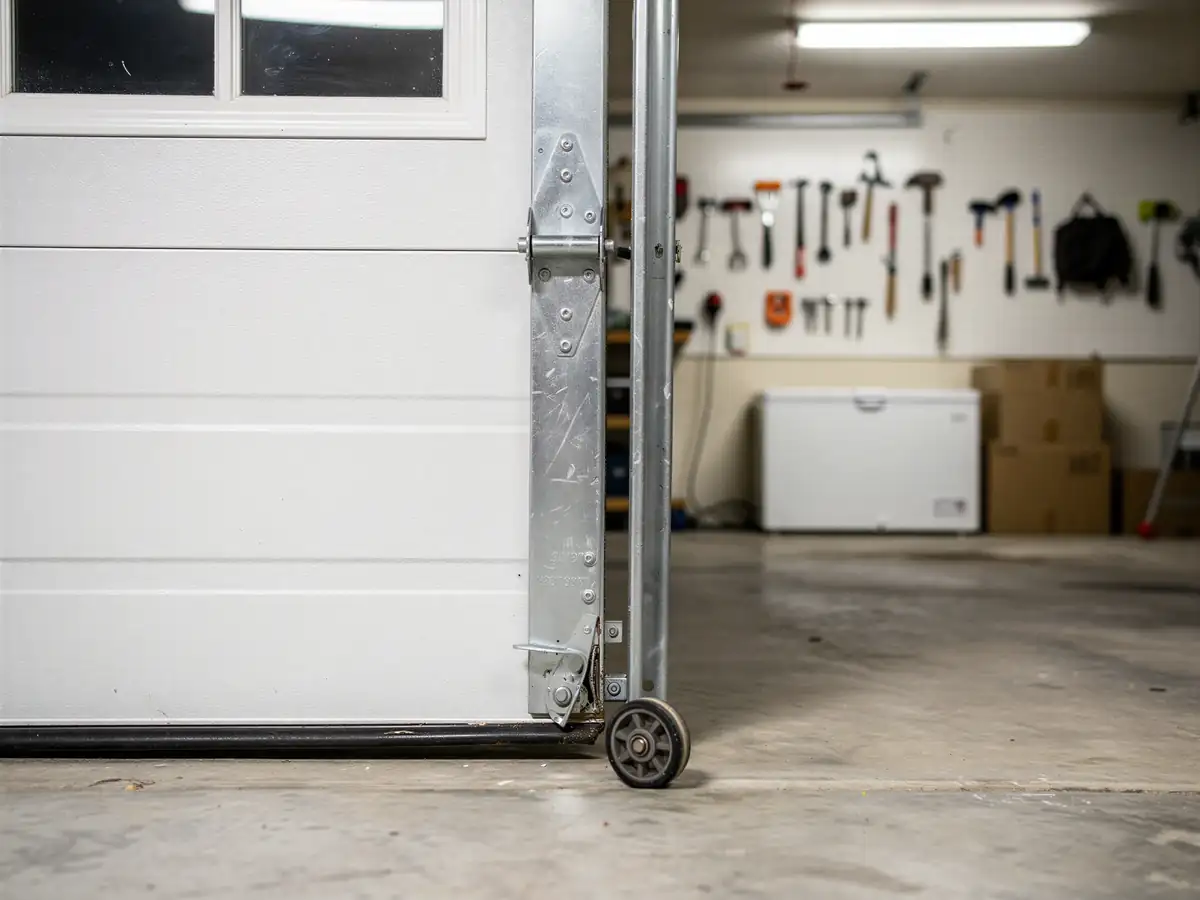
If your door was installed when the house was built in the mid-90s, you're at the point where the torsion spring has likely done its full rated number of cycles - that's the stiff lift, the door that drops a few inches before the opener catches it, or the spring that looks stretched and uneven on one side. Panels from that era were usually unfoiled steel, so dents show as bare metal rust spots rather than peeling laminate, which is a different symptom than what you'd see on an older one-piece door. If the opener has started reversing on its own partway down, that's often the photo-eye lens fogged or knocked out of alignment, not a failed board - worth checking before you assume the whole unit needs replacing. None of that means every symptom calls for full installation; sometimes it's a spring and cable job, not a new door. We'll tell you which one it is before we quote the bigger job.