What You Pay
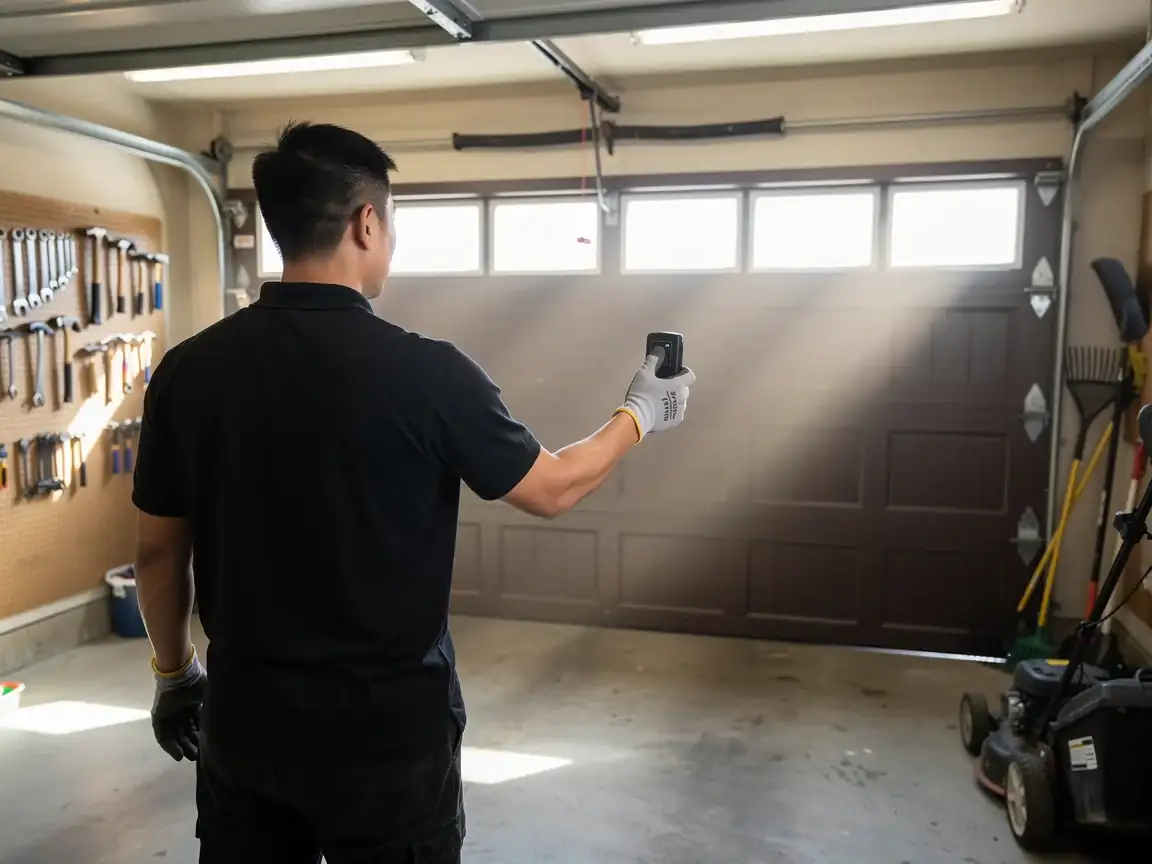
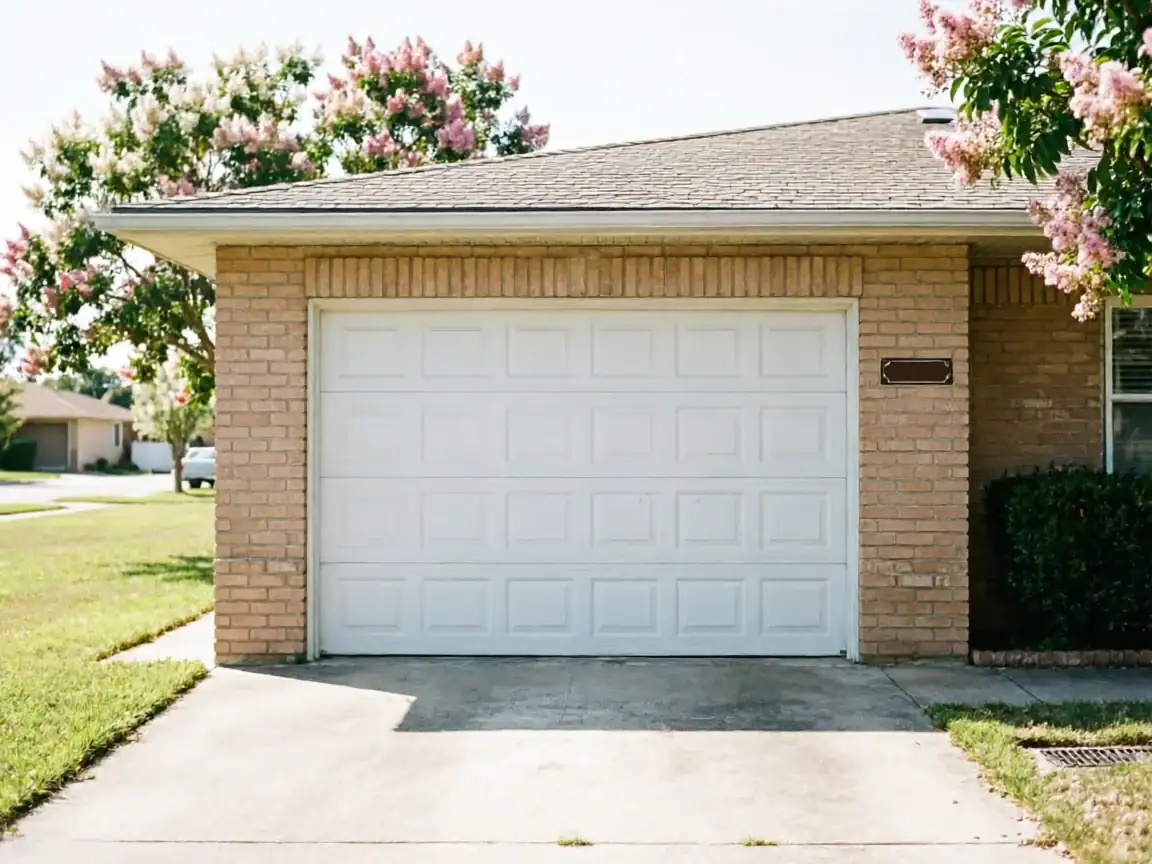
Bartlett is a small town - around 605 households, not the sprawl you get closer to Hutto - so the jobs here run toward single-door houses rather than the three-car garages you see in the newer subdivisions. That matters for price because labor is the same whether a door is one town or nineteen miles out, but the hardware on a house built in 1957 is often simpler: single torsion spring, narrower track, lighter panel material than the double-door steel setups common in newer builds. A straightforward spring swap or roller replacement on an older single door tends to run lower than the same repair on a heavier modern double door. We quote the job once we see the door, not off a phone description, because a 1957 door with original hardware and a 1995 door with a retrofit opener are not the same repair even if the symptom sounds identical. Median household income here is $63,464, noticeably below the wider service area's $86,477, and we price the work the same regardless - we just don't pad the invoice with upgrades nobody asked for. If a part needs ordering because it's an older size no longer stocked locally, that adds a day or two, and we tell you that up front rather than after the fact.
What Causes It Around Here
The median year built in Bartlett is 1957 - decades older than the 1980s-90s stock that makes up most of the wider area. That age gap is the whole story for this town. Original hardware on a door that old has usually been repainted, patched, or had an opener bolted on later rather than designed in from the start. Springs sized for a lighter original panel sometimes get asked to lift a heavier replacement door installed at some point in the last 60 years, and that mismatch shows up as a door that's hard to lift by hand or that slams the last foot of travel. Track alignment drifts over decades of settling on older slab foundations, and rollers that were steel to begin with wear grooves that newer nylon rollers don't develop the same way. We also see brittle, dry-rotted weatherstripping and bottom seals that were never replaced since install - not a safety issue most days, but it's often the first visible sign that other hardware is just as old and due.
The DIY Question
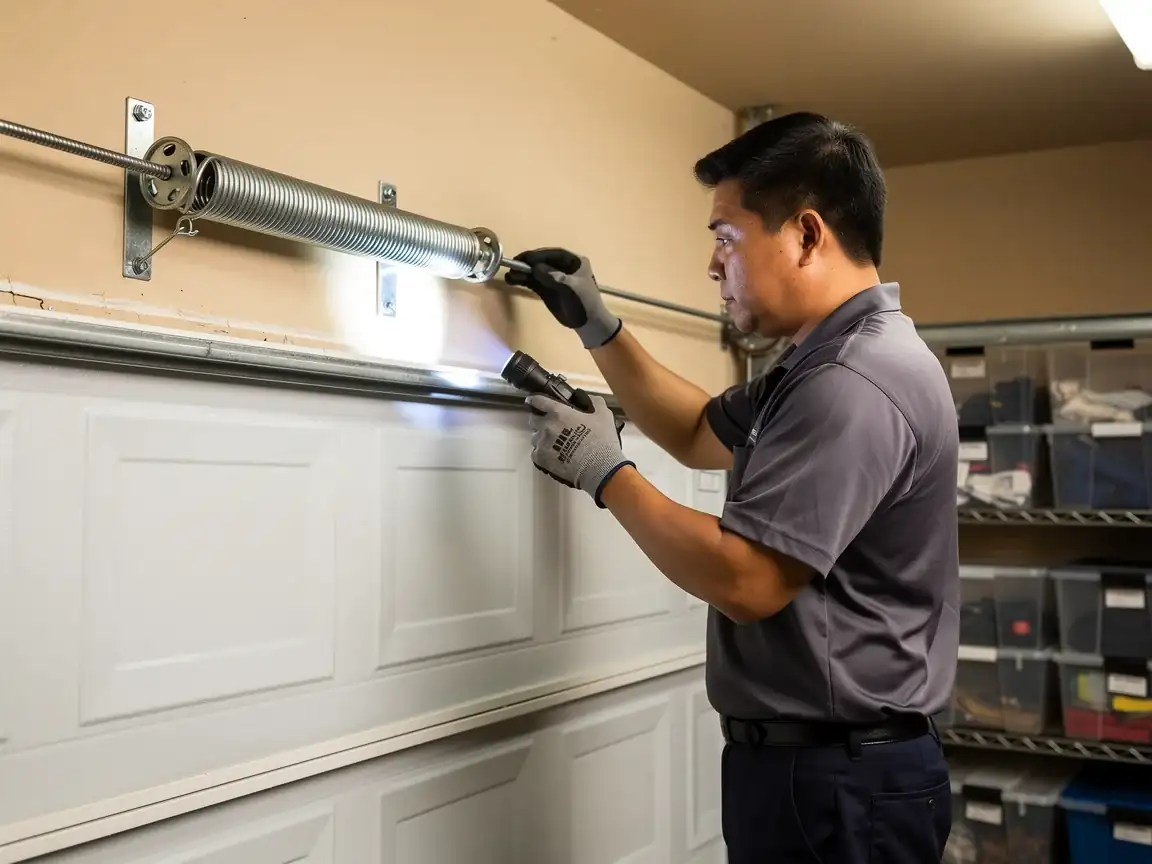
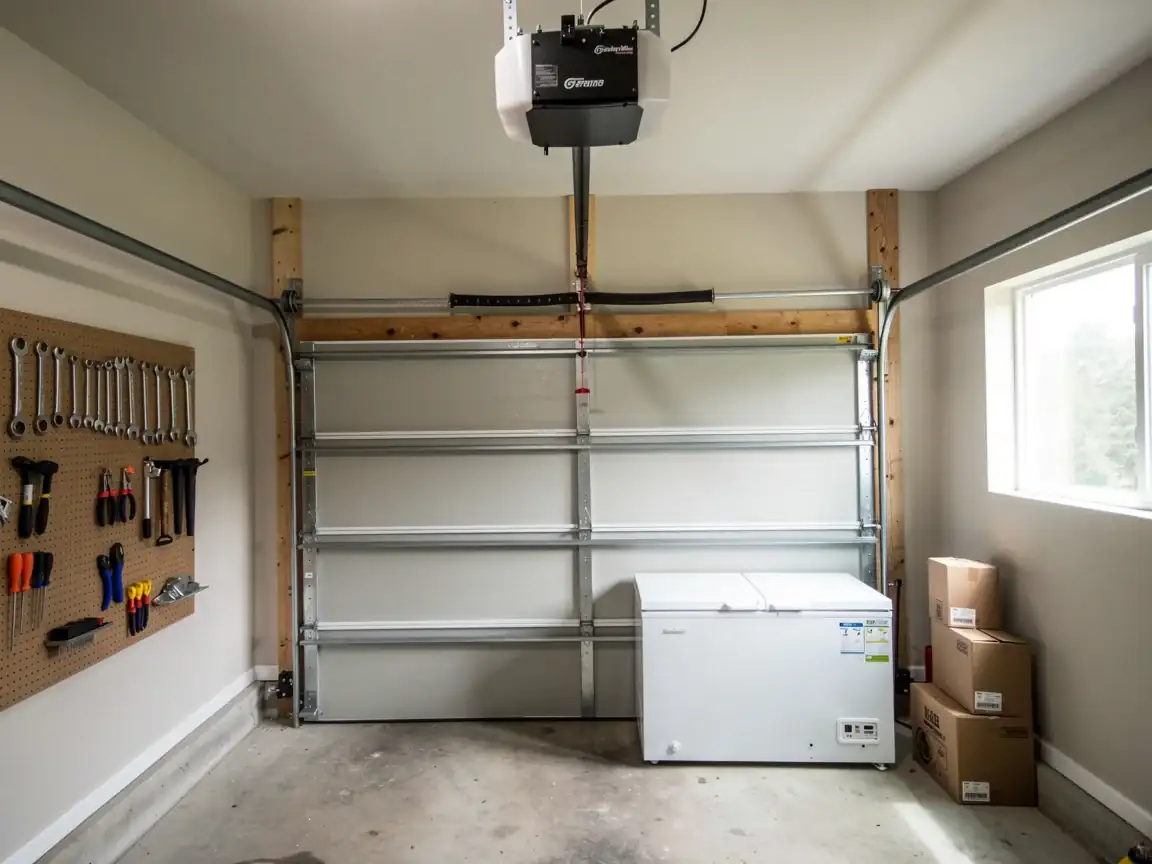
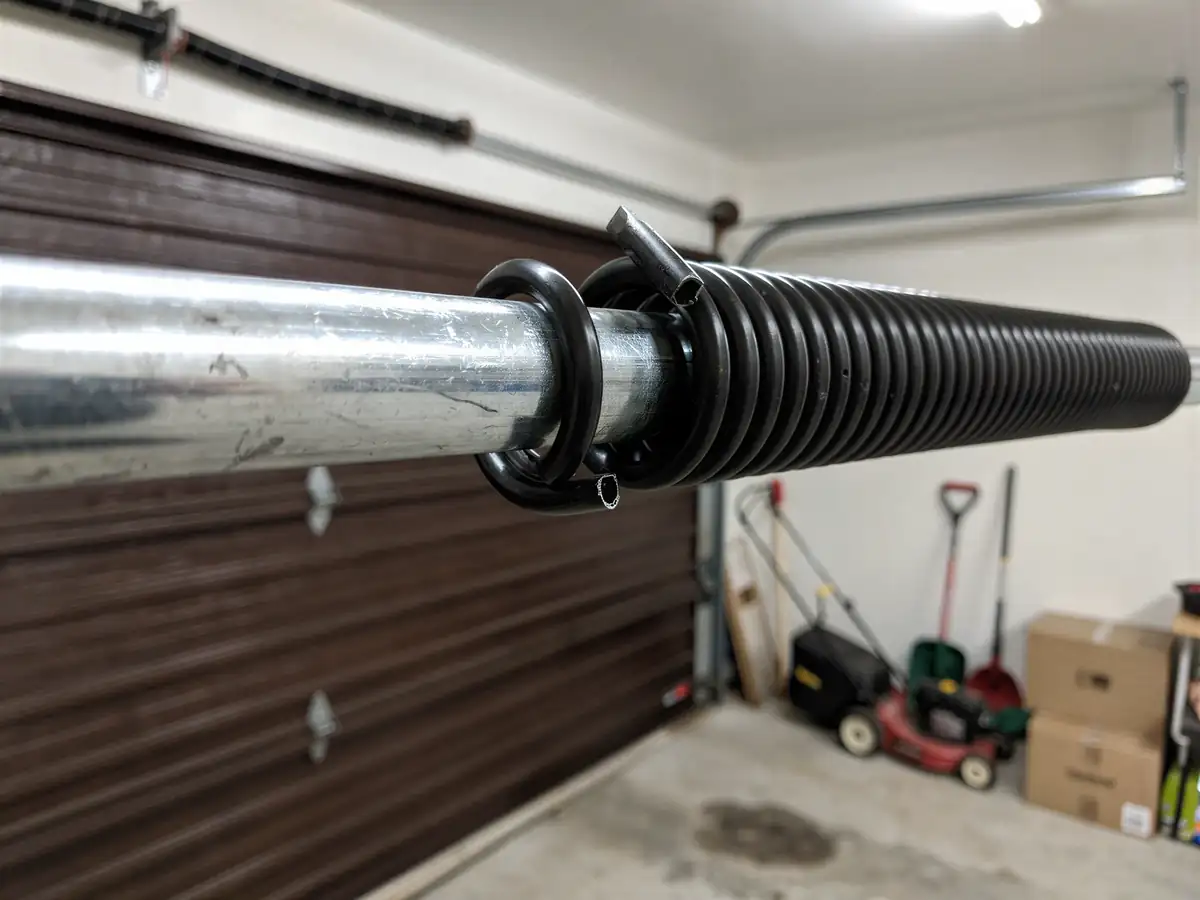
Swapping a worn roller or tightening a loose hinge screw is reasonable weekend work if you're comfortable on a ladder and the door isn't under spring tension. Torsion springs are not a DIY job at any age of door - the ones on a 1957-era single door hold less stored energy than a heavy modern double door's springs, but they can still break a hand or worse if the winding bars slip. Where age actually raises the DIY risk here specifically: older brackets and fasteners can be more corroded or stripped than they look, so what seems like a simple bolt swap can strip the mounting point and turn a small job into a bigger one. If the door is original and you're not sure what you're looking at, that's the call to make before you start pulling panels.
How Long You Are Without the Door
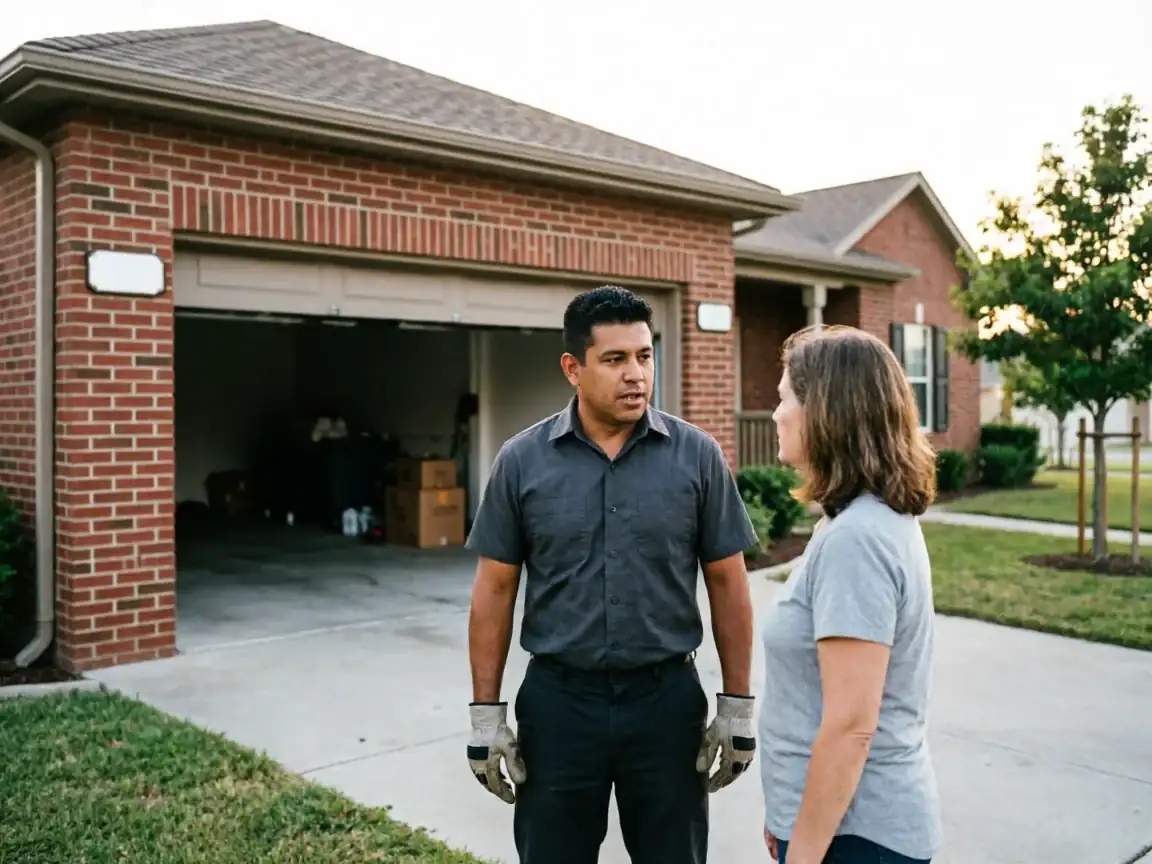
We're honest about this one because we drive the 19 miles out from Hutto rather than keeping a crew stationed in Bartlett. For a standard repair - spring, cable, roller, opener board - we bring common sizes on the truck and most jobs get the door moving again the same visit. Where the wait gets longer is parts specific to an older door: a non-standard track width or a spring sized for original 1957-era hardware isn't something we carry stock of, since most of the area's housing is decades newer. If that's the case, we'll tell you straight that it's an order-in part rather than guess at a timeline we can't back up. We don't have a stated response-time guarantee for Bartlett calls, and we're not going to invent one just to sound reassuring.